










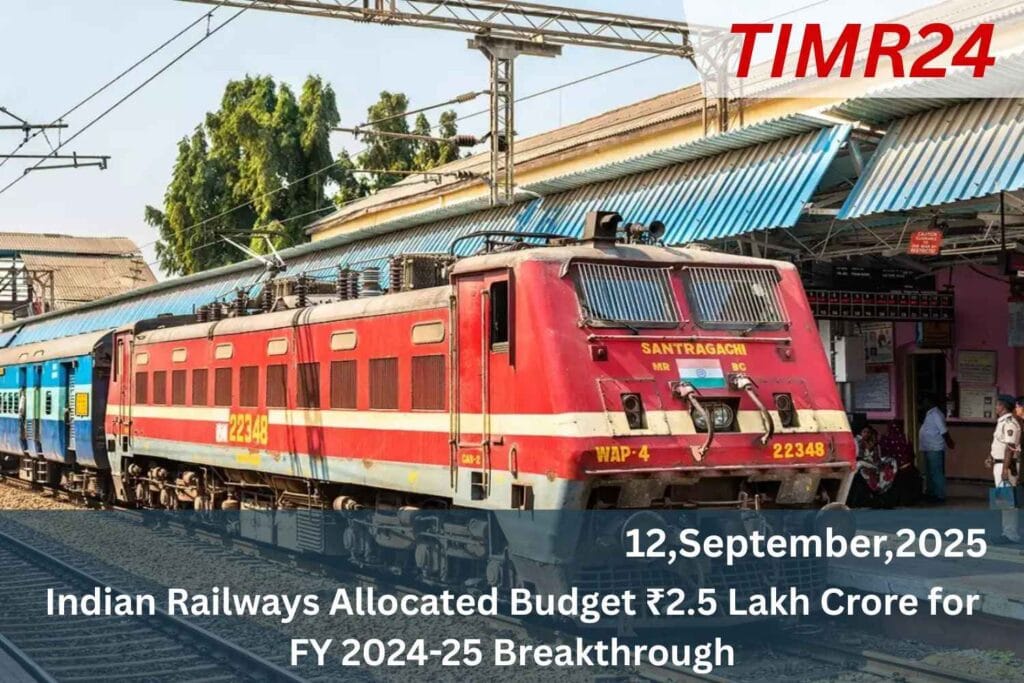
Indian Railways has received a 5% increase in outlay for 2024-25, with a nine-fold increase from 2013-14. The majority of the expenditure is for staff costs and fuel expenses. The net revenue expenditure is ₹2,78,500 crore, with ₹745 crore allocated for debt servicing of National Projects. The Union Government’s allocation of ₹2.5 lakh crore to Indian Railways in FY 2024-25 is a landmark decision that reflects India’s commitment to strengthening its transport backbone while embracing sustainability, modernization, and inclusivity. This budget is not merely about financial allocation but about laying down a blueprint for the next decade of railway transformation, ensuring that Indian.
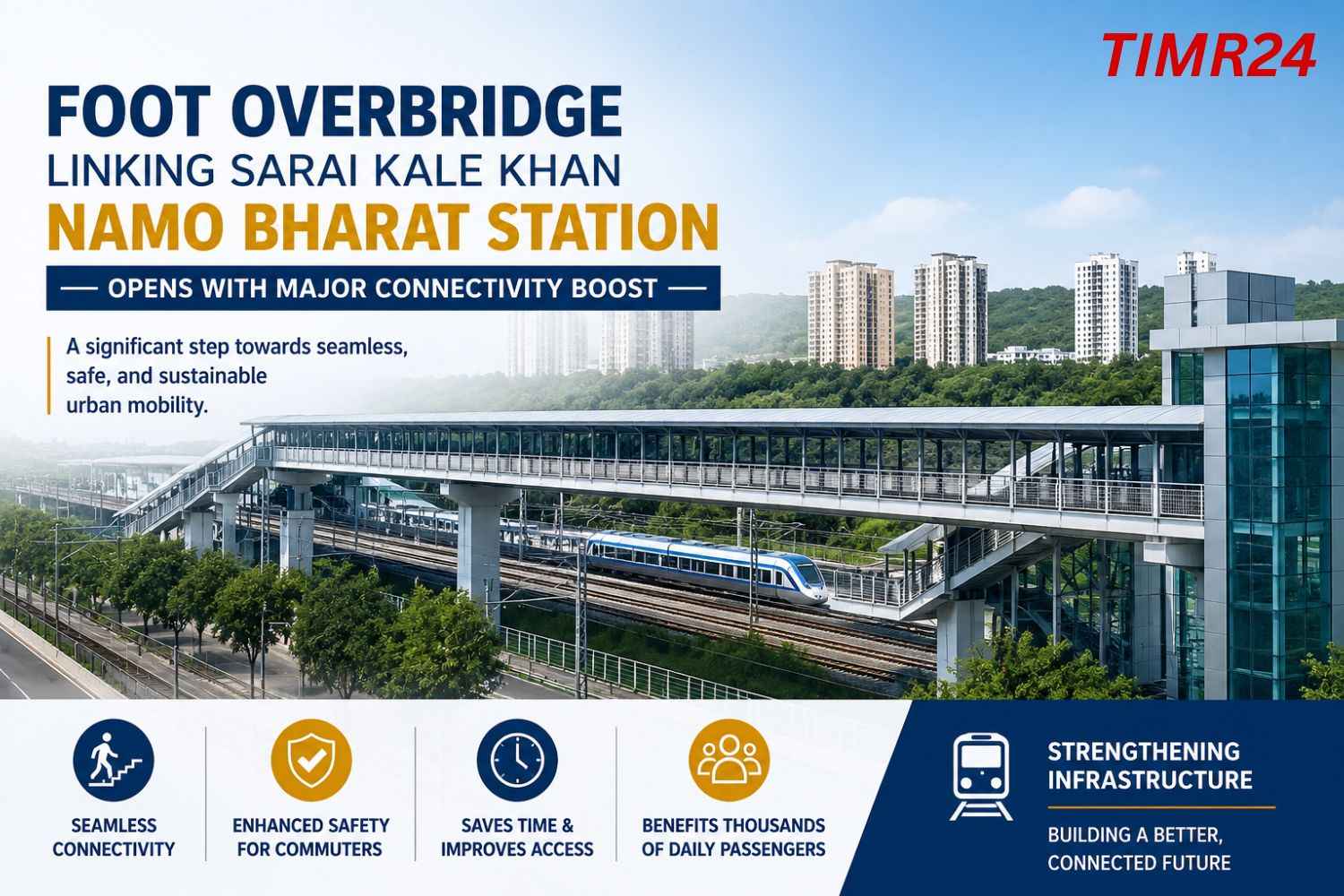
Railways continues to remain the backbone of national integration, freight movement, and passenger mobility. One of the most significant aspects of this year’s budget is the focus on infrastructure expansion, with thousands of kilometres of new tracks being planned alongside the upgrade of existing lines to support high-speed and heavy freight corridors. This is expected to ease congestion, reduce travel times, and improve punctuality across major routes. A major push has been given to the Amrit Bharat Station Scheme, under which more than 1,300 railway stations are to be modernized with state-of-the-art facilities such as improved waiting lounges, better sanitation.\
AI-powered ticketing systems, and enhanced passenger information displays. These redevelopments are designed to make stations not just transit points but holistic public spaces that reflect India’s growing urbanization and passenger needs, and for readers interested in station modernization, detailed coverage can be seen at. Another defining feature of this budget is the priority accorded to electrification and green energy, as Indian Railways is marching toward 100% electrification of its broad-gauge network by 2030, a move that directly contributes to India’s net-zero carbon emission targets. The budget has earmarked significant funds for integrating.
Renewable energy sources such as solar and wind into station operations and running pilot projects for hydrogen-powered trains that could redefine the future of green transport. This not only reduces the dependence on fossil fuels but also positions Indian Railways as a global example of sustainable transport solutions, in line with the government’s larger vision of green energy transition Another area where the allocation makes a breakthrough impact is in freight corridors, which have been the lifeline for industries, agriculture, and exports. With dedicated freight corridors being expanded under this budget, industries can expect reduced logistics costs, faster deliveries.
And greater efficiency in bulk movement. This will directly support India’s ambition of becoming a global manufacturing hub and is aligned with initiatives like Make in India. The importance of freight corridors in reducing costs for sectors such as steel, cement, and agriculture has been widely acknowledged by the (Ministry of Railways) and this allocation ensures continuity in their expansion. The high-profile Mumbai Ahmedabad Bullet Train Project has also found significant backing in this budget, ensuring that India’s first high-speed rail initiative moves closer to reality. Apart from this, the budget highlights feasibility studies and groundwork for future high-speed corridors.
Connecting Delhi, Varanasi, and Chennai, which will drastically reduce travel times and elevate India’s railway ecosystem to match global benchmarks. More details about high-speed rail initiatives can be tracked at For passengers, this translates into not just faster trains but also improved safety, as significant funds have been dedicated to deploying AI-based monitoring systems, collision-avoidance technology, and smart signaling mechanisms The budget also recognizes the importance of regional connectivity and last-mile integration. New semi-high-speed services like Vande Bharat trains will be expanded to tier-2 and tier-3 cities, enabling regional.
Growth and reducing the disparity between urban and rural connectivity. This is a big step toward inclusive development, as improved transport access directly impacts employment, education, and healthcare opportunities in smaller towns. Alongside passenger convenience, the government is also committed to job creation, as these railway projects require extensive manpower in construction, manufacturing, operations, and maintenance. The ripple effect of this ₹2.5 lakh crore investment is expected to create lakhs of direct and indirect jobs, while also boosting MSMEs that are part of the railway supply chain. Internal initiatives like further underline the government’s.
Vision for a modernized network where smart ticketing, online freight booking, and AI-driven traffic management become the norm Digital transformation is also being backed by large-scale integration of data analytics and automation, which will allow better capacity planning and smoother passenger experiences. In addition, safety and security are prioritized with advanced surveillance systems at stations, enhanced track maintenance technologies, and predictive monitoring of assets to avoid accidents. As Indian Railways continues to evolve into a smart mobility ecosystem, the government is also ensuring that rural-urban linkages are enhanced by increasing the number of trains in underserved.
Regions, improving feeder services, and integrating railways with other transport modes like metro and roadways. This is a holistic approach where transport and logistics are seen as interconnected rather than isolated segments, ensuring that the entire supply chain benefits from efficiency gains From an economic standpoint, this record allocation underscores the government’s belief that railway-led growth is key to driving India’s GDP expansion. Railways, being one of the most energy-efficient modes of transport, can carry large volumes of freight at low costs, thus reducing the burden on road infrastructure and lowering logistics expenses for businesses.
The integration of technology, sustainability, and inclusivity makes this budget more than a financial statement it is a vision document for India’s journey toward becoming a developed economy. Those who wish to understand the strategic long-term transport planning can explore (NITI Aayog) Importantly, the ₹2.5 lakh crore allocation also represents fiscal prudence, as the investments made today in railway infrastructure will yield long-term economic benefits, including lower carbon emissions, improved productivity, and a more connected India the Indian Railways Budget FY 2024-25 with its ₹2.5 lakh crore allocation is not only the largest in history but also the most ambitious in terms of vision.
By combining infrastructure growth, green energy adoption, freight efficiency, passenger convenience, and digital innovation, this budget ensures that Indian Railways is prepared for the challenges and opportunities of the 21st century. It positions railways as the true engine of India’s development, enhancing connectivity across regions, generating employment, and contributing directly to sustainability goals. As projects roll out under this allocation, the transformation of Indian Railways will be visible not just in faster trains or modern stations but in the improved quality of life for millions of citizens who rely on rail transport every day.
Q1. How much budget is allocated to Indian Railways for FY 2024-25?
₹2.5 lakh crore has been allocated.
Q2. What are the major focus areas of this budget?
Electrification, safety, high-speed rail, and modern stations.
Q3. How will this impact freight corridors?
The budget will expand dedicated freight corridors to reduce logistics costs.
Q4. Is green energy part of the railway budget?
Yes, the budget emphasizes solar, wind, and hydrogen-powered trains.
Q5. How will passengers benefit from this allocation?
Through better facilities, smart ticketing, and improved connectivity.