





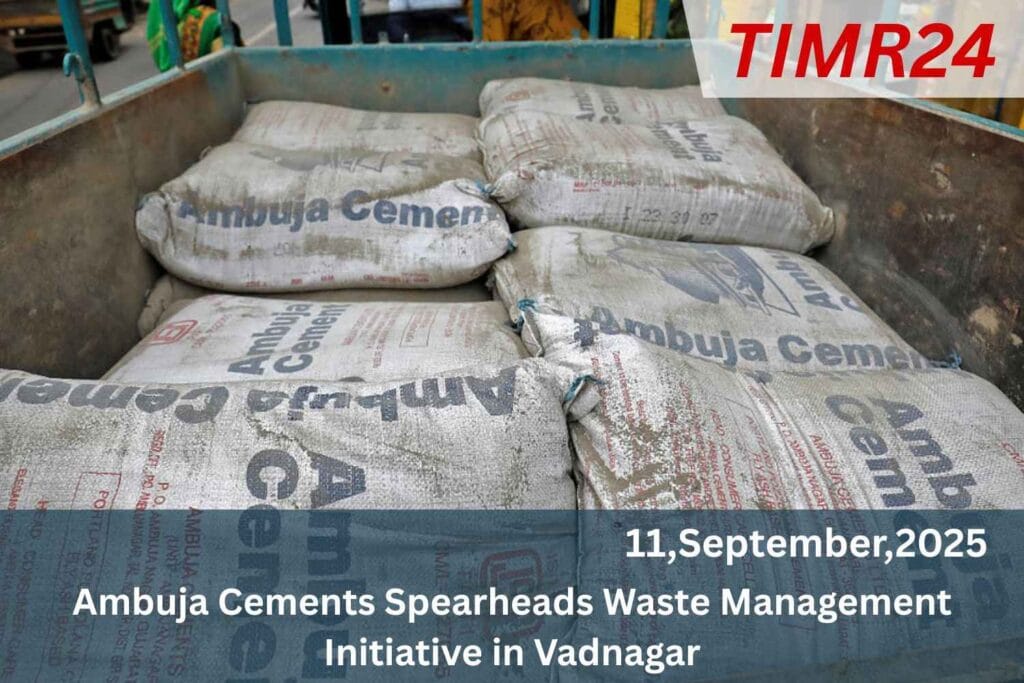
Ambuja Cements, part of the Adani Group, has successfully implemented a solid and liquid waste management initiative in Vadnagar village, Gujarat, through the Lighthouse Initiative (LHI). The project, in collaboration with the Ministry of Drinking Water and Sanitation, has led to improved plastic waste management under Phase II of the Swachh Bharat Mission Grameen. Ambuja Cements also supports infrastructure development and corporate CSR involvement. Ambuja Cements, one of India’s leading cement manufacturers, has always been at the forefront of blending industrial growth with environmental responsibility. The company’s latest step, a waste management.
Initiative in Vadnagar, is not just a CSR activity but a model that demonstrates how large corporations can integrate sustainability with community development. This initiative comes at a time when Indian towns and cities are grappling with the twin challenges of rising population and mounting waste. Vadnagar, a town known for its cultural heritage and historical significance, has now been chosen as a pilot region where Ambuja Cements is laying down the blueprint of modern waste management that connects people, technology, and environment The starting point of the program is systematic waste segregation, an area where most urban local bodies struggle. Ambuja Cements has collaborated.
With local authorities and community representatives to set up waste collection centers and bins specifically for biodegradable and non-biodegradable waste. Residents are encouraged to separate household waste at the source, and awareness campaigns have been launched to educate families about the long-term benefits of segregation. These drives are not just one-time events but part of an ongoing movement where schools, women’s groups, and local volunteers join hands to reinforce the message. The idea is that sustainable change only happens when citizens are actively involved, not merely passive beneficiaries The initiative also emphasizes the reuse and recycling of materials.
Particularly plastics, which have become a global concern. In Vadnagar, Ambuja Cements is introducing small-scale plastic recycling units where collected plastic waste is repurposed into useful products. This approach reduces landfill pressure while creating micro-economies for local workers. Alongside plastics, biodegradable waste is being converted into compost, which is then supplied to local farmers and gardeners, ensuring a circular economy where waste becomes a resource. Such efforts resonate strongly with the principles of Swachh Bharat Mission, which focuses on sustainable sanitation and waste reduction at the community level.
Beyond recycling, the program has a strong employment and training component. Ambuja Cements has identified local workers, including youth and women, to be trained in modern waste handling practices. These training sessions cover safe collection, segregation, composting, and use of protective equipment. By creating structured jobs in waste management, the initiative addresses not just environmental goals but also the socio-economic aspirations of the town. Trained individuals are absorbed into ongoing operations, thereby ensuring that the system does not collapse once initial funding is withdrawn. This dual benefit of environment and livelihood makes the Vadnagar initiative a replicable model for other towns in India.
Another striking feature is the integration of technology. Ambuja Cements has introduced monitoring systems that track the volume of waste collected, processed, and recycled. Digital apps are being tested for real-time reporting, enabling transparency and accountability in the waste management chain. These digital interventions align with the broader government push for and show how corporate initiatives can complement national agendas. The data collected will also help policymakers and researchers analyse patterns of waste generation in semi-urban towns, offering insights for future planning The program is also strongly linked to community engagement.
Schools in Vadnagar are organizing eco-clubs where students participate in clean-up drives, debates, and environmental awareness projects. By involving the younger generation, Ambuja Cements is ensuring that the culture of sustainability is deeply embedded into the community’s mindset. Local NGOs and citizen groups have been roped in to organize awareness workshops, and religious leaders have been engaged to reinforce the importance of cleanliness from a cultural perspective. This multi-layered approach strengthens the social foundation of the initiative What sets Ambuja Cements apart is its visionary alignment with global environmental goals.
By adopting practices that reduce landfill waste, cut down on plastic use, and promote recycling, the Vadnagar program reflects principles from the particularly SDG 11 (Sustainable Cities and Communities) and SDG 12 (Responsible Consumption and Production). This global alignment enhances the credibility of the initiative and makes it a case study for international observers who look for scalable solutions to waste management in developing countries Within its broader corporate journey, Ambuja Cements has been consistently working on sustainability and green practices. Earlier projects under its (Infrastructure Development) have included water conservation, rural infrastructure.
Development, and skill-building programs. The Vadnagar waste management project is an extension of these commitments, combining industrial expertise with community development. Internal stakeholders see it not as an isolated project but as a roadmap for how Ambuja Cements can embed sustainability into its long-term strategy. From a town perspective, the changes are already visible. Streets that once had uncollected waste are now cleaner, with dedicated bins and scheduled waste collection rounds. Farmers report positive results from using compost produced locally, reducing their dependence on chemical fertilizers. Youth volunteers in schools are more conscious.
About littering, and shopkeepers are beginning to phase out single-use plastics. These shifts may seem small individually, but together they mark a significant cultural transformation for Vadnagar The ripple effect of this initiative can be felt beyond the town. Neighbouring districts are beginning to take interest in the model, and discussions are underway to replicate similar programs with Ambuja Cements’ guidance. Policymakers view Vadnagar as a demonstration town, showing that waste management is not just a municipal responsibility but a collective mission where corporates, communities, and government must all play a role Looking ahead, Ambuja Cements plans to.
Expand the scope by integrating renewable energy solutions such as biogas units for processing organic waste. There are also plans to set up waste-to-energy projects that will power small community centers. This not only strengthens the town’s energy resilience but also reduces the carbon footprint of waste handling. If successful, Vadnagar could become a hub of innovation in sustainable waste management, inspiring other towns across Gujarat and the rest of India Ultimately, the Ambuja Cements waste management initiative in Vadnagar is about more than just cleanliness. It’s about reimagining urban life where communities take pride in their surroundings,.
where corporates act as responsible partners, and where the environment is preserved for future generations. With structured planning, citizen involvement, and corporate accountability, Vadnagar is on its way to becoming a cleaner, greener, and more sustainable town. The project underscores a powerful truth: when business and society work together, even the most complex challenges like waste management can be transformed into opportunities for growth, dignity, and hope.
Q1. What is the Ambuja Cements waste management initiative in Vadnagar?
It is a community-focused program promoting sustainable waste reduction, recycling, and proper disposal across Vadnagar.
Q2. How does the initiative benefit Vadnagar residents?
Residents gain access to organized waste collection, awareness programs, and eco-friendly disposal options.
Q3. Are local communities involved in the project?
Yes, local residents and authorities are actively engaged through workshops, training, and awareness campaigns.
Q4. Does Ambuja Cements provide employment through this initiative?
Yes, local workers receive training and employment opportunities in waste management operations.
Q5. Where can I learn more about sustainable waste management practices?
Check resources like (Swachh Bharat)