





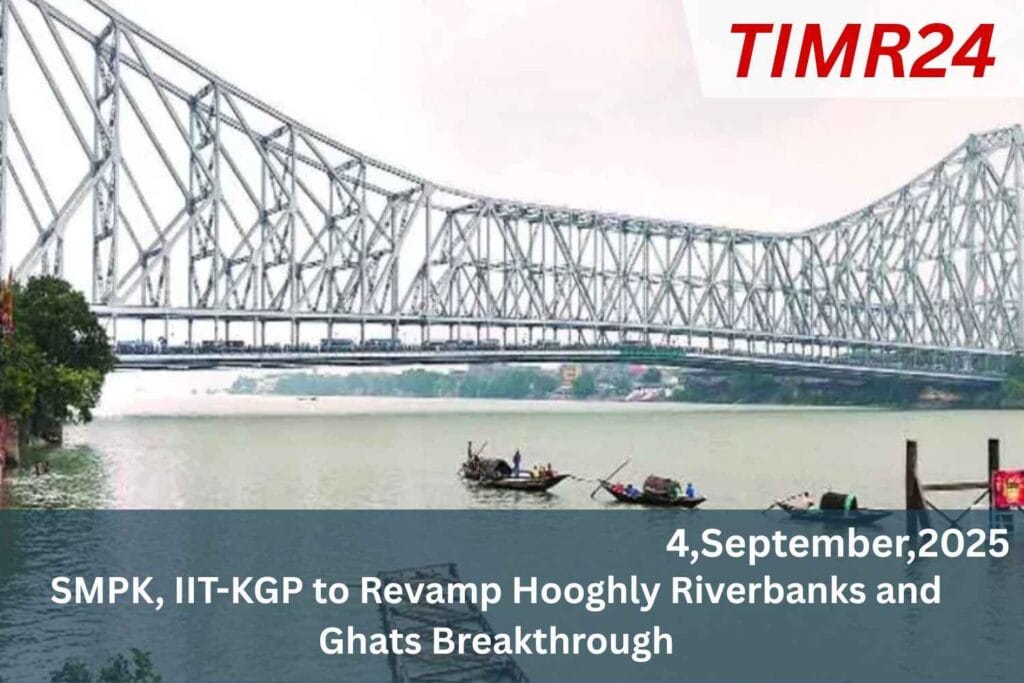
Syama Prasad Mookerjee Port, Kolkata (SMPK) is collaborating with IIT-Kharagpur to create a Riverbank Masterplan to revitalize the ghats and riverbanks along the Hooghly in Kolkata and Howrah. The initiative aims to enhance heritage conservation, improve urban aesthetics, and unlock tourism potential in line with the Responsible Tourism Mission 2025. The project includes the development of a world-class river cruise terminal, Millennium Park 3, and CSR-backed restoration of heritage ghats. The project aims to integrate cultural revival with economic development. The Hooghly River has always been the lifeline of Kolkata, shaping its history, trade, culture, and spiritual fabric for centuries. From the colonial era to the modern day.
Its riverbanks and ghats have been the center of commerce, social life, and traditions. Yet, in recent decades, the riverfront has faced severe neglect, encroachment, pollution, and infrastructural decline. Recognizing the urgent need for revival, Syama Prasad Mookerjee Port, Kolkata (SMPK) has joined forces with the Indian Institute of Technology Kharagpur (IIT-KGP) to launch a pathbreaking initiative aimed at rejuvenating the Hooghly Riverbanks and ghats. This collaboration promises not just cosmetic changes but a deep, sustainable, and scientific transformation that balances modernization with heritage preservation The project’s scope goes far beyond mere beautification. It envisions the riverfront as a vibrant urban.
Space where history and culture blend seamlessly with modern infrastructure and ecological sustainability. Kolkata’s ghats such as Babubhai, Prinsen Ghat, Armenian Ghat, and others are iconic landmarks that draw both residents and tourists. However, the dilapidated condition of many ghats, poor sanitation facilities, lack of safety measures, and environmental degradation have long diminished their appeal. With IIT-KGP’s expertise in urban planning, environmental engineering, and sustainable design, the project will address these challenges through a holistic approach Readers interested in related government strategies can also explore the (Smart Cities), which offers insight into how.
Syama Prasad Mookerjee Port
India is planning sustainable growth in urban centers. A crucial focus of the revamp will be infrastructure development, which includes building robust pathways, installing smart lighting, and integrating digital monitoring systems for safety. SMPK has emphasized that riverbank stabilization will be done using eco-friendly bioengineering methods, which are essential given the erosion and flooding risks in the Hooghly basin. Drawing inspiration from successful initiatives such as Hooghly project will incorporate lessons in riverbank management and urban integration Ensuring that the ghats are not just restored but also made functional for diverse activities ranging from transport to recreation Another dimension of this initiative is heritage and cultural preservation.
The ghats of Kolkata are not just physical structures but living repositories of stories, rituals, and architectural heritage. For instance, Bag bazar Ghat is linked to centuries-old Durga Puja traditions, while Armenian Ghat reflects the multicultural history of the city. SMPK has announced plans to work alongside conservationists and cultural bodies to ensure that the architectural integrity of heritage structures is preserved while modern amenities are introduced According to heritage-based projects not only restore the pride of communities but also create sustainable economic opportunities through tourism and crafts revival The Hooghly Riverfront revamp is also expected to boost tourism and the local economy.
A restored and vibrant riverbank will enhance the city’s appeal for domestic and international travellers. With improved ferry services, cultural festivals, and riverside events, the project is designed to attract footfall and create opportunities for boatmen, vendors, and local artisans. Tourists often associate Kolkata with its literary and cultural richness, and a revitalized Hooghly will strengthen this image For a deeper look at how infrastructure impacts tourism, you can explore our article on (India’s Tourism infrastructure), which highlights similar transformations across the country The environmental angle of this initiative cannot be overstated. The Hooghly has long suffered from untreated sewage, industrial effluents, and urban waste.
sustainable waste management systems
IIT-KGP’s environmental experts will design sustainable waste management systems, water treatment plants, and pollution monitoring frameworks. Plans also include green belts along the riverbanks to reduce air and noise pollution and to provide natural cooling spaces for city dwellers. The approach is similar to global benchmarks like The project, which successfully turned a polluted riverfront into an ecological and cultural asset. The lessons from such international models will guide the balance between urban development and environmental protection in Kolkata Equally important is the community involvement in this project. SMPK has emphasized that riverfront development is not just a government-driven exercise but one that requires the active participation of citizens.
NGOs, and local stakeholders. Engaging communities ensures that development is not imposed but co-created, giving residents a sense of ownership This participatory approach helps prevent misuse, encroachment, and neglect in the long run. In fact, urban planners highlight that without local buy-in, even the most ambitious infrastructure projects can falter. This initiative, therefore, promises not only physical transformation but also social empowerment. From an urban planning perspective, the collaboration between SMPK and IIT-KGP represents a model for future projects in India. It brings together government authority, academic expertise, and community participation, ensuring that projects are scientifically sound, culturally sensitive, and socially inclusive.
The long-term vision is to integrate the Hooghly Riverfront into the larger framework of Kolkata’s urban renewal, aligning and other state-level initiatives. The anticipated outcome is a riverfront that is not only visually appealing but also functional, safe, and sustainable. Whether it is morning walkers at Prinsen Ghat, tourists enjoying ferry rides, cultural enthusiasts attending festivals, or students studying the city’s history, the new Hooghly Riverbanks promise to offer something for everyone. This transformation can also inspire other cities along India’s major rivers, such as Varanasi on the Ganges or Patna on the Ganga, to take up similar projects, balancing development with tradition.
In conclusion, the SMPK-IIT KGP collaboration to revamp the Hooghly Riverbanks and ghats is more than a development project it is a cultural, ecological, and social movement. It aims to breathe new life into one of Kolkata’s most iconic features, ensuring that the river once again becomes a thriving space for commerce, culture, and community. The project stands as a testament to how science, heritage, and governance can come together to create a transformative vision. For readers who want to explore successful models of such transformations, references like and Thames21’s River provide a global context to what is being attempted in Kolkata.
As this initiative unfolds, it holds the promise of turning the Hooghly into a symbol of renewal for generations to come.
Q1. What is the SMPK and IIT-KGP project on Hooghly Riverbanks?
SMPK and IIT-KGP are collaborating to revitalize Hooghly’s riverbanks and ghats through modern infrastructure, eco-friendly solutions, and cultural preservation.
Q2. Why is the Hooghly Riverbank revamp significant?
It aims to boost tourism, protect heritage ghats, improve transport, and enhance the ecological health of the river.
Q3. Which ghats will be included in the revamp project?
The project will cover multiple heritage ghats in Kolkata and Howrah along the Hooghly, with priority on areas of cultural and historical importance.
Q4. How will IIT-KGP contribute to this initiative?
IIT-KGP will provide research, technical expertise, and sustainable urban planning models for long-term riverfront management.
Q5. When will the Hooghly Riverbanks project be completed?
Timelines are yet to be officially announced, but the initial phase is expected to start within the next year.