


















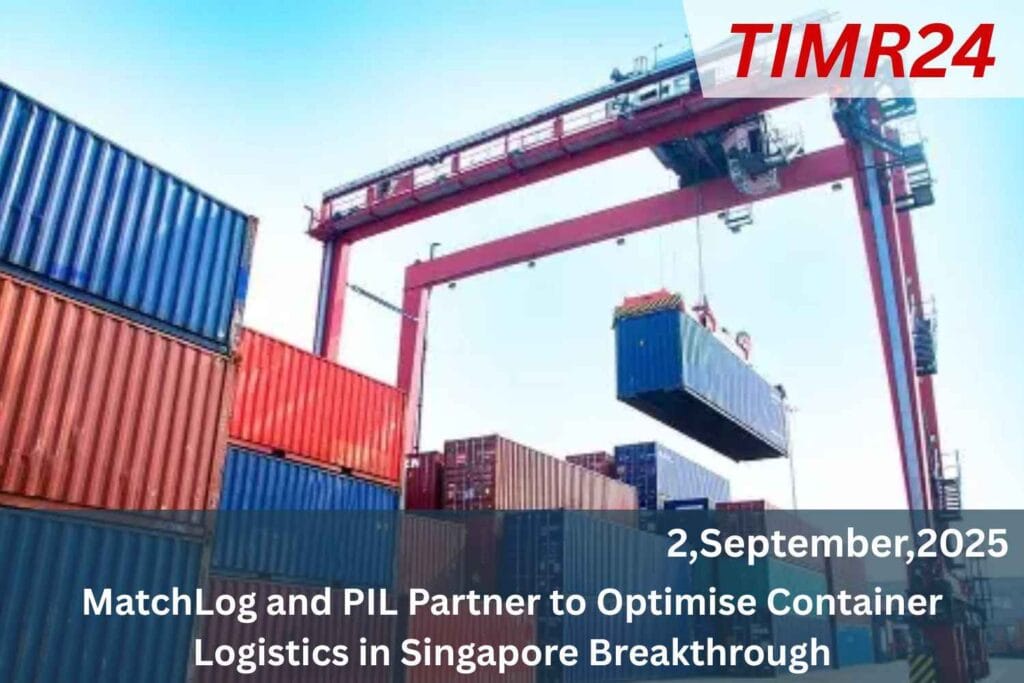
MatchLog, the world’s largest container-reuse platform, has partnered with Pacific International Lines (PIL) to improve container equipment optimization in Singapore. The partnership aims to reduce inefficiencies in container logistics, such as empty repositioning and under-utilised reuse cycles. By embedding Match Log’s platform into PIL’s Singapore operations, container turnaround times will decrease, asset utilization will increase, and redundant carbon-emitting moves will be reduced. The platform uses Match Log’s STinder, a container matchmaking engine, to connect import and export legs for reliable reuse across ports, Street Turn Yards, and inland nodes.
This partnership marks a significant step in modernizing container logistics, paving the way for smarter, greener, and more cost-efficient supply chains. The maritime industry is experiencing a pivotal transformation, with technology reshaping how ports, shipping lines, and logistics providers operate in a globalised economy. The recent collaboration between MatchLog and Pacific International Lines (PIL) marks a significant breakthrough in optimising container logistics in Singapore, one of the world’s busiest and most strategically important ports. This partnership goes beyond operational upgrades it represents a future where efficiency, sustainability, and digitalisation converge to redefine maritime trade.
The Strategic Importance of Singapore’s Container Hub
Singapore has long been recognised as a vital node in global shipping. Its geographic position between major east–west trade lanes allows it to function as a transhipment hub, connecting cargo flows between Asia, Europe, and North America. Yet, this centrality comes with challenges. Increasing trade volumes, port congestion, and the demand for faster deliveries put immense pressure on port infrastructure. By partnering with MatchLog, PIL is addressing these very issues, aligning with Singapore’s vision of becoming a smart port city powered by digitalisation and innovation. Readers can explore how Singapore is advancing smart port solutions through initiatives highlighted in our (logistics).
At the heart of this partnership is MatchLog’s technology platform, designed to tackle inefficiencies in container management. Empty container repositioning and idle container time have been persistent challenges in global trade. MatchLog’s predictive analytics and AI-driven solutions provide shipping lines with greater visibility and control, reducing unnecessary container movement while optimising allocation. This innovation directly benefits PIL, enabling smoother vessel turnaround, quicker cargo handovers, and enhanced customer service. For a broader understanding of digital logistics solutions, you may also check resources from which outlines global best practices in container management.
Enhancing Operational Efficiency for Shipping Lines
For PIL, one of the largest shipping companies in Asia, operational efficiency is vital. The collaboration with MatchLog allows for better cargo tracking, improved scheduling, and reduced port delays. With real-time tracking systems and advanced container flow management, stakeholders in the supply chain from exporters and importers to freight forwarders can anticipate shipment timelines with more accuracy. This reliability is crucial in a world where e-commerce and just-in-time deliveries are shaping new customer expectations. Companies interested in the broader impact of shipping efficiency can review our which detail global trends reshaping trade flows.
Congestion has been one of the biggest challenges for global ports, particularly during periods of high demand or unforeseen disruptions like the COVID-19 pandemic. By deploying MatchLog’s container optimisation tools, PIL and Singapore’s port authorities can alleviate bottlenecks, ensuring smoother vessel scheduling and yard operations. With better demand forecasting, containers can be repositioned strategically, minimising idle time and reducing the need for excess storage. This proactive approach helps not only the port but also the wider supply chain ecosystem, where delays at one hub can trigger ripple effects globally.
Building Sustainable Logistics Practices
Sustainability is becoming increasingly central to logistics operations, and the MatchLog-PIL partnership demonstrates how efficiency and eco-consciousness can align. Every minute that a container spends idle, every kilometre of unnecessary repositioning, contributes to additional carbon emissions. By streamlining flows and optimising routes, the collaboration reduces overall fuel consumption and lowers the carbon footprint of shipping operations. This approach resonates strongly with initiatives like which encourages shipping companies to adopt greener practices. For industry stakeholders, this partnership represents a real-world case study of how digitalisation and sustainability intersect.
In an era of geopolitical tensions, fluctuating trade policies, and unforeseen global crises, resilience has become the new currency of supply chains. The integration of MatchLog’s platform with PIL’s operations ensures a more adaptive and responsive system. AI-driven insights allow for scenario planning, where shipping lines can prepare for sudden demand surges, port strikes, or route diversions. This resilience enhances confidence among stakeholders, ensuring that Singapore continues to serve as a dependable hub even during turbulent times. Those interested in exploring how technology is reshaping resilience can browse.
Implications for Global Trade and Port Competitiveness
The partnership is not confined to Singapore alone; its ripple effects extend globally. As Singapore strengthens its position as a digital-first port, it sets an example for other maritime hubs aspiring to stay competitive in a rapidly evolving industry. Ports that adopt similar technology-driven solutions are likely to see reduced congestion, faster cargo handling, and enhanced stakeholder satisfaction. For global trade players, the MatchLog-PIL model demonstrates how collaboration and innovation can future-proof operations in an increasingly demanding environment. The success of a container logistics partnership cannot be measured only by port efficiency it must also deliver value across the supply chain.
Importers and exporters gain from improved predictability, which helps them manage inventory more effectively. Logistics providers benefit from reduced turnaround times and streamlined communication, lowering operational costs. Ultimately, end customers also feel the impact through faster and more reliable deliveries. By linking these improvements to the broader logistics ecosystem, the partnership showcases a win win framework that enhances value across the chain. As trade continues to grow and shipping becomes more complex, the integration of digital tools will be the defining factor in maritime competitiveness. The MatchLog and PIL partnership can be viewed as a blueprint for future smart shipping initiatives. Its success highlights.
The importance of collaboration between technology innovators and traditional shipping companies. By building on this model, ports and shipping lines across the globe can replicate Singapore’s approach, modernising their own operations to meet the evolving needs of global trade The collaboration between MatchLog and PIL is more than a strategic alliance; it is a breakthrough in container logistics that combines technology, sustainability, and operational excellence. By addressing inefficiencies, reducing carbon emissions, and enhancing supply chain resilience, this partnership strengthens Singapore’s role as a global shipping hub while setting new standards for the maritime industry. With the integration of AI, predictive analytics, and sustainability goals.
the partnership represents the future of logistics efficient, transparent, and resilient. As the world watches Singapore lead this digital transformation, other shipping hubs may soon adopt similar frameworks, bringing the global logistics ecosystem one step closer to a smarter, greener, and more connected future.
Q1. What is the objective of the Match Log-PIL partnership?
The partnership aims to optimise container logistics in Singapore by improving tracking, allocation, and reducing port congestion.
Q2. How does MatchLog’s technology benefit shipping operations?
MatchLog provides AI-driven tracking, predictive analytics, and container management solutions that enhance efficiency and transparency.
Q3. Will this partnership support sustainable shipping practices?
Yes, optimising container flows reduces idle times and carbon emissions, contributing to greener logistics operations.
Q4. Who benefits from this collaboration?
Shipping lines, importers, exporters, logistics providers, and Singapore’s port authorities benefit from improved efficiency and transparency.
Q5. Where can I find more information about global container logistics trends?
External resources like the (World Shipping Council)