


















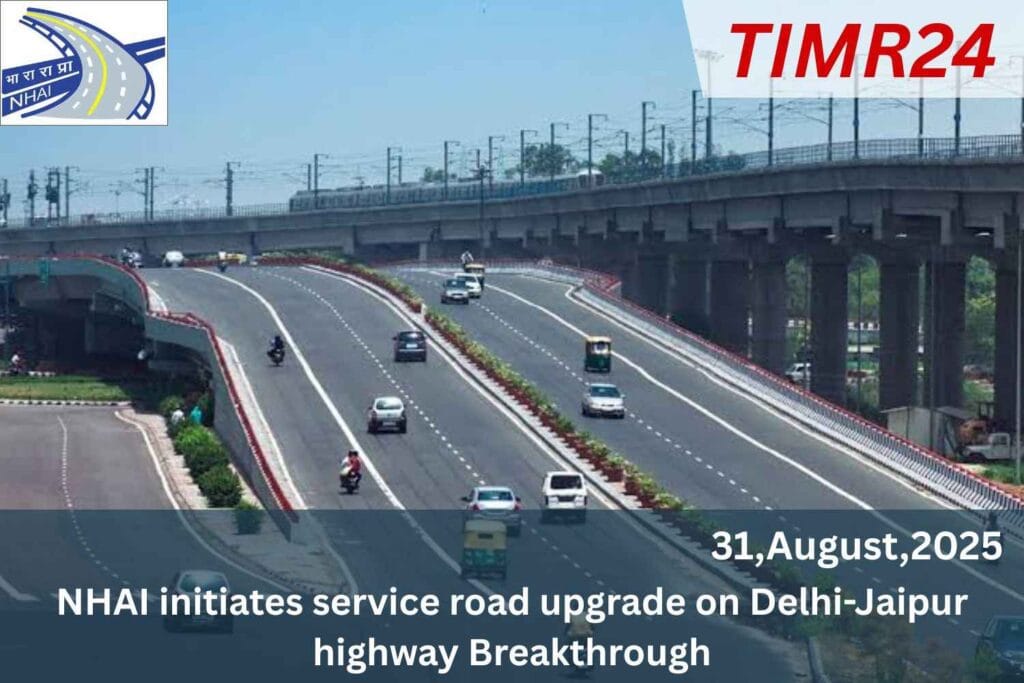
The National Highways Authority of India (NHAI) is laying service roads on both sides of the Delhi-Jaipur national highway, focusing on the section from Dharuhera flyover to Masani bridge, to improve road conditions and connectivity. The Delhi-Jaipur highway, officially known as National Highway 48, is one of the busiest and most vital road corridors in India, connecting the national capital region with Rajasthan’s capital city while serving as a lifeline for thousands of daily commuters and freight carriers. Over the years, the highway has become notorious for congestion, traffic bottlenecks, and rising accident rates, especially where local and long-distance traffic overlap.
Recognizing the urgency to address these challenges, the National Highways Authority of India (NHAI) has launched a significant service road upgrade project that promises to change the way this corridor functions. This initiative is not just about easing traffic; it is a strategic breakthrough in India’s infrastructure drive, aligning with broader development plans such as Bharatmala Pariyojana and the Delhi-Mumbai Industrial Corridor. The importance of the Delhi-Jaipur highway cannot be overstated. Serving as a key connector between Delhi NCR and Rajasthan, the route passes through Gurugram, Manesar, Dharuhera, Bhiwandi, Neemrana, and Rewari before extending to Jaipur.
These towns are home to industrial hubs, logistics parks, residential clusters, and educational institutions, all of which depend heavily on seamless mobility. According to (Road & Highways), the highway carries more than 1.5 lakh vehicles daily, of which nearly 40% consist of trucks and freight carriers. The service roads along this highway were originally designed to handle local traffic, but rapid urbanization and industrial growth have created far more pressure than they can bear. Local vehicles, two-wheelers, and slow-moving traffic frequently merge onto the main highway, slowing down high-speed lanes and increasing accident risks. With the new NHAI upgrade, these pain points are expected to be significantly reduced.
The upgrade will focus on widening and resurfacing existing service roads, introducing improved drainage systems to prevent waterlogging, adding pedestrian crossings, and enhancing signage. By separating local and through traffic more effectively, the project will not only reduce congestion but also increase safety levels. For instance, residents of Dharuhera and Bhiwandi currently face daily struggles as local movements mix with long-haul freight, but better-designed service roads will provide them a smoother and safer travel experience. At the same time, trucks and intercity vehicles will enjoy uninterrupted passage on the main lanes of NH-48, helping reduce travel delays and fuel wastage. This dual benefit of commuter comfort and logistics efficiency makes the initiative highly impactful.
Another critical dimension of this project is its role in strengthening India’s industrial growth corridors. The Delhi-Jaipur highway is a backbone of the one of India’s most ambitious infrastructure programs aimed at creating new industrial cities and boosting exports. The Neemrana Japanese Industrial Zone, which houses major global manufacturers, is directly dependent on smooth connectivity to Delhi and western ports. The service road upgrade will therefore not only benefit commuters but also create more efficient supply chains, reduce transport costs, and improve India’s competitiveness in manufacturing and trade. This directly ties into the government’s larger vision of making India a global manufacturing hub, alongside other transformative infrastructure projects such as.
Beyond industrial growth, the service road upgrade will also reshape the local economies along the highway. Improved access to Gurugram’s IT hubs, Bhiwandi’s real estate clusters, and Jaipur’s tourism circuits will create fresh opportunities for businesses and residents alike. As more people and industries move into these regions, better infrastructure will attract new investments, fuelling balanced regional development. In fact, similar to how Smart City have revitalized urban centers, the Delhi-Jaipur service road initiative is expected to accelerate suburban expansion in Dharuhera, Neemrana, and Rewari, turning them into more livable and economically vibrant zones.
Safety remains one of the key priorities of NHAI under this project. The Delhi-Jaipur stretch has witnessed numerous accidents due to unsafe pedestrian crossings, unregulated local entry points, and poor segregation of traffic. By improving service roads and channeling local traffic away from the main highway, accident risks are expected to reduce significantly. This is in line with the government’s vision to bring down road fatalities, a central aim and related highway development programs. Furthermore, the new design will make the service roads more pedestrian- and cyclist-friendly, ensuring that vulnerable road users are not left behind in the rush for modernization.
From a commuter’s perspective, the biggest relief will be reduced travel time. Currently, a trip between Delhi and Jaipur often takes more than six hours due to congestion, especially during peak hours near Gurugram and Bhiwandi. With improved service roads absorbing local traffic, the highway lanes will flow more smoothly, cutting travel time and making the route more reliable. This will also have a cascading effect on logistics costs, with trucks spending less time idling in jams and businesses gaining from faster delivery cycles. For exporters using ports in western India, the benefits will be even greater, as the corridor will better align with the upcoming further boosting speed and efficiency.
The environmental dimension of the project also deserves mention. Traffic congestion leads to higher fuel consumption and emissions, but smoother movement will mean fewer idling vehicles and lower carbon footprints. Combined with better drainage and road quality, the upgrade will make the highway more climate-resilient, protecting it from seasonal damage caused by heavy rains. In this way, the project supports India’s climate action goals while also improving day-to-day NHAI service road upgrade on the Delhi-Jaipur highway marks a significant step forward in India’s infrastructure modernization journey. By addressing local commuter needs, improving logistics efficiency, enhancing safety, and aligning with national development programs, the initiative offers a holistic solution.
One of the country’s most pressing transport challenges. Just as mega projects like the symbolize India’s global ambitions, the Delhi-Jaipur service road upgrade represents practical progress on the ground progress that will immediately benefit millions of travellers and businesses. As work continues over (NHAI) the next few months, the highway corridor is poised to become a model for how targeted infrastructure improvements can unlock both economic growth and everyday convenience, reinforcing the idea that India’s road network is not merely a means of travel but a backbone of the nation’s development.
Q1. What is the purpose of the NHAI service road upgrade on the Delhi-Jaipur highway?
The upgrade aims to improve traffic flow, ensure commuter safety, and reduce congestion.
Q2. Which sections of the Delhi-Jaipur highway are included in this service road upgrade?
The project covers critical stretches facing bottlenecks, diversions, and high local traffic movements.
Q3. How will the service road upgrade benefit commuters and transporters?
It will reduce travel delays, improve last-mile connectivity, and enhance logistics efficiency.
Q4. When is the project expected to be completed?
Completion timelines depend on phased execution, with major progress expected within 12–18 months.
Q5. Will the upgrade reduce accidents and improve road safety?
Yes, service road improvements will separate local and highway traffic, lowering accident risks.