


















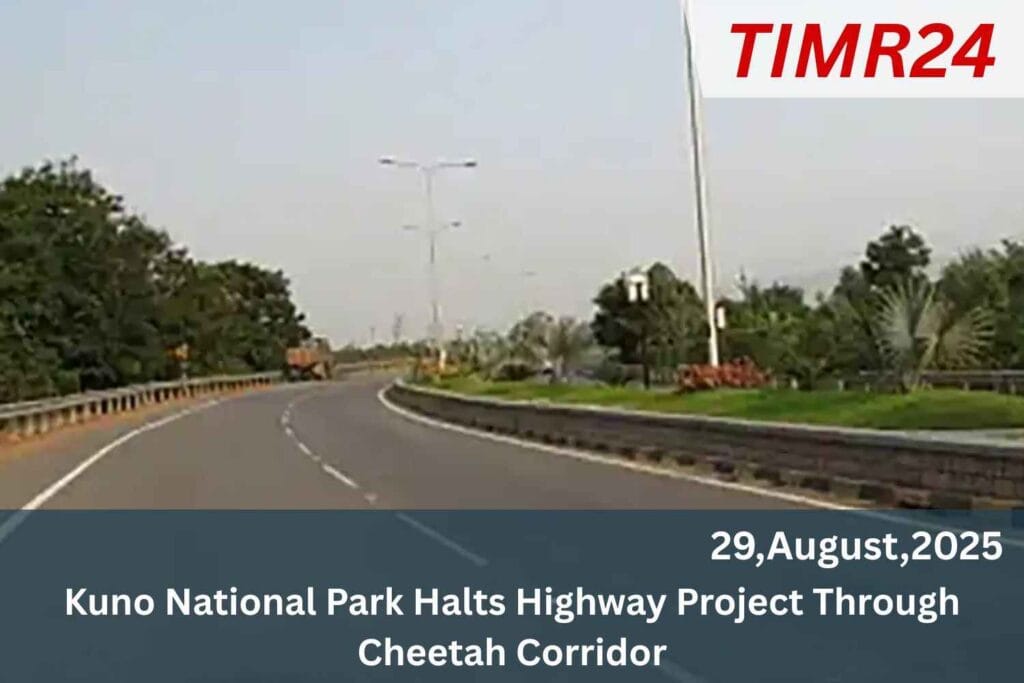
Kuno National Park halts construction of a 63.4 km Goras-Shyampur highway due to safety concerns, cutting through a proposed cheetah corridor. NHAI denies violation, but 32 km falls within ecologically sensitive zones. The decision to halt a highway project cutting through Kuno National Park’s cheetah corridor has emerged as a landmark step in balancing development and conservation in India. The proposed road had raised alarms among ecologists and conservationists who warned that it would fragment habitats, disrupt natural corridors, and endanger the survival of recently reintroduced cheetahs. By choosing conservation over short-term infrastructure expansion, authorities have highlighted India’s growing recognition of ecological sustainability as an essential part of national progress.
This move not only safeguards the cheetah but also protects the fragile web of biodiversity that thrives in Kuno National Park, situated in Madhya Pradesh, covers over 748 square kilometres of dry deciduous forest. Once a relatively lesser-known wildlife reserve, it came into the spotlight when India selected it as the site for reintroducing the cheetah, which had been declared extinct in the country in 1952. The project, part of (Highway Project) brought cheetahs from Namibia and South Africa to India in 2022, with Kuno chosen for its diverse prey base, open grasslands, and relative isolation from human settlements. Protecting the park’s natural corridors is critical because cheetahs, being wide-ranging animals, require large landscapes to survive and thrive.
Internal updates such as our article on India’s Wildlife Conservation Journey provide a deeper look at how Kuno plays a role in reviving lost species The halted highway project was planned to pass directly through a designated cheetah corridor, raising immediate concerns. Highways may improve connectivity for humans, but they can be devastating for wildlife. Vehicle collisions, habitat fragmentation, noise, and light pollution significantly disrupt animal behaviour. For species like cheetahs, which are already vulnerable due to their small founding population in India, such risks could have spelled disaster. Studies from that linear infrastructure roads, railways, and canals creates permanent barriers in wildlife landscapes.
By preventing the construction of this highway within Kuno, policymakers have avoided a scenario where conservation gains would have been undone by development pressures. Wildlife corridors are crucial for the survival of species that migrate, disperse, or require large territories. For cheetahs, corridors enable genetic exchange, hunting, and seasonal movement. Disrupting these pathways not only isolates populations but can lead to inbreeding and reduced resilience to environmental stress. Kuno’s corridor also supports leopards, wolves, jackals, striped hyenas, and several herbivores. By halting construction, authorities have ensured that ecological connectivity remains intact. This decision is a reminder of similar global examples, such as.
Wildlife overpasses in Canada and eco-bridges in Europe, where infrastructure projects have been redesigned to accommodate animal movement. Readers can also explore our piece on Wildlife Corridors in India to understand how similar challenges are being addressed nationwide India’s rapid development demands new roads, railways, and industrial hubs. However, projects cutting through ecologically sensitive zones highlight the conflict between growth and sustainability. The halt of the Kuno highway reflects an evolving perspective where policymakers recognize that infrastructure must not come at the cost of biodiversity. Alternatives like rerouting highways.
Conservation Gains for Cheetahs
Building underpasses, or designing eco-sensitive bridges can minimize impact. Successful examples exist in where elevated roads and monitoring systems are being implemented to protect wildlife. Balancing these needs ensures that conservation is not side-lined in the name of development The cheetah reintroduction project is still in its early phases, and ensuring minimal disturbances in Kuno is vital. The cheetahs brought from Africa are adapting to Indian conditions, learning to hunt native prey, and carving out territories. Any disruption caused by infrastructure would have risked their survival. By stopping the highway.
The halt of the highway project in Kuno National Park sets a precedent for balancing development with conservation. While India needs better infrastructure to support economic growth, this case highlights that planning must respect ecological sensitivities. Alternatives such as rerouting highways around protected areas or building eco-bridges and underpasses can reduce the impact on wildlife. This model has already been implemented successfully in places like where elevated roads and wildlife crossings are being tested.
Broader Environmental Implications
Halting the highway project goes beyond just saving cheetahs. It demonstrates India’s broader environmental commitment. Biodiversity-rich regions like Kuno act as carbon sinks, water regulators, and climate stabilizers. Conserving them helps in combating climate change and fulfilling the country’s sustainable development goals. Internal conservation policies such as further strengthen these measures.
The decision to stop the highway project through the cheetah corridor of Kuno National Park reflects a milestone in wildlife conservation. It underscores that development cannot come at the cost of ecological destruction. By prioritizing species survival and habitat protection, India has reaffirmed its position as a nation committed to sustainable growth and biodiversity protection. For those passionate about wildlife, this move is a reminder that every decision taken today shapes the future of endangered species tomorrow.
Authorities have provided these animals the space and safety to adjust. This not only increases their chances of establishing a viable population but also strengthens India’s position in global conservation discussions. Our article on Project Cheetah Updates offers insights into the progress of the reintroduction efforts and challenges faced so far. Protecting the cheetah corridor has ripple effects beyond a single species (Wildlife Project) Kuno is home to several threatened species of plants and animals. Healthy ecosystems provide essential s
Q1. Why was the highway project in Kuno National Park halted?
The project was stopped to protect the cheetah corridor and ensure safe wildlife movement without habitat fragmentation.
Q2. How does a highway affect wildlife corridors?
Highways fragment habitats, block animal movement, and increase the risk of vehicle collisions with endangered species.
Q3. What role does Kuno National Park play in cheetah conservation?
It is India’s first reintroduction site for African cheetahs, offering a secure habitat to restore their population.
Q4. Are alternative routes being considered for the highway project?
Yes, authorities are reviewing eco-sensitive alternative alignments that do not disturb core wildlife areas.
Q5. How will this decision impact India’s biodiversity goals?
Halting the project strengthens India’s wildlife conservation efforts and supports global biodiversity commitments.