







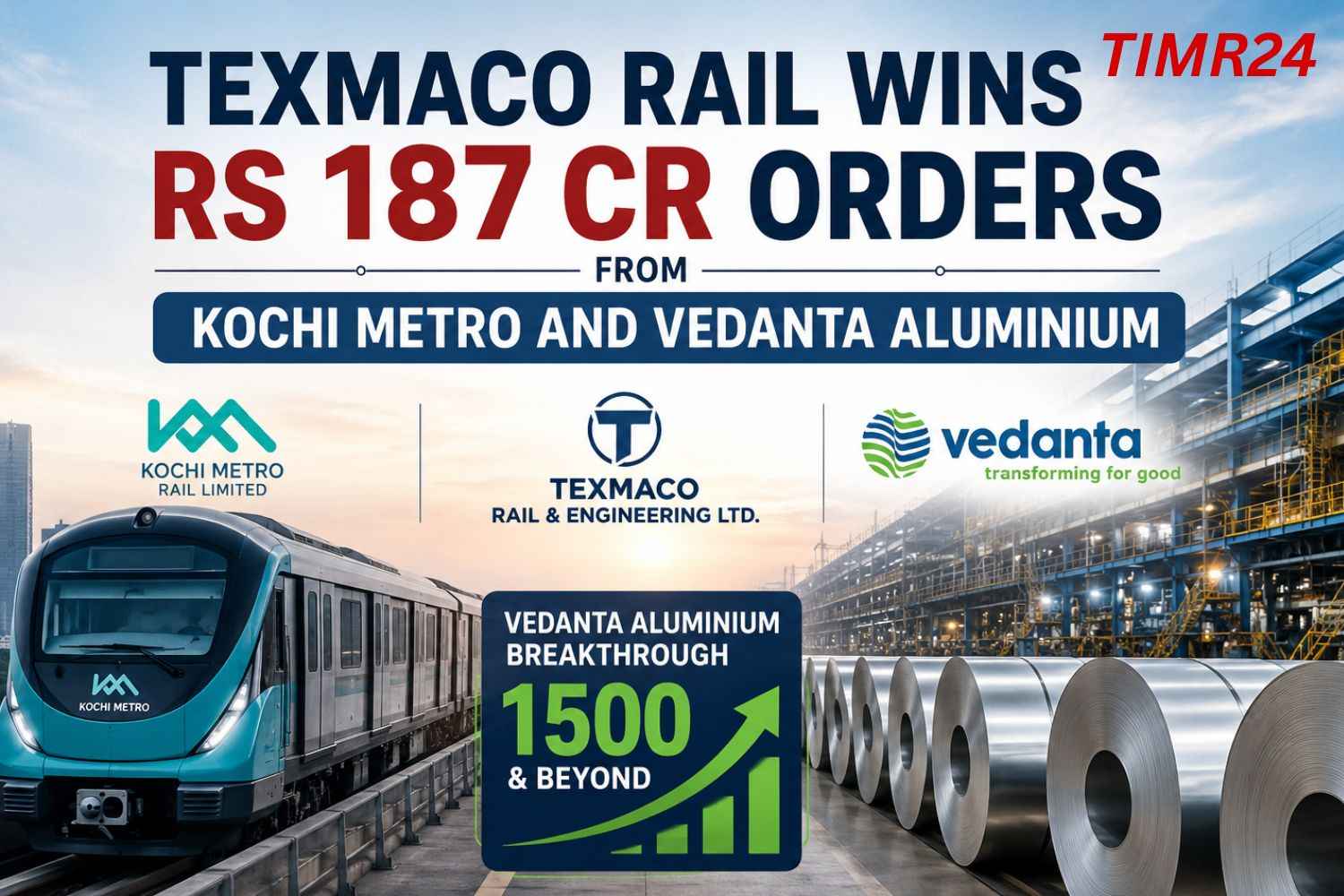
India’s Rail Vikas Nigam Limited (RVNL) and Texmaco Rail & Engineering Ltd. have signed a Joint Venture Agreement to develop India’s next-generation railway ecosystem. The joint venture will focus on rolling stock design, manufacturing, and maintenance of freight wagons, passenger coaches, locomotives, metro coaches, and trainsets. It will also undertake EPC projects, depot operations, and global tenders (Indian Railways) The partnership aims to deliver modern, sustainable, and globally competitive rail solutions for both domestic and international markets. RVNL will hold a 51% equity stake, while Texmaco will hold a 49% stake.
The Indian Railways has always been the backbone of the nation’s economy, enabling connectivity, growth, and development across regions. With the government’s vision to modernize the railway sector and align it with international standards, strategic collaborations have become increasingly significant. A major breakthrough in this journey came when Rail Vikas Nigam Limited (RVNL), a public sector enterprise under the Ministry of Railways, joined hands with Texmaco Rail & Engineering Limited, a leader in railway manufacturing and engineering solutions. This partnership represents a new era in India’s transportation system, often referred to as the next-gen rail revolution, where sustainability, technology, and modernization converge.
The Strategic Vision Behind the Partnership
The RVNL-Texmaco alliance is not just a business arrangement; it is a strategic collaboration with long-term implications for India’s rail infrastructure. RVNL, with its proven track record in project execution and infrastructure development, brings unmatched expertise in large-scale railway projects. Texmaco, on the other hand, is renowned for its role in manufacturing freight wagons, coaches, metro rail coaches, and various railway equipment. By joining forces, these organizations aim to build a holistic framework that integrates infrastructure, technology, and operations This partnership also aligns with the Indian government’s National Rail Plan 2030, which emphasizes complete electrification of railway lines.
Increased freight share, and significant improvements in passenger convenience. With RVNL handling the infrastructure execution and Texmaco focusing on rolling stock and equipment manufacturing, the collaboration is expected to fast-track several critical projects across India. India’s ambitious high-speed rail projects, including the Mumbai-Ahmedabad bullet train initiative, require specialized technologies, efficient project management, and precision manufacturing. The RVNL-Texmaco partnership is poised to contribute significantly to these developments. Texmaco’s capabilities in producing advanced rolling stock and RVNL’s experience in executing large-scale
Infrastructure projects can help overcome challenges related to cost, execution time, and safety Furthermore, with India looking to expand semi-high-speed corridors across different states, this collaboration could ensure that new trains meet international safety and efficiency standards. The move is crucial not just for improving passenger experience but also for strengthening India’s global standing in rail technology. One of the central themes of the RVNL-Texmaco collaboration is sustainability. Indian Railways has set a target of achieving net zero carbon emissions by 2030, and this partnership is expected to contribute significantly towards that goal.
Texmaco has been integrating green manufacturing practices in its facilities, focusing on energy efficiency, waste reduction, and eco-friendly designs. When combined with RVNL’s initiatives to expand electrified railway lines and integrate renewable energy, the outcome is a cleaner and greener transportation system The focus on sustainability not only reduces the environmental impact but also enhances long-term cost efficiency for Indian Railways. This aligns with the Paris Agreement goals and India’s broader commitments to climate change mitigation. By focusing on cleaner technologies, the partnership is expected to set benchmarks for future public-private collaborations in sustainable transport.
Economic Growth and Employment Opportunities
Beyond technology and sustainability, the RVNL-Texmaco partnership carries immense economic potential. As both companies expand their operations through this collaboration, significant employment opportunities will be created in manufacturing plants, project execution sites, and supporting industries. From highly skilled engineers to semi-skilled labor, thousands of new jobs are likely to emerge, directly contributing to India’s economic growth. This initiative also complements the ‘Make in India’ campaign by promoting indigenous manufacturing of railway components and reducing reliance on imports. By boosting local production, the partnership will enhance India’s self-reliance and global competitiveness in the railway sector.
India’s entry into next-generation rail technologies has global implications. By building expertise in high-speed trains, modern wagons, and digital signaling systems, the country positions itself as a potential exporter of railway technology and infrastructure solutions. The RVNL-Texmaco partnership can play a pivotal role in enabling India to cater to international markets, especially in developing countries that are looking to upgrade their railway systems. For India, this means an opportunity to enhance trade, develop international partnerships, and become a leader in rail innovation. With growing recognition of India’s role in infrastructure development globally, the RVNL-Texmaco collaboration could become a case study for future international projects.
While the partnership brings immense promise, it is not without challenges. Large-scale railway projects in India have often faced delays due to land acquisition issues, financing constraints, and bureaucratic hurdles. The success of the RVNL-Texmaco collaboration will depend on how efficiently these challenges are managed. Timely execution, seamless coordination between stakeholders, and adoption of global best practices will be essential for realizing the true potential of this alliance. At the same time, opportunities in digital rail solutions, AI-powered signaling, and smart stations present exciting prospects for innovation. If the partnership can integrate digital transformation into railway projects, it will ensure long-term sustainability and efficiency in operations.
The Future of India’s Next-Gen Rail Revolution
The collaboration between RVNL and Texmaco is more than just a business breakthrough it is a cornerstone in India’s railway modernization journey. As the country prepares for a future where trains are faster, safer, greener, and more efficient, such partnerships will define the way forward. With a blend of infrastructure execution, advanced manufacturing, and sustainable practices, the RVNL-Texmaco alliance sets the foundation for a rail network that meets the aspirations of New India. This partnership symbolizes progress not only in rail technology but also in economic growth, sustainability, and global competitiveness. As India continues to expand its railway network.
Both in terms of passenger and freight operations, collaborations like these will ensure that the country remains on track to achieve its long-term goals. The RVNL and Texmaco partnership is a historic moment in India’s journey toward a next-generation railway system. By combining expertise in infrastructure, manufacturing, and sustainability, the alliance is positioned to transform Indian Railways into a global leader in modern transportation. While challenges remain, the opportunities far outweigh them, making this collaboration a defining (RVNL) milestone for India’s future. Whether in terms of high-speed rail projects, green mobility, or employment generation, the partnership promises to leave a lasting impact on the nation’s growth trajectory.
Q1. What is the significance of RVNL and Texmaco’s partnership?
This partnership will accelerate modernization in India’s railways through advanced technology, high-speed trains, and sustainable infrastructure.
Q2. How will this alliance impact India’s National Rail Plan 2030?
It aligns directly with goals of increased electrification, freight efficiency, and carbon reduction in the rail sector.
Q3. Will this partnership create jobs?
Yes, the collaboration will generate thousands of jobs in manufacturing, engineering, and railway operations.
Q4. What role does Texmaco play in this partnership?
Texmaco specializes in manufacturing rolling stock, wagons, and modern railway equipment crucial for next-gen rail projects.
Q5. How does this partnership contribute to India’s Make in India initiative?
It boosts indigenous manufacturing and reduces reliance on imported rail technology.