


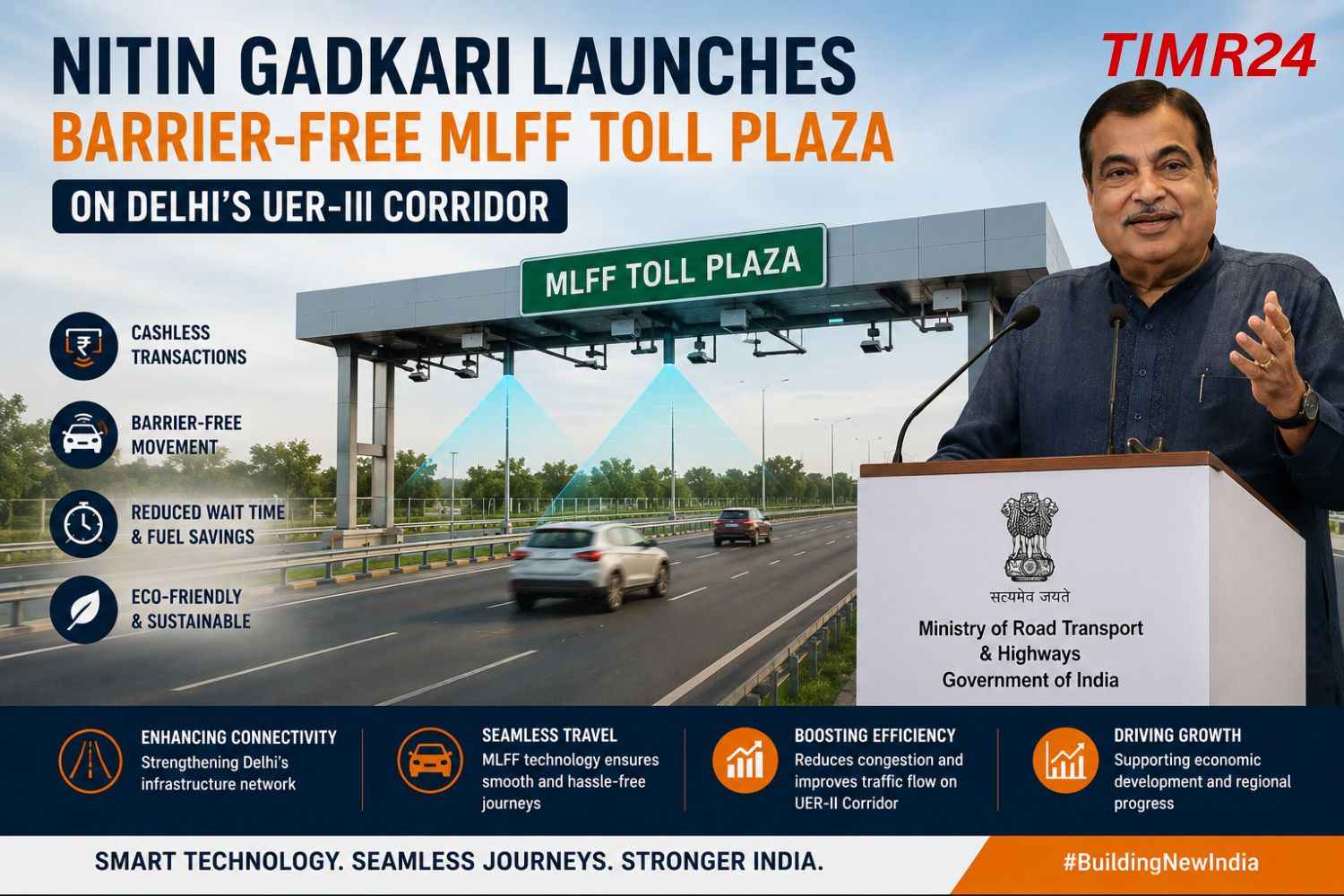




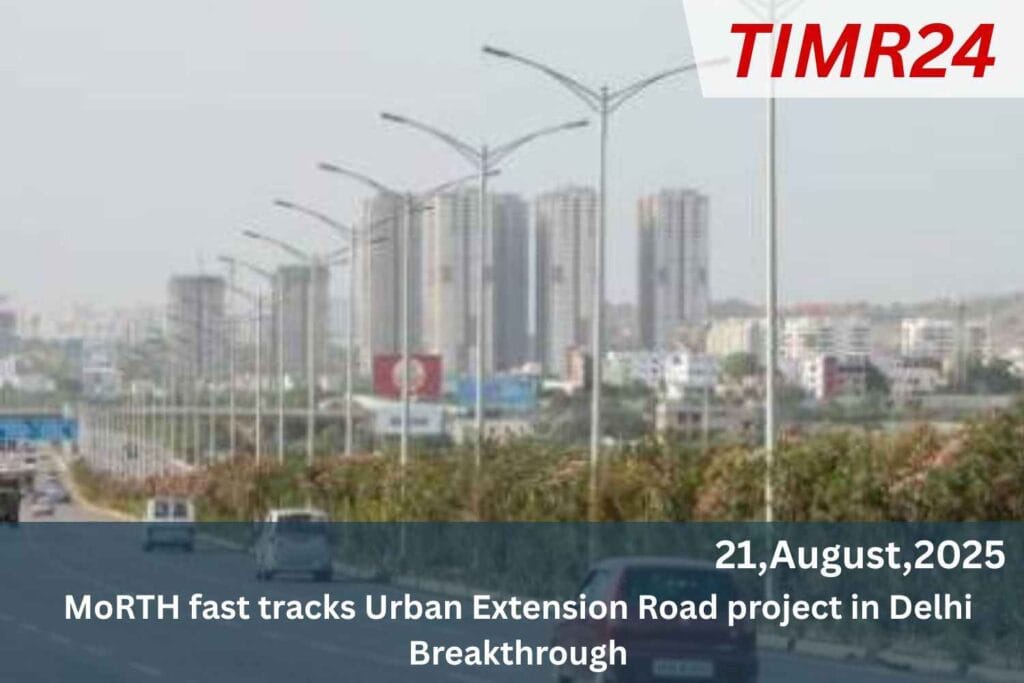
The Union Road Transport Ministry has expedited the construction of Urban Extension Road 2 in Delhi, aiming to shorten travel time from Kundli to Terminal 3 of Indira Gandhi International Airport to 20 minutes, reducing congestion for commuters. The Ministry of Road Transport and Highways (MoRTH) has recently announced a significant acceleration in the development of the Urban Extension Road (UER) project in Delhi, reflecting the government’s commitment to addressing the capital’s chronic traffic congestion and improving overall connectivity. The Urban Extension Road is strategically designed to create seamless links between
Delhi’s key arterial roads and the surrounding national highways, enabling smoother transit for commuters and freight traffic alike. By fast-tracking this project (National Highways Development Projects) MoRTH aims to not only reduce the travel burden on daily commuters but also enhance the city’s infrastructural capacity to accommodate rapid urban growth. The UER project is envisioned as a multi-lane corridor connecting various peripheral regions of Delhi, facilitating direct access to national highways without the need to pass through congested city roads. This development is crucial for areas on the city’s outskirts, which currently face severe traffic snarls during peak hours.
With a focus on modern road engineering and sustainable urban planning, the project includes flyovers, underpasses, and dedicated service lanes to ensure uninterrupted movement of vehicles. Furthermore, MoRTH has emphasized integrating smart traffic management systems along the UER to improve real-time monitoring and reduce bottlenecks. For readers interested in broader road infrastructure initiatives, you can refer to the for context on how UER complements nationwide efforts. The fast-tracking of the UER is expected to generate substantial economic benefits. By reducing travel time for commercial vehicles, logistics operators can achieve faster delivery.
Schedules, thereby enhancing the efficiency of supply chains that support the capital’s retail, industrial, and e-commerce sectors. Additionally, the project is projected to stimulate regional development by improving connectivity to industrial hubs, new business districts, and emerging residential areas. For companies planning warehousing or distribution operations, the UER could become a critical artery linking them directly to Delhi’s transport network. Internal links to related projects, such as the demonstrate how these infrastructure investments create a connected urban transport ecosystem.
Environmental and Urban Planning Considerations
While large-scale road projects often raise concerns regarding environmental impact, MoRTH has committed to implementing eco-friendly measures as part of the UER development. These measures include green buffers along the corridor, efficient stormwater drainage systems, and careful planning to minimize disruption to existing green zones. By integrating landscaping and noise mitigation measures, the project aims to harmonize urban mobility improvements with environmental sustainability. For those interested in urban planning trends, this aligns with broader initiatives such as that emphasize sustainable city expansion.
The UER project is designed to significantly ease the daily commute for thousands of Delhi residents. The addition of multi-lane roadways and bypasses will reduce congestion on existing city streets, allowing commuters to save valuable time. Moreover, dedicated service lanes for buses and emergency vehicles will improve safety and reliability of public transport. Local residents can anticipate improved access to essential services, shopping centres, and employment hubs across the city. This infrastructure improvement is also expected to reduce vehicular pollution by lowering idling times and enhancing traffic flow. Readers can explore to understand how such road projects complement metro and bus networks.
MoRTH has outlined an aggressive timeline for the completion of the UER project, deploying advanced construction techniques and modular project management methods to expedite progress. By collaborating with state agencies, contractors, and technology providers, the ministry is ensuring that the project remains on schedule without compromising quality standards. Periodic public updates and monitoring dashboards will provide transparency, enabling citizens to track the progress of different phases. Internal links to (MoRTH) can guide readers seeking detailed progress reports.
The fast-tracking of the Urban Extension Road project in Delhi represents a transformative step in the city’s ongoing efforts to modernize its transportation infrastructure. By addressing traffic congestion, supporting economic growth, and integrating sustainable urban planning practices, the UER project has the potential to redefine commuting in the capital. As Delhi continues to expand, projects like these are critical in ensuring that infrastructure keeps pace with urban growth, delivering tangible benefits to residents, businesses, and the environment.
Q1. What is the Urban Extension Road (UER) project in Delhi?
A major road project to decongest Delhi by improving regional connectivity.
Q2. Who is implementing the UER project?
The Ministry of Road Transport and Highways (MoRTH).
Q3. What benefits will the UER project bring to Delhi?
It will reduce traffic, cut travel time, and enhance logistics efficiency.
Q4. When is the UER project expected to be completed?
MoRTH is fast-tracking the work, with completion targeted soon.
Q5. How will commuters be impacted by the project?
They will enjoy smoother travel, reduced congestion, and better road safety.