




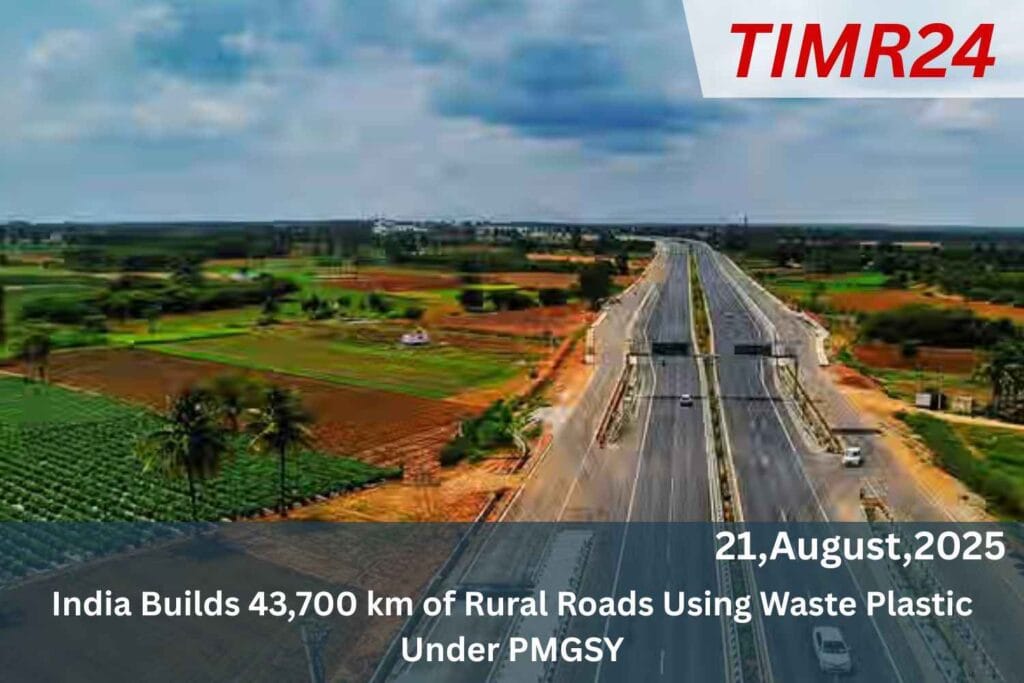
India has made significant progress in sustainable construction practices by using waste plastic in rural road construction under the Pradhan Mantri Gram Sadak Yojana (PMGSY). As of 31 July 2025, 56,875 km of road works have been sanctioned using waste plastic, with 43,700 km completed. The Ministry of Rural Development issued guidelines for green technology in roads, requiring states/UTs to use waste plastic in at least 70% of road length. Waste plastic roads reduce environmental hazards, improve pavement quality, and reduce maintenance needs.
India’s ambitious rural connectivity program, the Pradhan Mantri Gram Sadak Yojana (PMGSY), has once again achieved a remarkable milestone by adopting innovative technologies in road construction. As part of its commitment to sustainable infrastructure, the country has successfully (Rural Development) constructed more than 43,700 kilometres of rural roads using waste plastic, turning an environmental challenge into a powerful solution. This unique approach not only strengthens rural road networks but also addresses the growing problem of plastic waste management in a rapidly urbanizing society.
The use of waste plastic in road building under PMGSY is more than just a construction strategy; it represents a paradigm shift in India’s vision for sustainable development. Traditionally, rural roads were built using bitumen, which, though effective, had limitations in terms of durability and resilience. By integrating shredded waste plastic with bitumen, engineers have discovered that roads gain greater strength, become resistant to water damage, and last longer under heavy usage. This technology has been widely tested and recommended by the Indian Roads Congress and is actively promoted by the Ministry of Rural Development.
One of the most significant outcomes of using plastic in roads is its positive impact on rural communities. Durable all-weather connectivity ensures farmers can transport agricultural produce more efficiently, students can access schools without seasonal disruptions, and rural businesses can flourish with better market access. For instance, in states like Tamil Nadu, Maharashtra, and Himachal Pradesh, where this model has been extensively adopted, villages have reported reduced travel time and improved economic opportunities. By linking rural innovation with urban waste management, PMGSY effectively bridges two of India’s pressing challenges—rural isolation and plastic pollution.
From an environmental perspective, the use of plastic waste in road construction is revolutionary. India generates millions of tons of plastic waste annually, a large part of which ends up in landfills or water bodies. By channeling this waste into infrastructure, the government is preventing environmental degradation while reducing dependence on conventional raw materials. According to experts, every kilometer of road built with plastic waste can consume nearly one ton of otherwise non-recyclable plastic. This means the current achievement of 43,700 kilometers has diverted tens of thousands of tons of plastic from polluting ecosystems. Such practices align with India’s commitments to the United Nations Sustainable Development Goals (SDGs), particularly those focusing on sustainable cities, responsible consumption, and climate action.
Looking ahead, PMGSY is not just resting on its past achievements. Under its Phase-IV plan, the government aims to add another 62,500 kilometers of rural roads by 2029, with a strong emphasis on eco-friendly and climate-resilient technologies. This expansion will further boost rural connectivity while ensuring that sustainability remains at the heart of development. The inclusion of advanced techniques like cold mix technology, fly ash utilization, and geosynthetics alongside plastic roads demonstrates India’s holistic approach to green infrastructure.
Another important aspect of the PMGSY initiative is its contribution to rural employment and local participation. The program provides significant work opportunities for local contractors, engineers, and laborers, empowering rural communities with both better connectivity and livelihood. Simultaneously, it encourages state governments and local administrations to innovate further in sustainable construction. For instance, states like Kerala and Odisha are exploring community-driven models to collect, segregate, and supply plastic waste for road projects, thereby generating an additional income stream for rural households.
Beyond rural benefits, India’s adoption of plastic roads has also drawn global attention. International organizations like the World Bank and Asian Development Bank have recognized PMGSY’s role in inclusive development and sustainable engineering. Several developing nations in Africa and Southeast Asia are now studying India’s model to replicate it in their own contexts. By integrating innovation with inclusivity, PMGSY not only addresses domestic challenges but also sets an example for the world in sustainable rural infrastructure.
The success of PMGSY’s plastic road initiative also highlights the importance of research and development. Institutions like the Central Road Research Institute (CRRI) and various Indian Institutes of Technology (IITs) have played an instrumental role in testing, validating, and standardizing (Central Road) the technology. These collaborations ensure that the methods used are safe, durable, and scalable across different geographical conditions, from the plains of Uttar Pradesh to the hilly terrains of the Northeast.
In conclusion, the construction of 43,700 kilometres of rural roads using waste plastic under PMGSY is a landmark achievement that merges technology, sustainability, and inclusivity. It strengthens India’s rural backbone, creates eco-friendly solutions to plastic waste, and positions the country as a leader in innovative infrastructure development. With the upcoming expansion under Phase-IV, this initiative promises to deepen its impact, paving the way for resilient rural economies and greener growth. The journey of transforming plastic waste into pathways of progress exemplifies how visionary policymaking can turn challenges into opportunities for a better future.
Q1. What is PMGSY?
PMGSY (Pradhan Mantri Gram Sadak Yojana) is a rural roads program launched to improve village connectivity.
Q2. How much road has been built with waste plastic?
India has constructed 43,700 km of rural roads using waste plastic under PMGSY.
Q3. Why is waste plastic used in road construction?
It strengthens roads, reduces construction costs, and promotes eco-friendly waste management.
Q4. Which areas benefit from these plastic roads?
Rural and remote villages across India gain durable, all-weather road connectivity.
Q5. What is the future plan under PMGSY?
India aims to expand eco-friendly road construction with sustainable technologies under future PMGSY phases.