







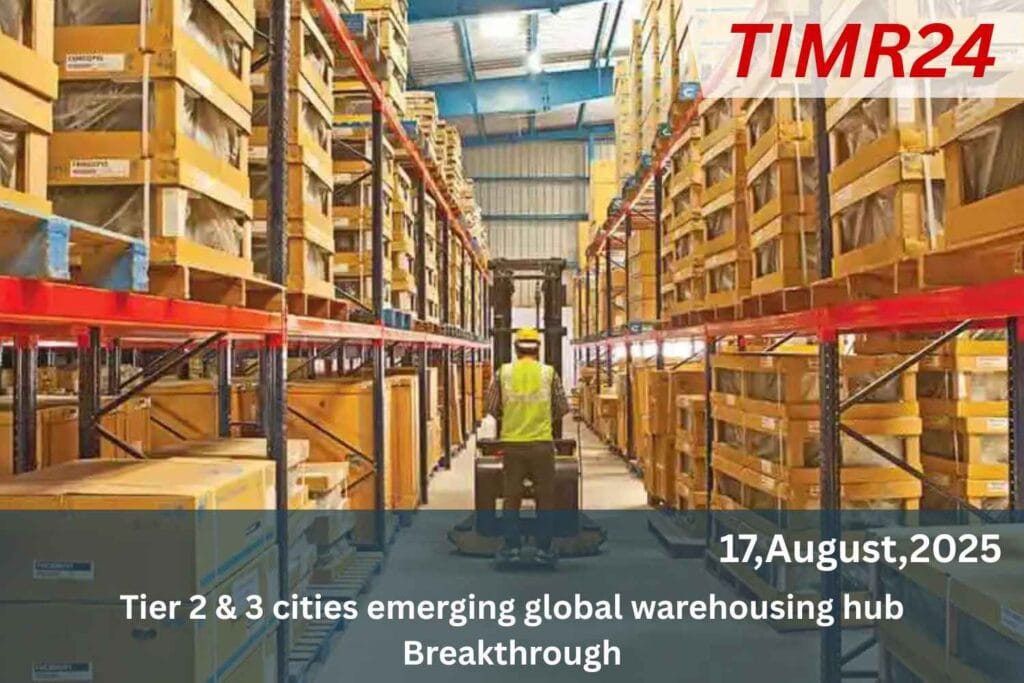
India’s focus on becoming a global Manufacturing hub has led to warehousing clusters expanding beyond top cities to Tier 2 and 3 cities, with a significant increase in demand for small and multi-location warehouses, strategically aligned with upcoming industrial and freight corridors. India’s logistics and warehousing sector is undergoing a significant transformation, with Tier 2 and Tier 3 cities emerging as pivotal players in the nation’s supply chain landscape. Once overshadowed by metropolitan hubs, these smaller cities are now at the forefront of a logistics revolution, driven by a confluence of factors that are reshaping India’s economic and Infrastructural Dynamics.
A primary catalyst for this shift is the rapid expansion of e-commerce. As online shopping gains momentum, businesses are increasingly establishing warehouses closer to emerging consumer markets in Tier 2 and Tier 3 cities. This strategic move not only reduces delivery times but also optimizes operational costs, making logistics more efficient and responsive to consumer demands (Logistics) Cities like Indore, Lucknow, Jaipur, and Coimbatore have become prominent centres for warehousing activities, catering to the growing online consumer base in these regions Complementing this trend is the significant improvement in infrastructure. Government initiatives such as the Urban Infrastructure Development Fund (UIDF), which allocates ₹10,000 crore annually to enhance infrastructure in Tier 2
Tier 3 cities, have played a crucial role in this transformation. These investments have led to the development of better road networks, improved connectivity to highways and ports, and the establishment of dedicated logistics parks. For instance, the development of Multi-Modal Logistics Parks (MMLPs) in cities like Coimbatore and Mapped near Chennai is enhancing the efficiency of goods movement and storage The economic advantages of operating in these cities are also compelling. Warehousing operations in Tier 2 and Tier 3 cities can reduce facility costs by 25-40% compared to metropolitan locations, significantly improving overall logistics economics. Additionally,
the availability of affordable land and labor further contributes to cost savings for businesses This cost-effectiveness is particularly attractive to small and medium-sized enterprises (SMEs) looking to optimize their supply chain operations Technological advancements are another driving force behind the rise of these cities as warehousing hubs. The adoption of automation and artificial intelligence (AI) (Manufacturing) in supply chain management has improved efficiency and reduced operational costs. AI-driven analytics are optimizing inventory management, while automated sorting and packaging systems are streamlining warehouse processes. These technological innovations are enabling businesses to manage their logistics operations more effectively, even in smaller cities.
The impact of this transformation extends beyond logistics companies. The expansion of warehousing facilities in Tier 2 and Tier 3 cities is generating employment opportunities and stimulating regional development. The establishment of logistics hubs is attracting investments in sectors such as retail, manufacturing, and e-commerce, contributing to the economic growth of these regions. Moreover, the decentralized nature of these logistics networks enhances supply chain resilience, making businesses better prepared to handle disruptions like pandemics, natural disasters, or geopolitical issues the emergence of Tier 2 and Tier 3 cities as global warehousing hubs marks a pivotal shift in India’s logistics landscape. This transformation is driven by the confluence of e-commerce growth,
Infrastructure development, economic advantages, technological advancements, and regional development initiatives. As these cities continue to evolve into logistics powerhouses, they are not only reshaping India’s supply chain dynamics but also contributing to the broader economic development of the nation.
Q1. Why are Tier 2 & 3 cities emerging as warehousing hubs?
Lower land costs, strategic locations, and improved infrastructure attract warehousing investments.
Q2. Which cities are leading in this trend?
Cities like Jaipur, Lucknow, Indore, Coimbatore, and Vijayawada are seeing rapid growth in warehousing.
Q3. How does this benefit businesses?
Faster delivery, reduced logistics costs, and easier access to regional markets boost operational efficiency.
Q4. What sectors are driving demand?
E-commerce, retail, FMCG, and manufacturing sectors are fuelling the warehousing boom in these cities.
Q5. What infrastructure improvements support this growth?
Better roads, connectivity to highways/ports, and modern logistics parks make Tier 2 & 3 cities ideal for warehousing.