
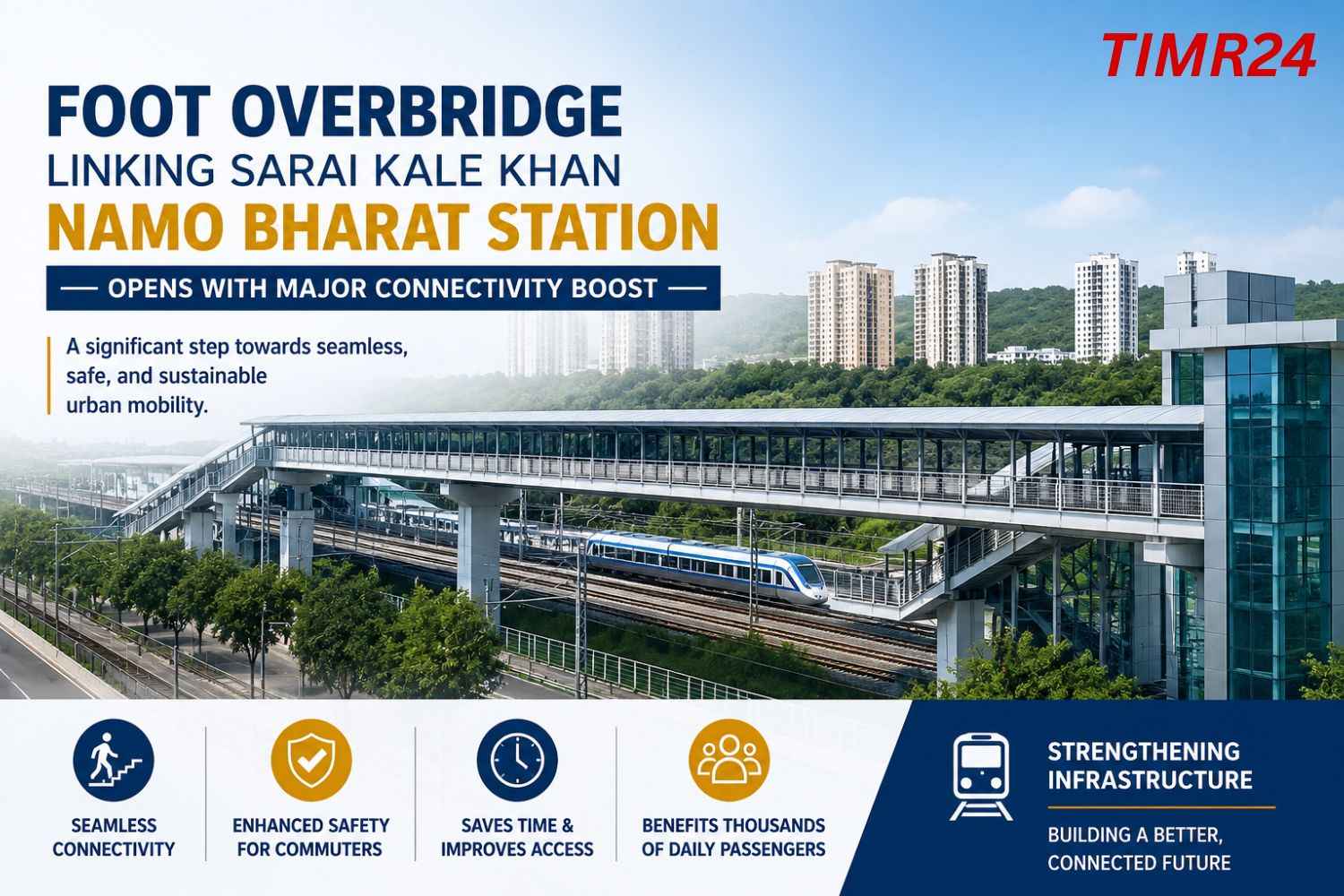














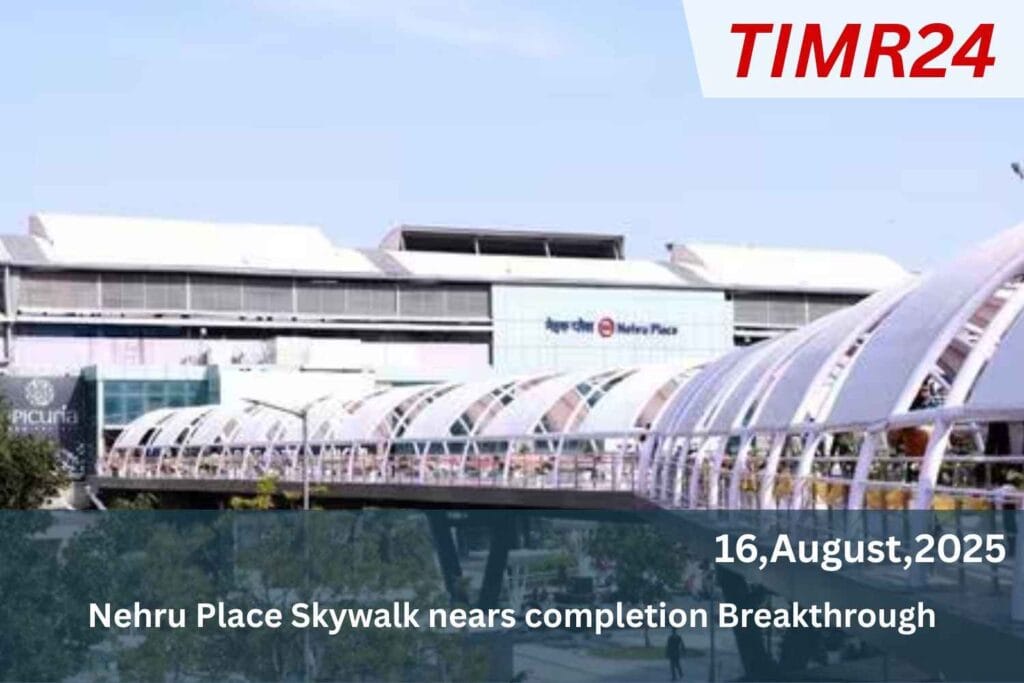
The Nehru Place Skywalk project, a five-year plan to connect the Metro station concourse and central plaza, is nearing completion. The Delhi Development Authority expects the project to be completed by March 2024, eliminating the need for pedestrians to descend. The much-anticipated Nehru Place Skywalk, a transformative urban artery bridging the Nehru Place Metro Station and the bustling Nehru Place District Centre, stands as a testament to Delhi’s commitment to reimagining pedestrian infrastructure within its iconic IT hub. Conceived as part of a sweeping redevelopment drive led by the Delhi Development Authority (DDA), this six-metre-wide elevated thoroughfare was completed over four years at an investment of approximately ₹75 crore
Far beyond being a mere passageway, the skywalk ushers commuters past enhanced public amenities—from smart light poles equipped with Wi-Fi, speakers, and CCTV to a revamped plaza featuring an amphitheatre and an LED screen wall creating a public realm that blurs the boundary between transit and gathering space At its core lies a sophisticated gesture toward inclusivity and urban usability: a seamless connection that allows people to exit the metro and glide directly to the market without descending to the chaos of Aastha Kunj Road a previously fraught crossing now rendered obsolete Accessibility has not been an afterthought; lifts, escalators, and a ramp ensure the structure is navigable for differently-abled individuals,
While newly installed footpaths, toilet blocks, upgraded staircases, and overhauled drainage reinforce its holistic design ethos Within the plaza area, the amphitheatre and LED screen offer an engaging environment to pause, converse, and absorb public life—nudging the skywalk toward being more than infrastructure, but instead a living, sociable landscape The backdrop of this project harks to a long-standing call for modernization: Nehru Place, conceived in the early 1970s as one of DDA’s eleven district centres, emerged as a dominant electronics and computer market By late 2019, structural wear, encroachments, outdated facades, and hazardous crossings prompted a comprehensive revamp plan, allocating over ₹182 crore for skywalks,
Multi-level parking, kiosks, amphitheatres, and vendor zones most of it drawn from the Urban Development Fund Thus, the skywalk is the flagship element of this broader urban rejuvenation Civic leadership ushered the project forward: Lieutenant Governor V K Saxena inaugurated (Metro Station) the skywalk in February 2024, lauding it as aesthetically pleasing and urging public participation in maintaining hygiene and infrastructure Presence of DDA officials and local MPs at the opening underlined collaboration between governance, civic bodies, and the community. The project not only elevates functionality but enhances the visual and social fabric of Nehru Place, signaling a future-oriented vision for public spaces in the capital.
This initiative reflects a shifting paradigm in skywalk design from bare overpasses toward dynamic urban connectors Thought leaders increasingly advocate for elevated walkways that function as social spaces integrating greenery, pause points, and aesthetic value, enabling them to become embraced rather than bypassed The Nehru Place Skywalk, with its sensory enhancements and inclusive features, embodies that philosophy in practice As this elevated pedestrian spine nears full operational status, the question becomes one of stewardship. Similar efforts in Delhi—such as the ITO Skywalk have previously faltered due to neglect: once celebrated structures fell into disrepair, with malfunctioning lifts, poor lighting, and maintenance lapses highlighting the fragility of urban infrastructure without sustained upkeep
The hope now rests with collective responsibility residents, vendors, market associations, and civic bodies to nurture this tangible investment in better off-ramps, safer crossings, and vibrant urbanity. In essence, the Nehru Place Skywalk signifies a new chapter in Delhi’s urban renewal embracing design, accessibility, and social vibrancy while bridging disparate urban functions. It is not merely a structure of steel and concrete, but a visible strand of the city’s evolving narrative, offering a model for how infrastructure can lift rather than merely carry, how pathways can connect people as much as they connect places, and how every civic project when cared for can endure as a celebrated chapter in the city’s landscape. (Nehru Place).
Q1. What is the Nehru Place Skywalk?
A pedestrian bridge connecting Nehru Place metro station with nearby areas for safe, quick movement.
Q2. When will the Nehru Place Skywalk be completed?
It is expected to be completed soon, with final touches underway.
Q3. Why is the Nehru Place Skywalk important?
It enhances pedestrian safety and eases congestion in the busy Nehru Place area.
Q4. Who is building the Nehru Place Skywalk?
The project is developed by the Delhi government in coordination with DMRC.
Q5. Will the Skywalk connect to the metro station?
Yes, it directly links to the Nehru Place Metro Station for seamless access.