




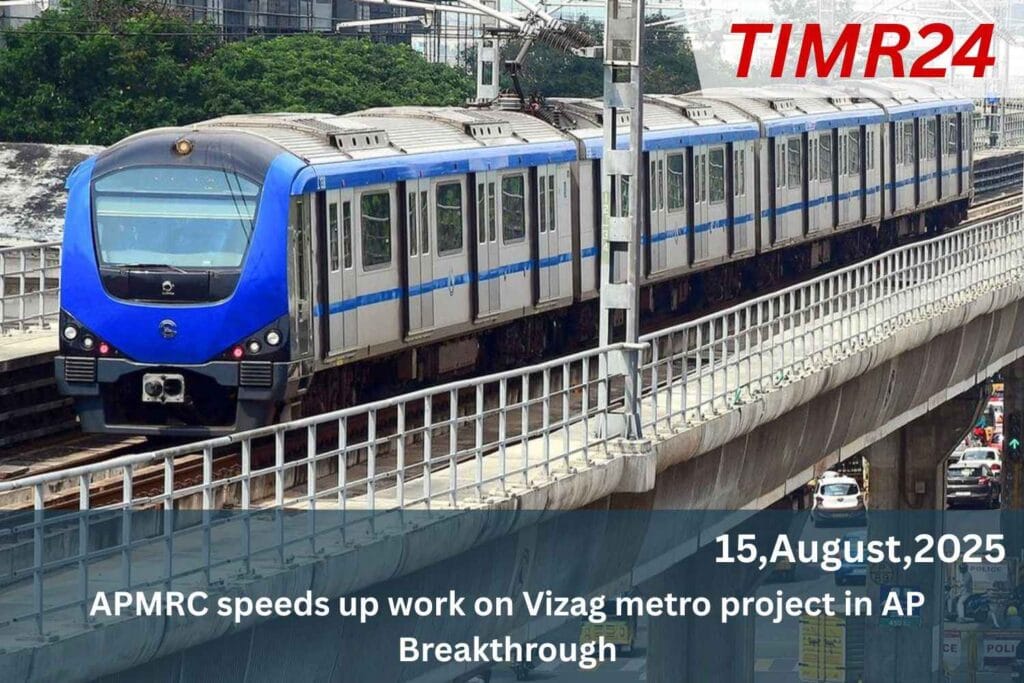
The APMRC state government has expedited construction of the Vizag Metro Project in Andhra Pradesh, a joint effort between the Central and State governments, IL&FS Engineering and Construction Limited. The project will consist of three corridors, with the Central Government contributing 20% via Viability Gap Funding, the State Government another 20%, and the remaining investment secured from private investors through a PPP model. The Andhra Pradesh Metro Rail Corporation (APMRC) has intensified its efforts to fast-track the much-awaited Visakhapatnam Metro Rail Project, a major urban transport initiative aimed at transforming mobility in the port city. With rising traffic congestion, increasing urbanization, and the need for sustainable mobility solutions, the project is now moving forward at an accelerated pace.
Project Overview and Strategic Importance
This development marks a significant step in the state’s commitment to modernizing infrastructure and boosting economic growth in the region. The Vizag Metro Project is designed as a world-class rapid transit system to cater to the city’s growing population and its expanding industrial footprint. As Andhra Pradesh’s largest city, Visakhapatnam has witnessed a consistent rise in vehicular traffic, leading to longer commute times and environmental concerns. The metro rail aims to provide a cleaner, faster, and more efficient transport option. The project’s strategic importance lies not only in easing daily commutes but also in supporting Visakhapatnam’s emergence as an IT and industrial hub. With connectivity between residential areas.
IT parks, industrial zones, and the port, the metro will serve as a critical enabler for future investments in the city. APMRC has recently revised its implementation strategy, focusing on faster approvals, parallel construction of priority corridors, and enhanced coordination between contractors and government agencies. Land acquisition processes, which earlier faced procedural delays, have been (Housing Urban) streamlined to prevent disruptions in construction schedules. modern construction techniques, such as precast segment launching and advanced project management tools, are being deployed to save time and ensure quality standards. These measures are expected to help complete key stretches well before the originally planned deadlines. The project envisions multiple corridors covering high-density.
Traffic routes in the city. Initial phases are expected to prioritize routes connecting Madhurawada Gautama, NAD Junction, and the city’s central business districts. These stretches have been identified based on passenger demand studies and urban growth patterns. By linking major residential zones with commercial hubs and the Visakhapatnam International Airport, the metro will significantly improve accessibility for both daily commuters and tourists. Integration with bus and suburban rail services will create a multi-modal transport network, reducing reliance on private vehicles. Infrastructure experts believe that the accelerated execution of the Vizag Metro will have a multiplier effect on the local economy.
Transit-oriented development (TOD) around metro stations is expected to create new commercial hubs, attract real estate investments, and generate employment opportunities. The metro’s development aligns with the Andhra Pradesh government’s vision of making Visakhapatnam the executive capital, thereby positioning the city as a model for sustainable urban growth. Better connectivity will also support tourism, given the city’s proximity to beaches, heritage sites, and industrial attractions.
Sustainability and Green Mobility Goals
One of the standout features of the Vizag Metro is its alignment with global sustainability goals. The project will use energy-efficient rolling stock, regenerative braking systems, and solar-powered station infrastructure. By shifting a substantial portion of commuters from road to rail, the metro is projected to reduce carbon emissions significantly. In line with India’s National Electric Mobility Mission, the metro (Metro Project) will serve as a catalyst for promoting electric feeder buses and non-motorized transport options like cycling paths around stations. Residents of Visakhapatnam have welcomed the acceleration of the project, with many expressing optimism about reduced travel times and improved urban living standards. Business communities see it as a key factor in attracting
skilled talent and expanding operations. Educational institutions, too, expect better access for students and staff from distant parts of the city. Public awareness campaigns by APMRC, including digital outreach and stakeholder consultations, have helped build trust and generate enthusiasm for the project’s timely completion. With construction now progressing on multiple fronts, the Vizag Metro is poised to become a flagship example of rapid urban transport development in India. The fast-tracking initiative by APMRC is expected to not only transform Visakhapatnam’s transport landscape but also set a precedent for other Indian cities embarking on similar projects.
Q1. What is the Vizag Metro project?
It’s a rapid transit system planned to improve public transportation in Visakhapatnam, Andhra Pradesh.
Q2. Who is executing the project?
The Andhra Pradesh Metro Rail Corporation (APMRC) is leading the development.
Q3. Why is the project being fast-tracked?
To meet urban mobility demands, reduce traffic congestion, and boost economic growth.
Q4. When will the project be completed?
Timelines are being revised with an aim to finish key phases sooner than planned.
Q5. How will it benefit the city?
It will offer faster, cleaner, and more efficient transportation for commuters.