





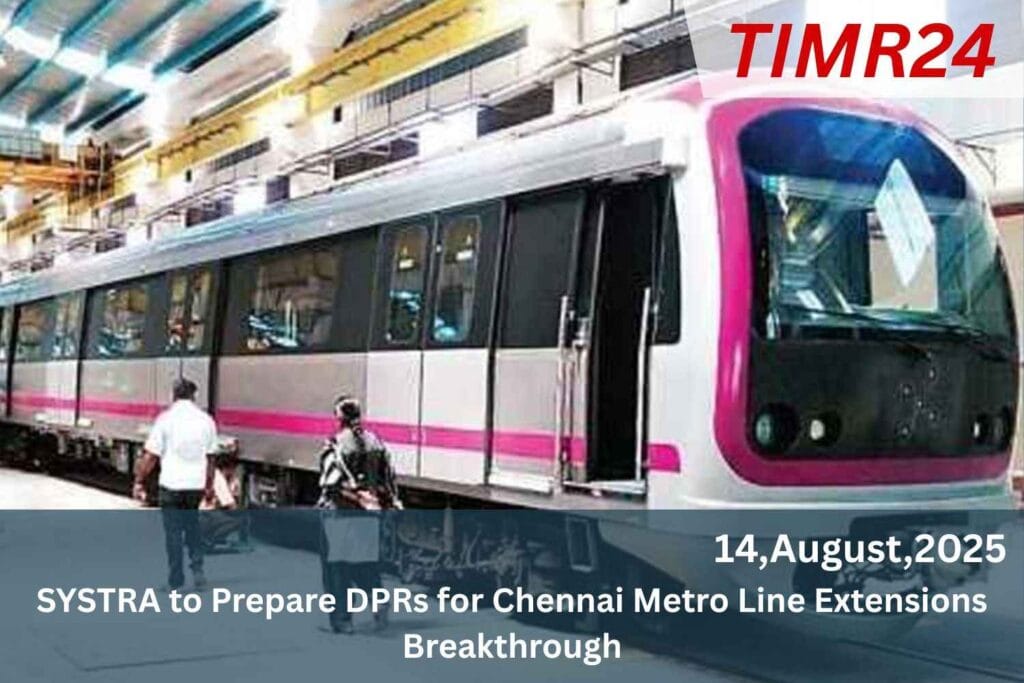
Sastra MVA Consulting has secured contracts to prepare Detailed Project Reports (DPRs) for two major metro line extensions under the Chennai Metro Rail project. The first project, a 7 km extension of Corridor 4, is valued at ₹38.2 lakh. The second project, a 21 km corridor connecting southern suburbs with Guindy Metro Station, is valued at ₹96.2 lakh. The Chennai Metro network, already a backbone for the city’s urban transport, is set for a major leap forward with the appointment of SYSTRA as the consultant for preparing Detailed Project Reports (DPRs) for multiple line extensions. This decision marks a crucial phase in expanding
the metro’s reach, improving connectivity, and ensuring that future infrastructure meets the growing demand of the region’s commuters A Detailed Project Report serves as the blueprint for metro expansion projects, covering everything from technical designs to cost estimates, environmental studies, and operational plans. In Chennai’s case, SYSTRA will focus on identifying feasible routes, designing station layouts, estimating passenger demand, and integrating the extended lines with the existing metro network. SYSTRA’s selection reflects its strong track record in delivering high-quality metro and rail consultancy projects globally. The company has previously worked on metro systems (SYSTRA Group’s)
Anticipated Benefits of the Chennai Metro Extensions
The proposed extensions are expected to deliver a range of benefits:
- Improved Last-Mile Connectivity – By extending lines into new neighborhoods, the metro will serve more commuters directly, reducing dependence on feeder buses and personal vehicles.
- Decongestion of Roads – With more people opting for the metro, road traffic—especially during peak hours—will see significant relief.
- Economic Growth Catalyst – Areas connected by metro lines often experience increased real estate development, business activity, and investment opportunities.
Integration with Existing and Future Phases
Including Delhi, Pune, and Bangalore, and has earned a reputation for blending global best practices with local infrastructure needs. Their role will go beyond technical detailing SYSTRA will also assess socio-economic benefits, evaluate the environmental impact, and ensure compliance with Indian urban transport regulations The Chennai Metro is already in various stages of Phase-2 construction (Titagarh Rail Metro) which aims to add over 100 km of new lines to the network. The extensions planned under the SYSTRA DPR will seamlessly integrate with these under-construction corridors, ensuring commuters can travel across the city without multiple mode changes.
Moreover, these plans will be future-proofed, with provisions for further expansion, technological upgrades, and better intermodal connectivity with suburban rail, buses, and even future regional rail links. While the DPR will provide detailed cost estimates, the funding is likely to come from a mix of state government allocations, central government support, and external lending agencies such as JICA The DPR will also propose a phased execution plan to minimize disruption to existing metro services and ensure that critical stretches are prioritized for early completion.
SYSTRA will utilize modern engineering tools such as GIS mapping, 3D modelling, and digital simulations to plan alignments, visualize station designs, and forecast passenger flows. This ensures the project’s design phase is not only accurate but also adaptable to potential challenges during execution. Additionally, sustainability will be a core element, with emphasis on energy-efficient stations, renewable power integration, and rainwater harvesting systems. Chennai Metro Rail Limited (CMRL) is expected to involve the public in the process by seeking feedback on proposed routes and station locations. This participatory approach ensures the project meets the real needs of communities while minimizing displacement and environmental disruption.
Timeline and Expected Milestones
The DPR preparation process generally takes 6 to 12 months, after which approvals from the state and central authorities will be sought. Once sanctioned, the tendering and construction phases will follow. If everything proceeds as planned, construction could begin within two years, with the first operational segments opening by the late 2020s. The expansion of the Chennai Metro is more than just a transport project—it’s a city-shaping initiative. By extending metro lines into under-served regions, CMRL and SYSTRA are setting the stage for an environmentally friendly, economically vibrant, and socially inclusive urban future.
Q1. What is SYSTRA’s role in the Chennai Metro project?
SYSTRA will prepare Detailed Project Reports (DPRs) for the proposed Chennai Metro line extensions.
Q2. Which metro lines will be extended under this plan?
The extensions cover select corridors of the existing and upcoming Chennai Metro network.
Q3. Why are these DPRs important?
They guide project feasibility, cost estimation, alignment, and construction planning.
Q4. How will this benefit Chennai commuters?
The extensions will improve last-mile connectivity, reduce travel time, and ease traffic congestion.
Q5. When will the DPRs be completed?
Exact timelines will depend on survey completion, approvals, and stakeholder consultations.