















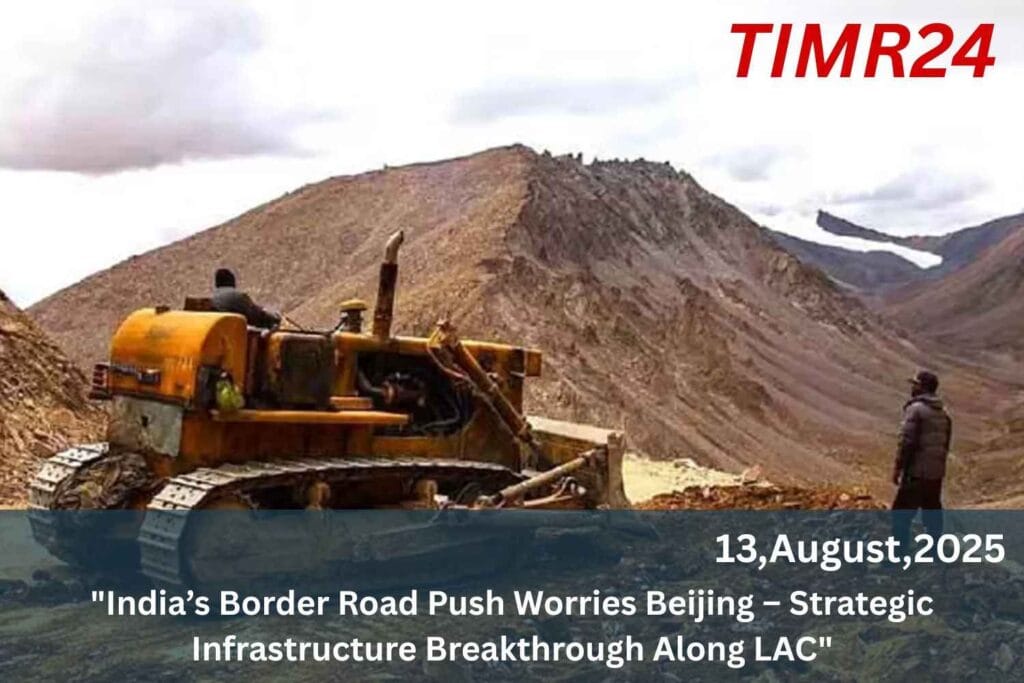
India’s strategic road upgrades in Ladakh, including the Darbuka-Shayok-Daulat Beg Oldie (DSDBO) Road, are causing concerns in Beijing, as it narrows China’s traditional infrastructure advantage along the Himalayan frontier. The road, which connects India to the Galwan Valley, is being strengthened to carry tanks and specialized trucks for long-range missiles. India is also nearing the completion of a 130-kilometer alternative route to avoid detection by Chinese patrols. The Line of Actual Control (LAC) between India and China has witnessed a deadly 2020 clash, with India rejecting China’s claim. Chinese experts warn of the strategic implications of India’s upgraded logistics and military capabilities, urging China to modernize at its own pace. (India’s infrastructure)
India’s accelerated push to develop strategic border roads along the Line of Actual Control (LAC) is reshaping the defence and connectivity landscape in the Himalayas. These projects aim to improve troop mobility, strengthen logistics, and enhance surveillance capabilities. While India sees these roads as essential for national security and regional development, Beijing has expressed concerns, interpreting the move as a challenge to its influence. The LAC, stretching over 3,488 km, passes through some of the world’s most challenging terrains. In the past, poor infrastructure slowed troop movement and limited rapid deployment capabilities. Following the 2020 Galwan Valley clash, India decided to speed up road, bridge, and tunnel construction in sensitive areas.
Strategically placed roads enable the Indian Army to transport troops, artillery, and supplies to forward posts quickly. This infrastructure strengthens India’s deterrence and reduces vulnerability in high-altitude conflict scenarios. For example, projects in Ladakh like the DS-DBO road now allow year-round access to forward bases near the Daulat Beg Lodi airstrip.
China’s Reaction
China has voiced concern over India’s infrastructure growth along the border, claiming it disrupts “mutual trust” and escalates tensions. Beijing fears that faster troop mobility could undermine its tactical advantages. However, India maintains that these are defensive and development-oriented measures. Beyond defence, these roads will transform the lives of residents in remote Himalayan regions. Improved connectivity means easier access to healthcare, education, and markets. Tourism is expected to increase in states like Arunachal Pradesh and Ladakh, providing alternative income sources for locals.
The LAC, stretching over 3,488 km, passes through some of the world’s most challenging terrains. In the past, poor infrastructure slowed troop movement and limited rapid deployment capabilities. Following the 2020 Galwan Valley clash, India decided to speed up road, bridge, and tunnel construction in sensitive areas. (India-China BBC) Strategically placed roads enable the Indian Army to transport troops, artillery, and supplies to forward posts quickly. This infrastructure strengthens India’s deterrence and reduces vulnerability in high-altitude conflict scenarios. For example, projects in Ladakh like the DS-DBO now allow year-round access to forward bases near the Daulat Beg Lodi airstrip.
Major Ongoing Projects
Several flagship projects are underway:
- Sela Tunnel (Arunachal Pradesh) – ensures all-weather connectivity to Tawang.
- Zojila Tunnel (J&K) – reduces travel time between Srinagar and Leh.
- DS-DBO Road (Ladakh) – critical for high-altitude military deployment.
These projects are overseen by the Border Roads Organisation (BRO), which has ramped up construction speeds using advanced technology. Building in extreme weather, fragile ecosystems, and high-altitude zones presents significant engineering and logistical challenges. Landslides, snow, and limited working seasons make these projects both costly and complex. India plans to complete dozens of high-priority, tunnels, and bridges over the next few years. With geopolitical tensions unlikely to ease soon, the push for infrastructure along the LAC will remain a top strategic priority. The developments promise both security and socio-economic transformation for border communities.
Q1. Why is India building more border along the LAC?
To improve troop mobility, logistics, and border security in sensitive areas.
Q2. Why is China concerned about India’s road projects?
They enhance India’s strategic position, challenging China’s influence along the LAC.
Q3. Which regions will benefit most from these roads?
Ladakh, Arunachal Pradesh, Sikkim, and other high-altitude border areas.
Q4. How will these roads impact local communities?
Better connectivity, economic growth, and access to essential services.
Q5. Are these roads part of a bigger defence plan?
Yes, they’re part of India’s comprehensive border infrastructure strategy.