














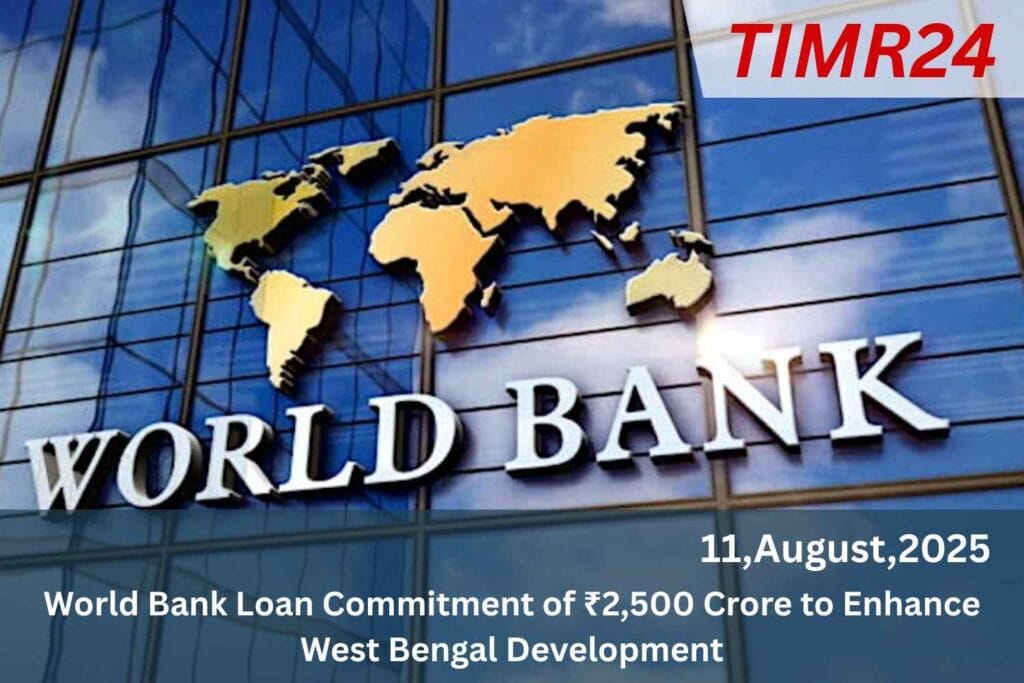
World govt West Bengal government secures Rs 2,500 crore from the World Bank for infrastructure development, including road networks and water transport systems. The loan will also fund logistic sector training and the establishment of four economic corridors covering 930 km, with North Bengal’s longest being 630 km. The West Bengal government has secured a significant ₹2,500-crore loan from the World Bank to strengthen and expand its infrastructure network. This financial support is aimed at accelerating development in sectors such as urban connectivity, transportation, water supply, and climate-resilient infrastructure. The initiative aligns with the state’s long-term economic growth plan and reflects a commitment to sustainable development. (Infrastructure Development)
Loan Agreement Details
The agreement was signed between the Government of West Bengal, the Government of India, and the World Bank. The loan has a flexible repayment period, with a focus on projects that can deliver both short-term job creation and long-term economic benefits.
Purpose of the Funding
The ₹2,500-crore funding will primarily target:
- Upgrading urban road networks for better mobility.
- Expanding water supply systems in rural and urban areas.
- Developing climate-resilient infrastructure to handle flooding and extreme weather events.
- Strengthening digital infrastructure for improved governance and public service delivery.
Urban Connectivity and Transport
One of the top priorities is improving urban transport systems in Kolkata and other major cities. This includes modernizing public transportation, reducing congestion, and integrating smart traffic management technologies. These upgrades are expected to improve daily commuting and reduce pollution levels.
Similar measures have been seen in (Urban Transport) A significant portion of the funding will be allocated to water supply and sanitation projects, particularly in underserved rural areas. This will help ensure clean drinking water access, reduce the spread of waterborne diseases, and improve living standards.
Given West Bengal’s vulnerability to cyclones and floods, climate resilience is a major focus. The funding will support the construction of flood-resistant roads, improved drainage systems, and cyclone shelters. The integration of green infrastructure such as urban parks and tree-lined streets is also on the agenda to improve environmental sustainability. Digital transformation is another component of the loan utilization plan. By enhancing broadband connectivity, implementing e-governance solutions, and upgrading data management systems, the government aims to improve transparency and efficiency in service delivery.
Economic Impact and Job Creation
The ₹2,500-crore loan is not just about infrastructure it’s also about job creation. Construction projects, IT upgrades, and service expansion will generate thousands of direct and indirect employment opportunities. Additionally, improved infrastructure will attract private investments, boosting the state’s GDP in the long run.
Past investments shown similar economic multiplier effects. The World Bank’s involvement brings not only financial resources but also technical expertise in project planning, risk assessment, and sustainability measures. This partnership ensures that the projects meet international quality standards and deliver measurable outcomes.
For more on global financing support.
Challenges and Implementation Roadmap
While the funding is substantial, successful implementation will require efficient project management, timely completion, and strict monitoring to avoid cost overruns. The West Bengal government plans to set up dedicated monitoring committees and utilize digital tracking tools for transparency.
Similar monitoring models. The ₹2,500-crore World Bank loan marks a milestone in West Bengal’s infrastructure development journey. By focusing on urban connectivity, water supply, climate resilience, and digital transformation, the state is positioning itself for sustainable economic growth. If implemented effectively, these projects will not only improve living standards but also make West Bengal a model for inclusive development.
Q1. What is the purpose of the ₹2,500-crore World Bank loan to West Bengal?
The loan will fund urban connectivity, water supply, climate-resilient projects, and digital infrastructure upgrades.
Q2. Which sectors will benefit most from this funding?
Transport, water and sanitation, climate resilience, and governance-related digital services will see major improvements.
Q3. How will the loan impact job creation in West Bengal?
It will generate thousands of direct and indirect jobs in construction, technology, and public services.
Q4. Why is climate resilience a focus of this project?
West Bengal is prone to floods and cyclones, so resilient infrastructure will reduce disaster risks.
Q5. Who will monitor the implementation of these projects?
Dedicated state committees with digital tracking systems will oversee progress and ensure transparency.