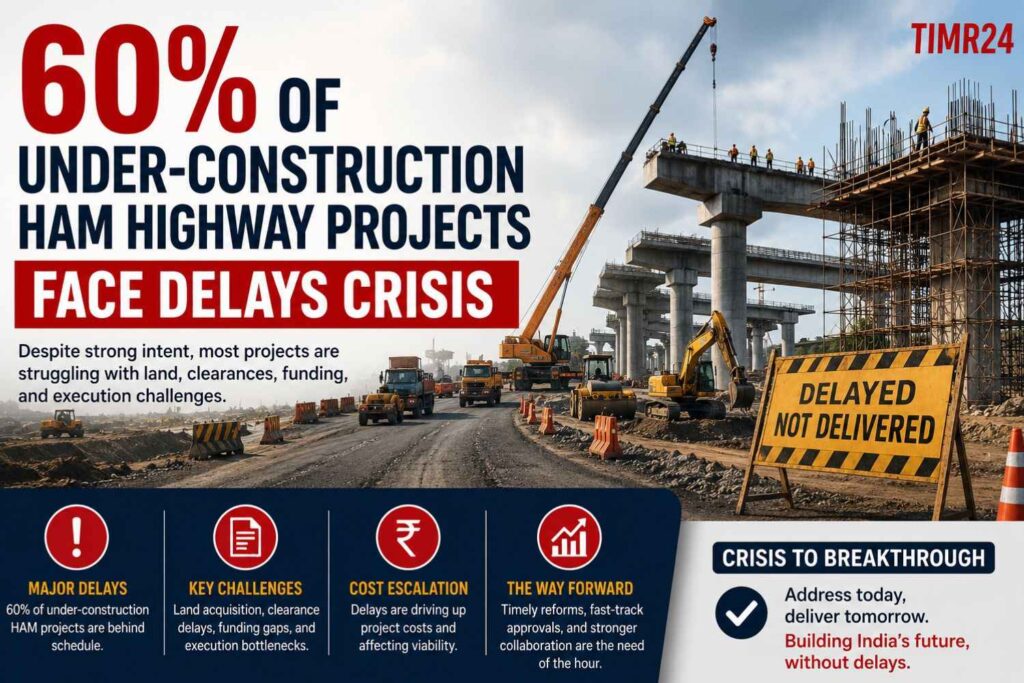
Another major concern highlighted in the report is delayed environmental and forest clearances. HAM projects passing through ecologically sensitive zones often require multiple approvals from state and central authorities. The approval process can take months or even years, directly impacting project execution schedules. Construction companies are forced to pause work while waiting for regulatory permissions, increasing financial stress and operational inefficiencies. These delays ultimately affect the broader goal of improving national connectivity and logistics efficiency Financing challenges are also becoming increasingly significant in India’s infrastructure sector.
Although HAM Projects Are Considered
Rising interest rates, tighter lending norms, and cautious banking practices are creating funding pressures for developers. Several mid-sized infrastructure firms are struggling to secure working capital for ongoing projects. Although HAM projects are considered relatively safer compared to older BOT models, developers still face liquidity issues due to delayed payments and rising raw material costs. Cement, steel, fuel, and labor expenses have increased substantially over the past few years, reducing profit margins for construction companies The report also indicates that execution-related inefficiencies are contributing to the slowdown. Many highway projects face contractor shortages.
Machinery delays, labor gaps, and supply chain disruptions. In some cases, monsoon-related interruptions and regional political factors further delay project activities. As infrastructure projects become larger and more complex, companies require stronger project management systems, advanced technology adoption, and improved coordination between stakeholders to maintain timelines effectively Despite these challenges, the Indian highway sector remains one of the strongest pillars of the country’s infrastructure growth strategy. The government continues to invest heavily in expressways, economic corridors, logistics parks, and national highway expansion programs.
Economic Growth, Boost Employment Opportunities
Agencies such as National Highways Authority of India are actively pushing new road development initiatives to improve connectivity between major cities, industrial hubs, ports, and rural regions. These investments are expected to support economic growth, boost employment opportunities, and strengthen India’s logistics ecosystem over the long term Industry experts believe that improving project preparedness before awarding contracts could significantly reduce delays. Ensuring complete land acquisition, faster approvals, and better financial planning prior to project allocation would help developers execute projects more efficiently.
Digital monitoring systems, AI-based project tracking, and stronger coordination between government departments may also improve delivery timelines. Several analysts have suggested that policy reforms focused on dispute resolution and payment mechanisms could (India) enhance confidence among private infrastructure players The slowdown in HAM highway execution may also impact related industries such as construction equipment manufacturing, cement production, logistics services, and real estate development. Highway expansion projects often create strong economic activity around industrial zones, warehousing hubs, and residential developments.
Government’s Continued Emphasis On Capital Expenditure
Delays in road connectivity can therefore influence broader investment cycles across multiple sectors. Companies involved in heavy construction equipment and engineering services are closely monitoring the situation to assess future demand trends. At the same time, infrastructure experts remain optimistic about India’s long-term growth prospects. The government’s continued emphasis on capital expenditure and public infrastructure development i ndicates that highway construction will remain a national priority. Large-scale programs such as Bharatmala Pariyojana, expressway corridors, and multimodal logistics infrastructure are expected to drive future investments.
The key challenge will be improving project execution capabilities and reducing approval-related delays that currently affect the sector India’s infrastructure story is entering a critical phase where execution efficiency will determine the pace of economic growth. While ambitious highway expansion plans continue to attract global attention, timely delivery of projects remains essential for achieving national development goals. The latest findings from CRISIL serve as an important reminder that policy vision alone is not enough; efficient implementation, faster clearances, and stronger coordination are equally important for sustaining infrastructure momentum in the country.
For developers, contractors, and investors, the coming years will be crucial in understanding how India addresses these structural bottlenecks within the highway sector. If reforms successfully improve project delivery timelines, the country could witness unprecedented growth in (India) transport infrastructure, logistics efficiency, industrial expansion, and regional connectivity. However, if delays continue at the current pace, cost overruns and financing pressures could impact the overall infrastructure ecosystem and slow down future project investments.
Q1. What is the Hybrid Annuity Model (HAM) in highway projects?
The Hybrid Annuity Model (HAM) is a road development model where the government and private developers share project costs and risks. The government pays a fixed portion during construction, while the private company finances, builds, and maintains the highway project.
Q2. Why are 60% of HAM highway projects facing delays?
According to CRISIL, the major reasons include land acquisition problems, delayed environmental clearances, financing challenges, rising construction costs, and execution-related issues.
Q3. How do highway project delays impact India’s infrastructure sector?
Project delays increase construction costs, affect investor confidence, slow logistics improvements, and delay economic development linked to roads, industrial corridors, and real estate growth.
Q4. Which government body manages national highway development in India?
The National Highways Authority of India is the primary agency responsible for developing, maintaining, and managing national highways across the country.
Q5. What solutions can reduce delays in HAM highway projects?
Experts suggest faster land acquisition, quicker approvals, improved financing support, better project planning, digital monitoring systems, and stronger coordination between government departments and private developers.