






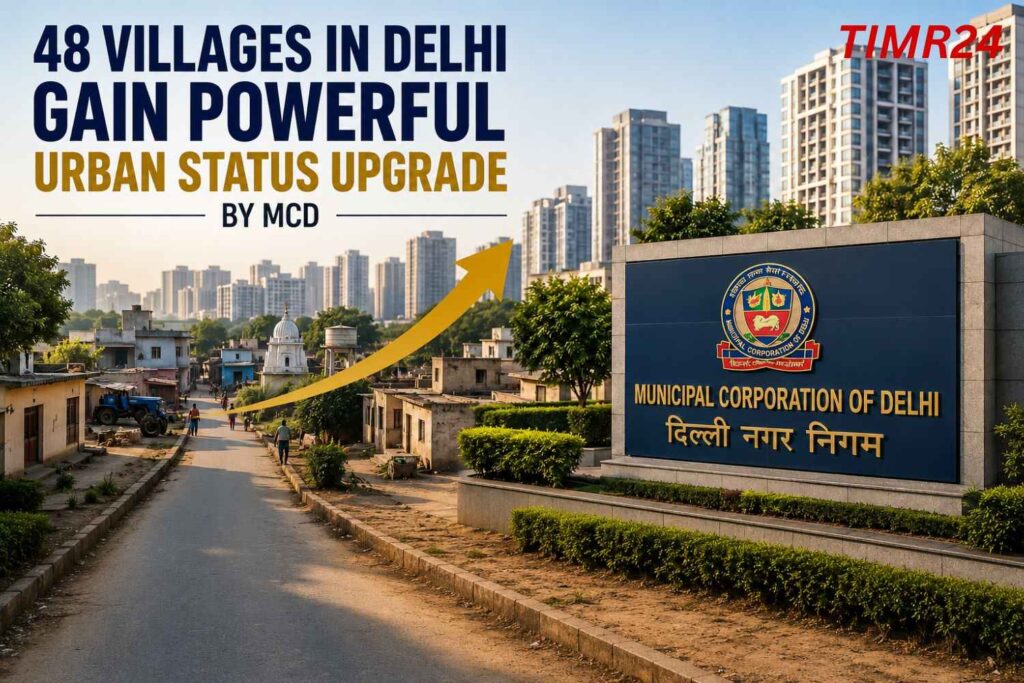
The Municipal Corporation of Delhi (MCD) standing committee has approved a proposal to grant urban status to 48 villages in the capital, aimed at managing urban expansion. This decision, made under Section 507(a) of the Delhi Municipal Corporation Act, 1957, will allow the villages to enter formal municipal frameworks, making them eligible for structured urban planning and essential services such as roads, drainage, and waste management. Many of these villages have transitioned into urban clusters needing organized governance. The proposal aligns with the Master Plan for Delhi-2041, addressing population growth and infrastructure demand.
Endorsement, Although Implementation Timelines
This change aims to enhance oversight on unauthorized construction and integrate development efforts. After committee approval, the initiative will proceed to the full MCD house and then to the Central government for final endorsement, although implementation timelines have not been specified Delhi’s urban transformation has taken another major step forward after the Municipal Corporation of Delhi approved urban status for 48 villages across the national capital. The move is being seen as a major breakthrough for civic infrastructure, planned development, and long-term real estate growth in several outer and semi-urban regions of Delhi.
The decision is expected to directly impact thousands of residents who have long demanded improved roads, drainage systems, sanitation services, and organized municipal facilities in these areas. According to officials, the change in status will help integrate these villages into Delhi’s expanding urban framework and bring them closer to the standards of developed city zones The announcement has generated strong interest among residents, property owners, urban planners, and real estate investors because the upgrade could significantly improve living conditions in these localities. Many of these villages were previously categorized under rural administration.
Residents Are Also Expecting Improvements
Which often limited the speed and scale of infrastructure development. With urban status now granted, municipal authorities can begin implementing broader civic projects, better road connectivity, and modern waste management systems. Residents are also expecting improvements in public lighting, sewer systems, water supply, and maintenance services that are usually available in urban neighborhoods The decision reflects Delhi’s rapidly changing urban landscape where rural pockets are increasingly becoming part of the city’s expanding economic and residential ecosystem. Several villages located near highways, metro corridors, and developing residential sectors have already witnessed.
Increased construction activity in recent years. Urban planners believe the latest approval by MCD could accelerate planned development and encourage more organized infrastructure investment. It may also help authorities regulate unauthorized construction and improve land-use planning across the newly upgraded areas One of the biggest expected impacts of this urban status upgrade is on the real estate market. Property experts believe land values and housing demand could rise steadily in these villages over the next few years. Buyers often prefer areas where municipal services are reliable and infrastructure development is officially recognized. Improved roads, drainage systems.
Transportation Planning In Outer Delhi Regions
Sanitation, and connectivity generally increase residential appeal, especially for middle-income homebuyers looking for affordable alternatives within Delhi. Investors are also likely to monitor these areas closely as future development projects begin taking shape The urban status decision could also improve connectivity and transportation planning in outer Delhi regions. Several villages included in the upgrade are strategically located near developing road corridors and transport networks. Better integration with Delhi’s transport infrastructure may support smoother mobility for residents who travel daily for work, education, and business activities.
Experts believe future development may include improved bus connectivity, road widening projects, and upgraded public utility systems to accommodate increasing urban activity Civic authorities are expected to focus on phased infrastructure implementation to ensure that development work remains organized and sustainable. Urbanization often brings challenges such as population pressure, traffic congestion, and environmental concerns. Therefore, municipal planning will play an important role in balancing growth with sustainability. Officials may prioritize drainage improvements, sewage systems, green space planning, and traffic management as part of long-term urban development strategies.
Urban Recognition Can Improve Access To Better
Planned execution will be necessary to prevent unregulated expansion and maintain the quality of civic infrastructure The move also carries social and economic importance for local communities. Residents in several villages have historically faced issues related to inconsistent sanitation services, poor road conditions, and limited municipal attention. Urban recognition can improve access to better public services and strengthen administrative accountability. Improved infrastructure may also create local employment opportunities during construction and development phases. Small businesses operating in these areas could benefit from higher commercial activity and increasing population movement once civic improvements begin.
Q1. What does urban status for Delhi villages mean?
Urban status allows villages to receive improved civic facilities such as better roads, drainage, sanitation, street lighting, and planned infrastructure development under municipal administration.
Q2. How many villages received urban status in Delhi?
A total of 48 villages in Delhi have been granted urban status by the Municipal Corporation of Delhi (MCD).
Q3. Will property prices increase in these villages?
Yes, experts believe that improved infrastructure and development planning may increase property demand and land values in these areas.
Q4. What benefits will residents receive after this upgrade?
Residents are expected to get improved civic services, organized construction regulations, better waste management, and upgraded public facilities.
Q5. Why is this decision important for Delhi’s growth?
The move supports Delhi’s long-term urban expansion strategy and helps integrate developing rural pockets into the city’s modern infrastructure network.