


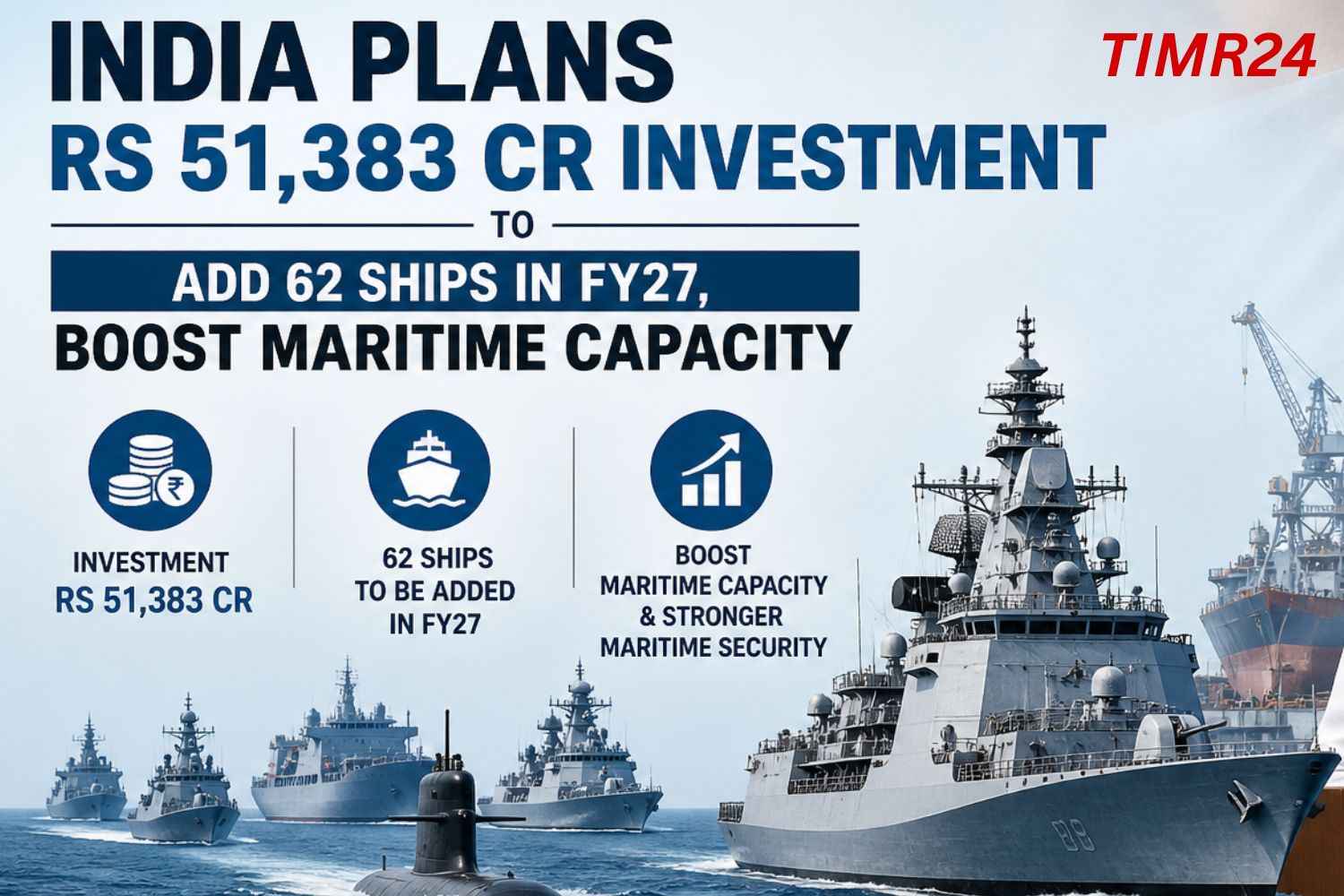














Sarbananda Sonowal announced an investment of Rs 51,383 crore to add 62 vessels in FY 2026–27, aimed at strengthening India’s shipping capacity and resilience in maritime trade. This decision follows a review of global shipping challenges and focuses on expanding India’s fleet in key segments. The initiative will increase capacity by about 2.85 million gross tonnage and includes a joint venture to acquire 59 vessels, along with improvements in shipbuilding and port infrastructure. This move aligns with the government’s strategy to create a self-reliant maritime ecosystem and support India’s trade needs India is rapidly transforming its infrastructure landscape.
Shipping And Logistics Capabilities
The maritime sector is emerging as one of the most critical pillars of this transformation. With a planned investment of ₹51,383 crore to add 62 ships by FY27, India is signaling a strong commitment toward strengthening its shipping and logistics capabilities. This initiative is not just about increasing the number of vessels; it represents a broader strategy to enhance trade efficiency, reduce logistics costs, and position the country as a dominant player in global maritime trade The maritime sector has always played a crucial role in facilitating international trade, with nearly 90% of global trade carried through sea routes. Recognizing this.
The Indian government has been consistently investing in port modernization, inland waterways, and shipping capacity expansion. This latest move aligns with ongoing initiatives like Sagarmala and Make in India, both aimed at boosting domestic manufacturing and improving logistics infrastructure One of the key drivers behind this investment is the growing demand for efficient and cost-effective transportation. India’s logistics cost currently stands higher compared to global benchmarks, which affects export competitiveness. By increasing the number of ships, the country aims to reduce dependency on foreign vessels and lower freight costs.
Government Is Encouraging Indian Shipyards
This will significantly benefit industries such as manufacturing, agriculture, and e-commerce, all of which rely heavily on smooth supply chain operations Another important aspect of this initiative is the focus on domestic shipbuilding. The government is encouraging Indian shipyards to take a leading role in constructing these vessels, which will not only boost local industries but also generate employment. Shipbuilding is a labor-intensive sector, and this expansion is expected to create thousands of direct and indirect jobs. This aligns with the broader vision of self-reliance under the Atmanirbhar Bharat initiative The addition of 62 ships will also strengthen coastal.
Shipping, which is an underutilized mode of transport in India. Coastal shipping is significantly more fuel-efficient and environmentally friendly compared to road and rail transport. By promoting this mode, the government aims to reduce congestion on highways and rail networks while lowering carbon emissions. This step is particularly important in the context of global sustainability goals and climate commitments From a strategic perspective, enhancing maritime capacity also improves national security and resilience. A stronger fleet ensures better control over trade routes and reduces vulnerability to global disruptions. The recent challenges in global supply chains have the importance of having.
Facilitate Faster Movement Of Goods, Reduce
A robust domestic shipping infrastructure. By investing heavily in this sector, India is preparing itself to handle future uncertainties more effectively The economic implications of this investment are substantial. Improved shipping capacity will facilitate faster movement (India) of goods, reduce turnaround time at ports, and increase overall trade volume. This will have a direct impact on exports, making Indian products more competitive in international markets. Additionally, better connectivity between ports and hinterlands will support regional development and industrial growth Another critical factor is technological advancement. The new ships are expected to be equipped with modern technologies.
That improve efficiency, safety, and environmental performance. This includes better fuel management systems, digital navigation tools, and advanced cargo handling capabilities. Such innovations will bring India’s maritime sector in line with global standards and enhance its competitiveness The role of private sector participation cannot be overlooked in this transformation. Public-private partnerships are expected to play a significant role in financing, construction, and operation of these ships. This collaborative approach will ensure better efficiency, innovation, and resource utilization. It will also attract foreign investment into the sector, further strengthening India’s economic position.
Global Stage, This Move Positions India
This initiative complements other infrastructure developments such as dedicated freight corridors, expressways, and industrial corridors. Together, these projects create a comprehensive logistics ecosystem that supports economic growth On the global stage, this move positions India as a serious contender in maritime trade. With increasing geopolitical shifts and evolving trade patterns, having a strong shipping network provides a strategic advantage. It allows the country to participate more actively in global supply chains and reduce reliance on external players.
The ₹51,383 crore investment to add 62 ships by FY27 is a transformative step for India’s maritime sector. It goes beyond capacity expansion and touches upon multiple aspects of economic development, including trade, employment, sustainability, and technological (India) advancement. As these plans unfold, the impact will be visible across industries and regions, reinforcing India’s position as a growing economic powerhouse. This initiative is not just about ships; it is about building a stronger, more resilient, and globally competitive nation.
Q1. What is the total investment planned?
India has planned an investment of ₹51,383 crore to expand its maritime fleet.
Q2. How many ships will be added?
A total of 62 ships are expected to be added by FY27.
Q3. What is the main objective of this plan?
To enhance maritime capacity, reduce logistics costs, and boost trade efficiency.
Q4. Which sector benefits the most?
Shipping, logistics, port infrastructure, and export-import businesses.
Q5. How will it impact the economy?
It will create jobs, improve supply chains, and strengthen India’s global trade position.