

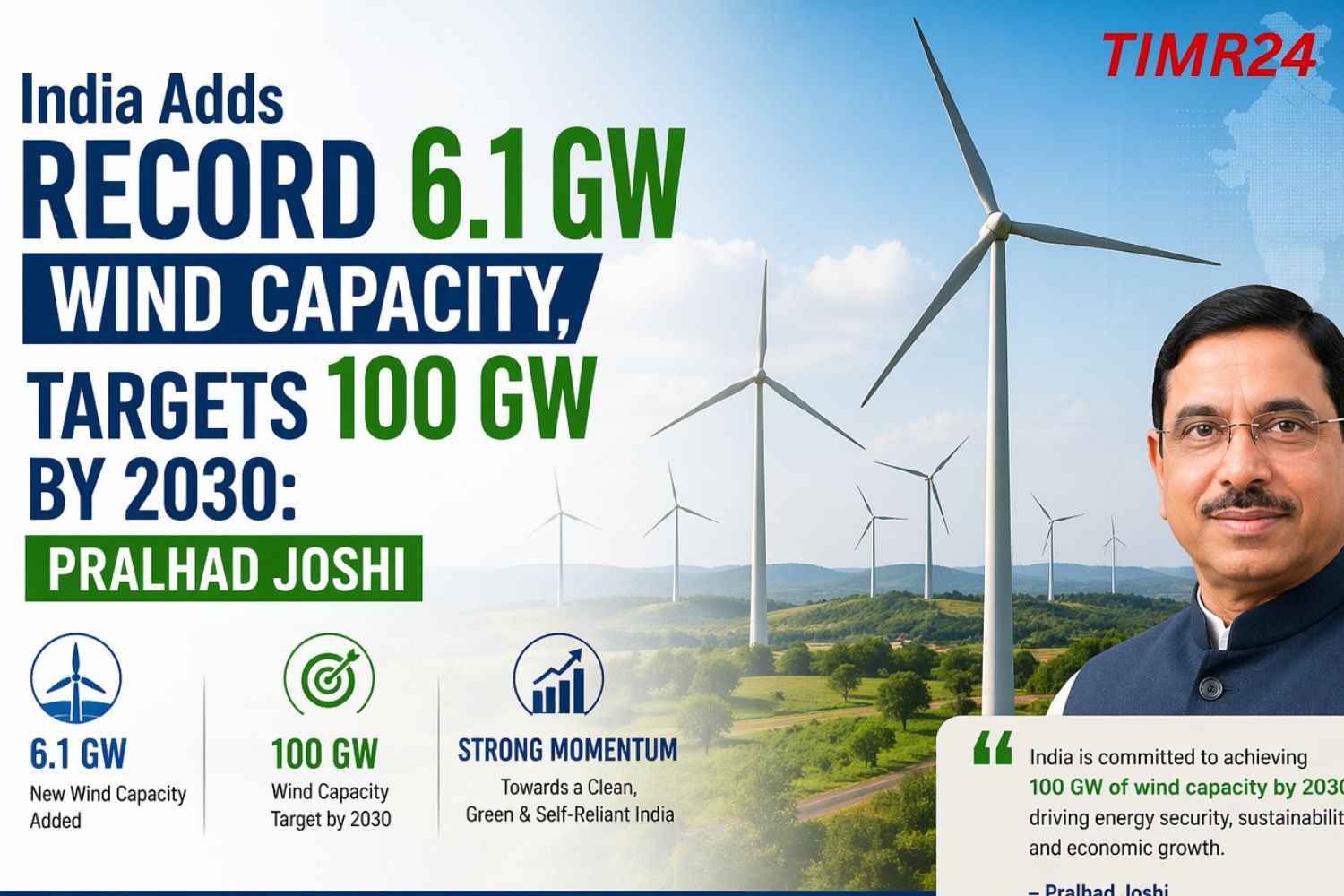











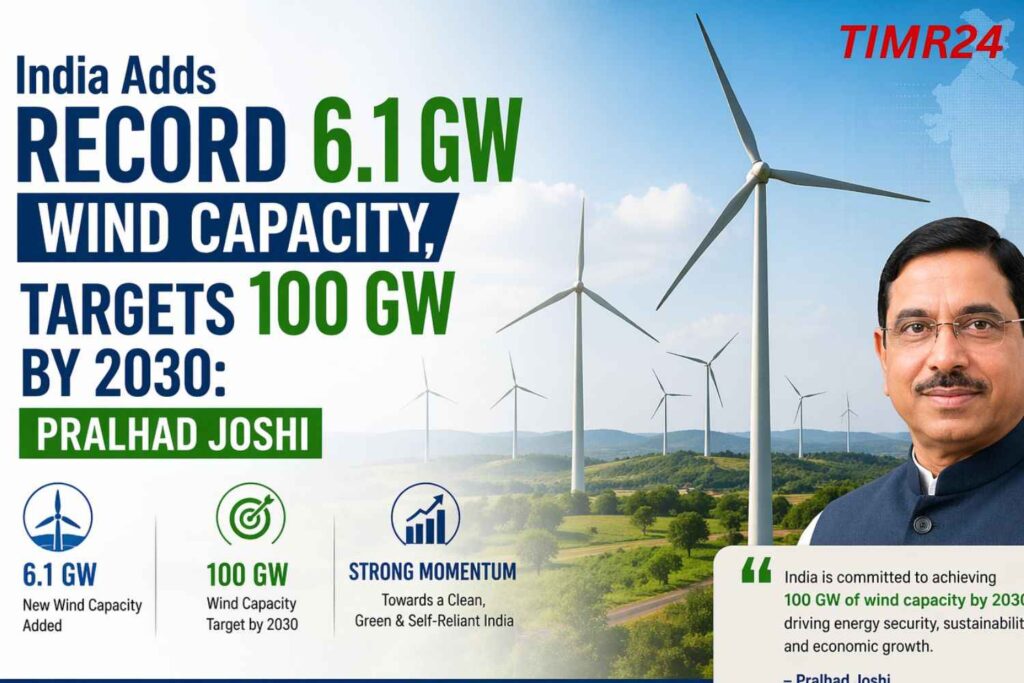
Pralhad Joshi, India’s Union Minister for New and Renewable Energy, announced that the country achieved a record addition of 6.1 GW in wind energy capacity during 2025–26, asserting the government’s commitment to clean energy. India, currently fourth globally with over 56.1 GW installed and 28 GW in progress, aims for 100 GW by 2030 and 156 GW by 2036, crucial for its net-zero target by 2070. Wind energy plays a vital role in stabilizing the power grid, especially with peak demand alignment. The government has introduced policies like Renewable Purchase Obligations and enhanced investor confidence measures to support growth.
Wind Tenders And Promoting Hybrid Projects
India’s manufacturing capacity exceeds 24 GW, with high indigenisation levels. Upcoming initiatives include releasing more wind tenders and promoting hybrid projects. Joshi emphasized opportunities for India to become a major manufacturing hub for wind energy equipment and expressed confidence in reaching the 156 GW target through robust policies and industry engagement India’s renewable energy journey has entered a transformative phase, with wind energy emerging as a key pillar of its clean energy ambitions. The recent addition of 6.1 GW wind capacity marks a historic achievement, signaling strong momentum in the sector. This development, by Pralhad Joshi, reflects.
The country’s aggressive push towards achieving 100 GW of wind energy capacity by 2030. The milestone is not just a numerical achievement but a reflection of India’s broader commitment to sustainable growth, climate responsibility, and energy independence. As global economies shift towards greener alternatives, India is positioning itself as a leader in renewable energy adoption, leveraging its vast natural resources and policy support mechanisms The expansion of wind energy capacity is deeply connected to India’s long-term climate goals and commitments under global agreements such as the Paris Climate Accord.
Enhance Infrastructure Capabilities
By increasing reliance on renewable energy sources, the country aims to significantly reduce carbon emissions and dependence on fossil fuels. Wind power, being a clean and abundant resource, plays a crucial role in this transition. The government has been actively promoting policies that encourage private investments, streamline project approvals, and enhance infrastructure capabilities. These initiatives have created a favorable ecosystem for developers and investors, enabling rapid capacity additions and technological innovation One of the key drivers behind this growth is the integration of advanced technologies in wind energy generation.
Modern turbines are more efficient, capable of generating higher output even at lower wind speeds. This technological evolution has made wind energy viable in regions that were previously considered unsuitable. Additionally, hybrid projects combining wind and solar energy are gaining traction, offering better utilization of land and transmission infrastructure. These hybrid models ensure consistent power generation, addressing one of the major challenges associated with renewable energy variability. India’s focus on innovation and efficiency is helping bridge the gap between demand and sustainable supply The role of policy reforms cannot be overlooked in this remarkable growth trajectory.
Turbine Components Have Also Contributed
The government has introduced several measures to boost investor confidence, including transparent bidding processes, long-term power purchase agreements, and financial incentives. Schemes promoting domestic manufacturing of wind turbine components have also contributed to the sector’s expansion. By reducing dependency on imports and encouraging local production, India is strengthening its industrial base while creating employment opportunities. This approach aligns with the broader vision of self-reliance and economic resilience Infrastructure development is another critical factor supporting the growth of wind energy in India.
The expansion of transmission networks and grid connectivity has enabled efficient integration of renewable energy into the national grid. Investments in green corridors and smart grid technologies are ensuring that the power generated from wind farms reaches consumers without significant losses. These developments are crucial for maintaining grid stability and reliability, especially as the share of renewable energy continues to increase. The government’s proactive approach in addressing infrastructure challenges is paving the way for sustained growth in the sector India’s geographical advantage also plays a significant role in its wind energy potential.
National Capacity The Exploration Of Offshore
Coastal regions and certain inland areas offer favorable wind conditions, making them ideal for large-scale projects. States like Tamil Nadu, Gujarat, and Karnataka have emerged as leaders in wind energy generation, contributing significantly to the national (India) capacity. The exploration of offshore wind projects is the next frontier, with immense potential to further boost capacity. Offshore installations can generate higher energy output due to stronger and more consistent wind speeds, making them a promising avenue for future growth The economic impact of wind energy expansion is equally noteworthy. The sector is creating jobs across various segments.
Including manufacturing, installation, maintenance, and research. It is also attracting significant investments from both domestic and international players, contributing to economic growth. As the demand for clean energy rises, the wind sector is expected to play a pivotal role in shaping India’s energy landscape. The multiplier effect of these investments is benefiting allied industries and supporting overall development Environmental benefits remain at the core of this transition. Wind energy is a clean source of power that does not produce greenhouse gas emissions during operation. By increasing the share of wind energy in the energy mix, India is reducing.
Its carbon footprint and mitigating the impact of climate change. This shift is essential for ensuring a sustainable future and protecting natural resources. The emphasis on renewable energy also aligns with global sustainability goals, enhancing India’s position on the international stage Despite the progress, challenges remain in achieving the ambitious 100 GW target by 2030. Land acquisition, regulatory complexities, and financing constraints are some of the hurdles that need to be addressed. However, the government’s continuous efforts to streamline processes and introduce investor-friendly policies are expected to mitigate these challenges.
Technological Advancements, And Increasing
Collaboration between public and private stakeholders will be crucial in overcoming these barriers and maintaining the growth momentum The future of wind energy in India appears promising. The combination of policy support, technological advancements, and increasing awareness about sustainability is driving the sector forward. As the country moves towards its 2030 target, the focus will be on enhancing efficiency, reducing costs, and expanding capacity. The integration of digital technologies and data analytics is expected to further optimize operations and improve performance. These advancements will not only boost energy generation but also ensure long-term sustainability.
Renewable energy policies, you can visit the official website of Ministry of New and Renewable Energy and explore global energy trends on International Energy Agency. Internally, you can also read related updates on India’s infrastructure growth and green initiatives to (India) understand the broader context of this development. Articles covering solar energy expansion, green hydrogen missions, and infrastructure investments provide valuable insights into the country’s comprehensive approach to sustainable development.
India’s achievement of adding 6.1 GW wind capacity is a testament to its commitment to clean energy and sustainable growth. The ambitious target of 100 GW by 2030 reflects a forward-looking vision that prioritizes environmental responsibility and economic progress. With continued efforts and strategic planning, India is well on its way to becoming a global leader in renewable energy, setting an example for other nations to follow.
Q1. What is India’s current wind energy addition?
India has added a record 6.1 GW wind capacity recently.
Q2. What is the wind energy target for 2030?
India aims to achieve 100 GW wind capacity by 2030.
Q3. Who announced this update?
Union Minister Pralhad Joshi highlighted this achievement.
Q4. Which states lead in wind energy?
Tamil Nadu, Gujarat, and Karnataka are major contributors.
Q5. Why is wind energy important?
It reduces carbon emissions and supports sustainable development.