

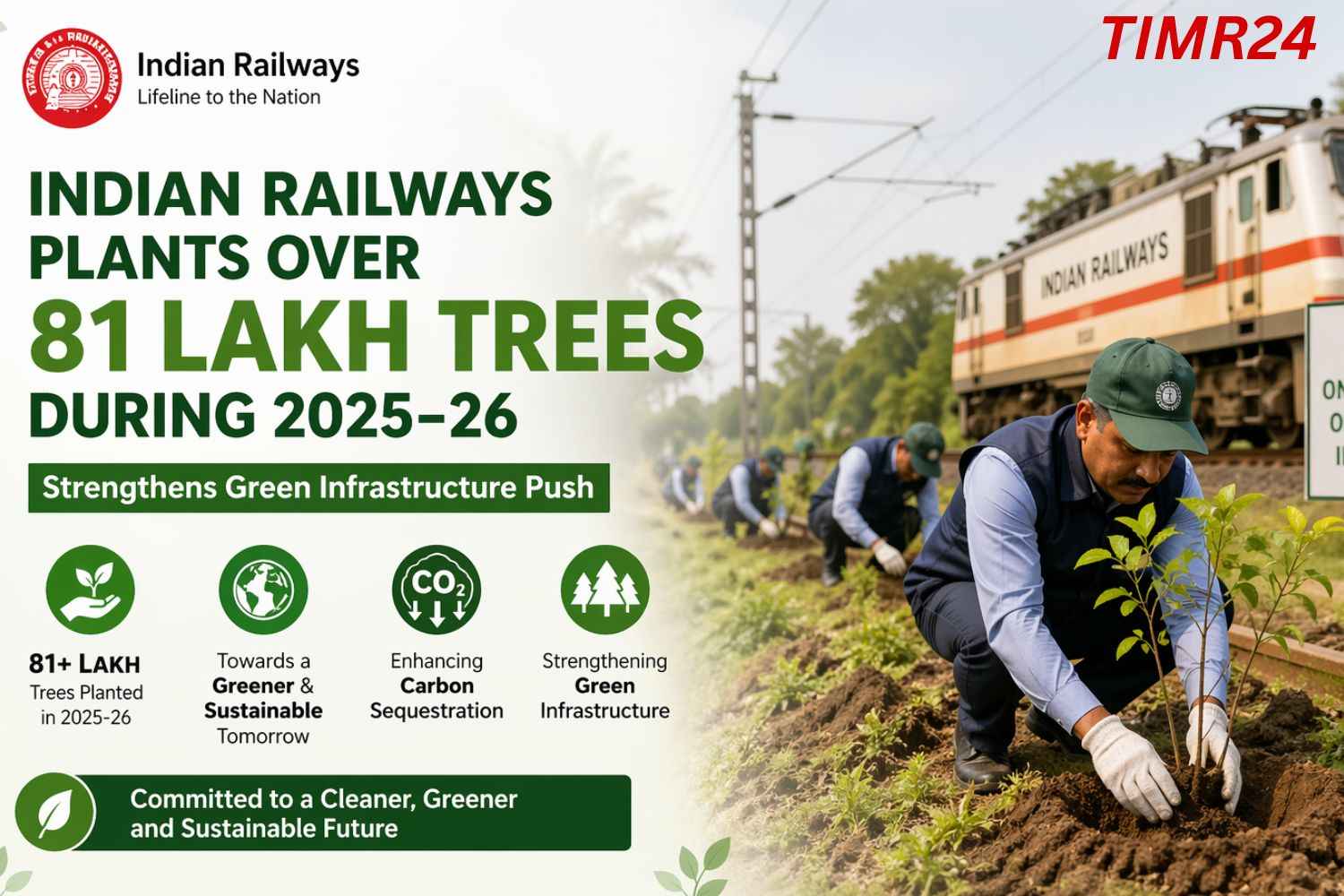













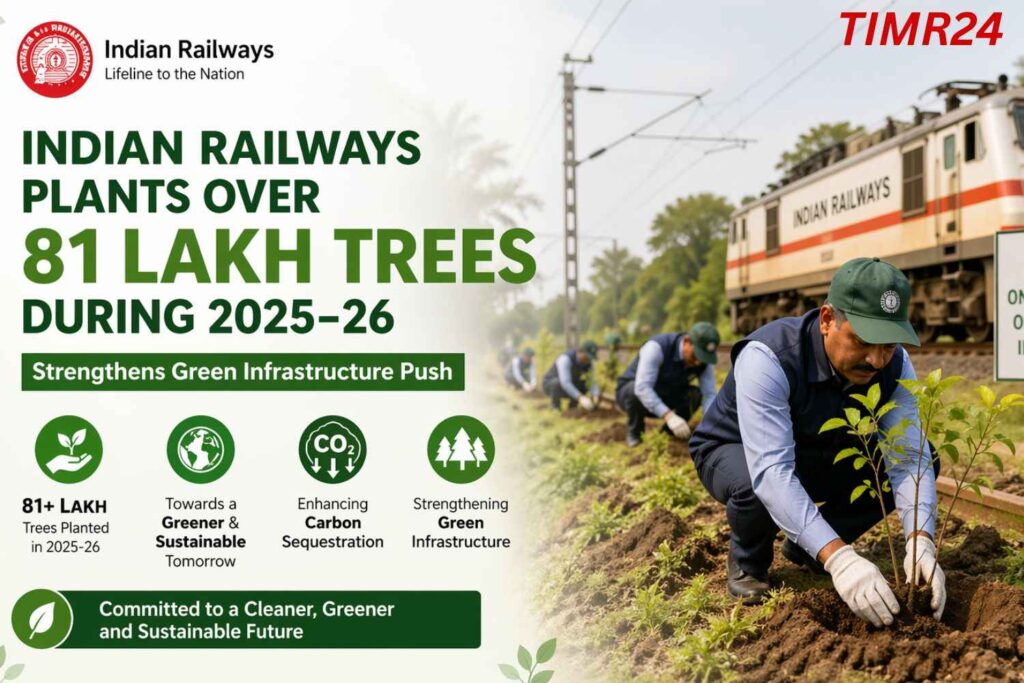
On Earth Day 2026, Indian Railways announced its environmental initiatives, highlighting the planting of over 81.59 lakh trees during 2025–26. This extensive drive, conducted across all railway zones, aims to integrate sustainability into operations and reduce the carbon footprint. Contributions from various zones, especially Northeast Frontier, South Central, Northeast, and Northern Railway, are enhancing green cover and supporting biodiversity. Additionally, the initiative improves infrastructure safety by reducing soil erosion and managing runoff, while also enhancing microclimatic conditions for passengers, aligning with Indian Railways’ commitment to sustainable transportation.
Emerged As A Frontrunner By Undertaking
The transformation of India’s transport infrastructure is no longer limited to expansion and modernization; it is now deeply intertwined with sustainability and environmental responsibility. In this evolving landscape, Indian Railways has emerged as a frontrunner by undertaking one of the largest afforestation drives in the country. The plantation of over 81 lakh trees during the financial year 2025–26 is not merely a numerical achievement but a strategic move aimed at strengthening green infrastructure across the nation. This initiative reflects a conscious shift toward eco-friendly development, aligning infrastructure growth with climate goals and environmental preservation.
The concept of green infrastructure within railway systems encompasses multiple dimensions, including tree plantations, water conservation, renewable energy adoption, and biodiversity enhancement. By focusing heavily on tree plantation, Indian Railways is addressing several environmental challenges simultaneously. Trees play a crucial role in absorbing carbon dioxide, reducing pollution levels, and stabilizing ecosystems. Along railway tracks, plantations also act as natural barriers against noise and dust, enhancing the travel experience while contributing to ecological balance. This large-scale initiative demonstrates how infrastructure projects can integrate.
Environmental solutions without compromising operational efficiency India’s commitment to global climate targets has accelerated the adoption of sustainable practices across sectors. In this context, Indian Railways’ afforestation drive complements national missions such as National Action Plan on Climate Change and supports international commitments under the Paris Agreement. By increasing green cover across railway corridors, the organization is actively contributing to carbon sequestration, helping reduce the overall carbon footprint of its operations. This initiative also aligns with the vision of achieving net-zero emissions in the coming decades, making.
Being Transformed Into Green Belts
Indian Railways a key contributor to India’s sustainable future The plantation drive is strategically planned, focusing on areas that maximize environmental and social impact. Railway lands, tracksides, station premises, and vacant zones are being transformed into green belts. This not only optimizes land utilization but also enhances the aesthetic value of railway infrastructure. The presence of trees along tracks improves microclimatic conditions, reducing heat levels and providing shade in surrounding areas. Additionally, such green corridors support biodiversity by creating habitats for birds and small wildlife, contributing to ecological restoration in urban and semi-urban regions.
Another important aspect of this initiative is community involvement. Indian Railways has collaborated with local bodies, environmental organizations, and volunteers to ensure the success of plantation drives. This participatory approach fosters environmental awareness and encourages citizens to take ownership of sustainability efforts. By involving communities, the initiative goes beyond infrastructure development and becomes a movement toward collective environmental responsibility. It also creates employment opportunities in nursery development, plantation, and maintenance activities, contributing to socio-economic growth The integration of technology and data-driven.
Survival Rates Is Particularly Crucial
Planning has further enhanced the effectiveness of this green initiative. Advanced monitoring systems are being used to track plantation progress, survival rates, and environmental impact. This ensures that the initiative is not limited to planting trees but extends to maintaining and nurturing them for long-term benefits. The focus on survival rates is particularly crucial, as it determines the actual success of afforestation efforts. Indian Railways is adopting best practices in plantation management, including species selection, irrigation planning, and soil conservation techniques The benefits of this large-scale plantation drive extend beyond environmental impact.
It also enhances the overall brand image of Indian Railways as a responsible and forward-thinking organization. In an era where sustainability is a key factor in decision-making, such initiatives build public trust and strengthen the organization’s reputation. Passengers increasingly prefer environmentally conscious transport options, and Indian Railways’ green initiatives position it as a leader in sustainable mobility, the initiative complements other green measures undertaken by Indian Railways, such as electrification of railway lines, installation of solar panels, and adoption of energy-efficient technologies. These combined efforts create a holistic approach to sustainability, ensuring.
That environmental considerations are embedded in every aspect of railway operations. The plantation of 81 lakh trees is a significant milestone in this journey, reinforcing the organization’s commitment to reducing its environmental footprint From an economic (India) perspective, green infrastructure investments yield long-term benefits. Trees contribute to soil stabilization, reducing maintenance costs associated with erosion and land degradation. They also improve air quality, which has positive implications for public health. By investing in afforestation, Indian Railways is not only addressing environmental challenges but also creating value for society and the economy.
Improve Air Quality, Which Has Positive Implications
This approach highlights the importance of integrating sustainability into infrastructure planning to achieve balanced and inclusive growth The success of this initiative sets a benchmark for other sectors to follow. It demonstrates that large-scale infrastructure organizations can play a pivotal role in environmental conservation. The focus on green infrastructure is likely to expand further, with increased investments in eco-friendly technologies and practices. Indian Railways’ efforts serve as a model for sustainable development, showcasing how environmental goals can be seamlessly integrated into operational strategies.
The plantation of over 81 lakh trees during 2025–26 marks a significant step in Indian Railways’ journey toward sustainability. It reflects a proactive approach to addressing environmental challenges while enhancing infrastructure development. By aligning its initiatives (India) with national and global climate goals, Indian Railways is contributing to a greener and more sustainable future. This initiative not only strengthens green infrastructure but also inspires collective action toward environmental conservation, setting the stage for a cleaner and healthier India.
Q1. How many trees were planted by Indian Railways in 2025–26?
Over 81 lakh trees were planted across railway zones in India.
Q2. What is the objective of this plantation drive?
To enhance green infrastructure, reduce carbon footprint, and improve environmental sustainability.
Q3. Where are these trees being planted?
Along railway tracks, stations, railway land, and vacant areas.
Q4. How does this help the environment?
It improves air quality, supports biodiversity, and reduces climate impact.
Q5. Is this part of a larger sustainability plan?
Yes, it aligns with India’s climate goals and sustainable infrastructure development strategy.