






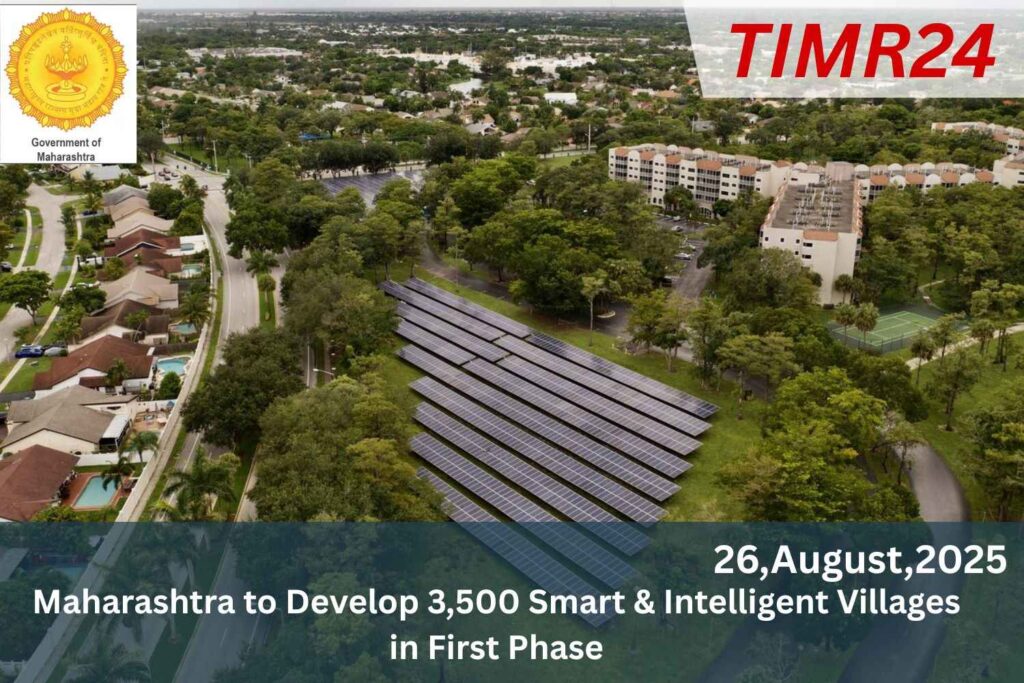
The Maharashtra government plans to develop at least ten Smart and Intelligent Villages in every taluka, aiming to transform nearly 3,500 villages in the first phase. The initiative, in collaboration with Voice of Indian Communication Technology Enterprises and 24 Indian companies, includes Satanwari as India’s first Smart and Intelligent Village. The villages will access 18 modern services. Maharashtra has taken a pioneering step by announcing the development of 3,500 smart and intelligent villages in the first phase of its rural transformation program. This initiative focuses on integrating modern technology, sustainability, and community empowerment to bring villages at par with urban centers. The smart village model is designed to provide better infrastructure, digital access, and improved livelihood opportunities for rural citizens.
A smart village is not just about digital connectivity but also about holistic development. It involves sustainable energy, efficient water management, advanced healthcare, digital literacy, and modern education facilities. Maharashtra aims to create an ecosystem where villagers have access to renewable energy like solar power, digital platforms for e-governance (Smart) and improved skill-based training to enhance employment opportunities. The smart village program will play a crucial role in generating employment through rural entrepreneurship, agro-based industries, and digital startups. With the introduction of smart farming techniques, farmers will have access to data-driven solutions for crop planning, weather forecasting, and soil health monitoring.
This move will reduce dependence on traditional farming and encourage innovation in agriculture smart farming practices to your article on “UP govt plans 550 MW solar plants along Bundelkhand Expressway” to show renewable energy integration in rural development. Maharashtra’s intelligent village program also emphasizes access to quality education and healthcare. Schools in rural areas will be digitally equipped making e-learning more accessible. Telemedicine and AI-driven health services will bridge the gap in medical facilities between rural and urban regions. This digital healthcare revolution will reduce rural migration to cities for basic health services.
Role of Renewable Energy and Sustainability
Renewable energy is a key driver in this transformation. Solar-powered streetlights, smart irrigation systems, and energy-efficient buildings will make villages eco-friendly and self-sustainable. This aligns with India’s commitment to green development. The project envisions villages with Wi-Fi zones, e-governance platforms, and digital payment systems. By digitizing governance, villagers can easily access government schemes, subsidies, and grievance redressal systems. This transparency will empower citizens to be more engaged in local decision-making. While the first phase targets 3,500 villages, Maharashtra plans to expand the initiative to cover all rural regions gradually.
This program will serve as a model for other Indian states, showcasing how rural development can be achieved by combining innovation with sustainability. Healthcare accessibility in rural India has always been a challenge. Maharashtra’s smart village initiative will introduce telemedicine centers, mobile health vans, and AI-based diagnostic tools in villages (National Health Mission) These facilities will allow villagers to consult doctors online, reducing the need to travel long distances for treatment. Preventive healthcare awareness programs will also be conducted digitally, ensuring communities stay informed about hygiene, nutrition, and early disease detection.
Q1. What is Maharashtra’s Smart & Intelligent Villages initiative?
It is a state-led program to develop 3,500 villages with modern infrastructure, digital technology, and sustainable solutions.
Q2. How will smart villages benefit farmers?
Farmers will access smart farming tools, weather forecasting, and digital platforms for crop and market information.
Q3. Will rural youth get job opportunities?
Yes, digital entrepreneurship, agro-industries, and skill training programs will create employment.
Q4. How does renewable energy support this initiative?
Solar and green energy will power irrigation, schools, healthcare, and rural infrastructure.
Q5. What is the long-term vision of this project?
To gradually transform all villages in Maharashtra into smart and sustainable communities.