















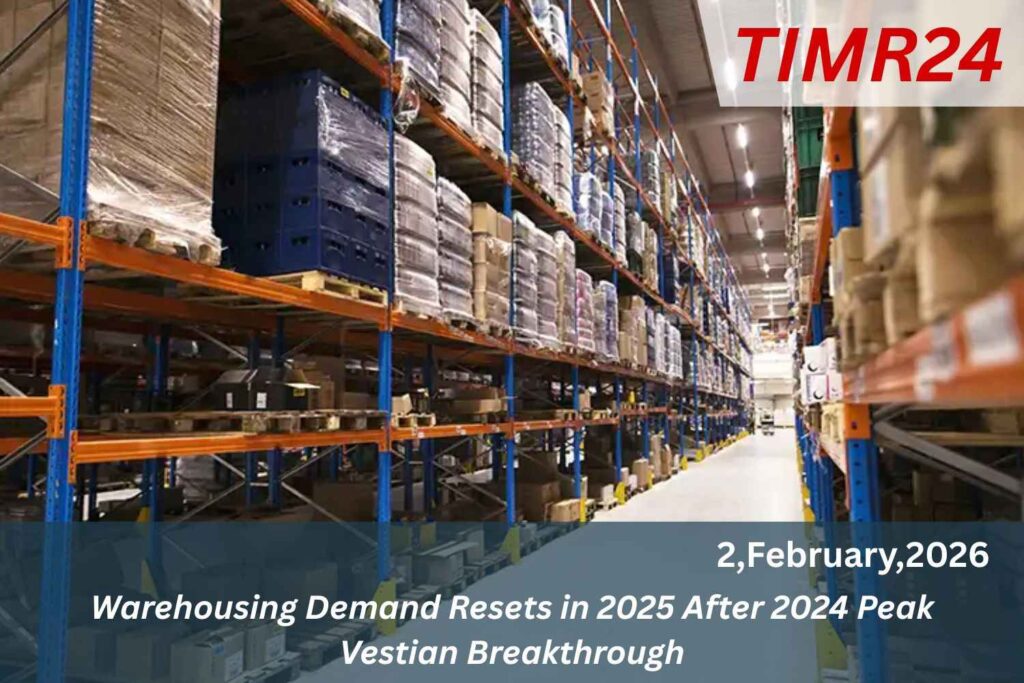
In the post-COVID period, the warehousing sector, particularly driven by e-commerce, manufacturing, and third-party logistics, experienced accelerated growth, prompting a scaling up of capacity to enhance supply chains. However, by 2025, absorption declined to 38.7 million sq ft from a peak of 44.9 million sq ft in 2024, representing a 14% decrease year-on-year yet remaining 84% above 2020 levels. This slowdown was viewed as a natural adjustment after intense growth rather than a decline in demand, with long-term fundamentals staying strong. Notable insights included Mumbai maintaining the highest absorption at 15.2 million sq ft despite an 18% decrease.
While Pune’s absorption was halved yet rental prices surged by 22%. Significant rebounds were observed in NCR and increases in Kolkata and Bengaluru, with projections for 2026 suggesting absorption could reach 40–45 million sq ft fueled by domestic consumption and macroeconomic improvements The Indian warehousing sector, which recorded historic leasing volumes in 2024, is now witnessing a measured reset in 2025. According to Vestian, this shift does not signal a decline but reflects market normalization after an exceptional growth cycle. In 2024, occupiers rushed to secure large-format warehousing spaces amid booming e-commerce demand, supply chain.
Diversification, and manufacturing expansion As these immediate requirements have largely been met, companies are now reassessing their footprints, focusing on operational efficiency and cost optimization rather than rapid capacity addition This recalibration phase aligns with the natural evolution of a maturing real estate asset class. Warehousing is no longer viewed merely as a support function but as a strategic component of business continuity. As discussed earlier in our analysis of India’s logistics transformation, the sector is moving toward stability-driven growth rather than volume-led expansion.
Why 2024 Marked a Peak for Warehousing Leasing
The record demand in 2024 was fueled by multiple converging factors. E-commerce players expanded aggressively to meet faster delivery expectations, while third-party logistics providers scaled up capacity to serve diversified client needs. Manufacturing firms, especially those aligned with government initiatives like Make in India, required modern storage solutions near industrial corridors. Vestian notes that this convergence created an unusually high absorption level, pushing several markets close to short-term saturation Additionally, global supply chain realignments prompted multinational companies to establish regional distribution hubs in India.
This trend boosted demand in established warehousing clusters such as Mumbai, NCR, Pune, Bengaluru, and Chennai. However, as occupiers completed their planned expansions, leasing activity naturally cooled in early 2025, leading to what Vestian describes as a “reset” rather than a downturn One of the most significant insights from Vestian’s outlook is the change in occupier behavior. Instead of acquiring new space, companies are optimizing existing assets through better layout planning, automation, and inventory management systems. This shift is particularly visible among large e-commerce and retail players who are consolidating operations into fewer but more efficient Grade A warehouses.
Developer Response to the Market Reset
The emphasis is now on strategic locations that reduce last-mile costs and improve turnaround times. Businesses are also renegotiating lease structures to incorporate flexibility, reflecting a more cautious and data-driven approach. This trend aligns with broader commercial real estate patterns observed across asset classes, including office and industrial segments. Developers are adapting quickly to the changing demand landscape. Instead of speculative construction, there is a growing focus on build-to-suit and pre-leased projects. Vestian highlights that developers are prioritizing quality over quantity, ensuring compliance with global safety, sustainability, and design.
Standards Grade-A warehousing continues to dominate new supply, even as overall construction activity becomes more selective Sustainability has emerged as a key differentiator. Features such as solar rooftops, rainwater harvesting, and energy-efficient lighting are increasingly standard rather than optional. This shift reflects occupier preferences as well as rising ESG expectations from investors. Developers who align their projects with these requirements are better positioned to attract long-term tenants in a stabilized market.
Technology and Automation Shape Future Demand
Technology adoption is playing a crucial role in redefining warehousing demand in 2025. Automation-ready facilities with higher floor load capacity, advanced fire safety systems, and digital inventory tracking capabilities are gaining preference. Vestian notes that even mid-sized occupiers are planning for automation compatibility, signaling a long-term shift in operational models This technological transformation is also influencing location choices. Warehouses closer to consumption centers are being redesigned to support faster fulfillment cycles, while peripheral hubs focus on bulk storage and distribution. The integration of technology-driven logistics solutions.
Regional Market Performance and Emerging Hubs
Reinforces the idea that demand moderation in 2025 is about smarter utilization, not reduced relevance. While Tier-I cities continue to dominate warehousing demand, Vestian observes rising interest in select Tier-II locations. Improved highway connectivity, lower land costs, and state-level policy incentives are encouraging occupiers to explore emerging hubs. Cities positioned along dedicated freight corridors are particularly attractive, as they offer multimodal connectivity and scalability This regional diversification supports balanced growth across the country and reduces overdependence on a few saturated markets. As highlighted in our previous coverage of infrastructure-led.
Real estate growth, such decentralization is critical for long-term sector resilience Despite the demand reset, investor confidence in the warehousing sector remains strong. Institutional investors continue to view logistics assets as stable, income-generating investments (India) with long-term growth potential. Vestian points out that stabilized assets with strong tenant profiles are attracting sustained interest, even as underwriting assumptions become more conservative The correction in leasing velocity is helping bring valuations to more realistic levels, which could further support transaction activity in 2025. From an investment perspective, the reset is creating.
What the Reset Means for the Industry
Opportunities for disciplined capital deployment rather than speculative bets. The warehousing demand reset in 2025 marks a transition from rapid expansion to sustainable growth. Vestian’s assessment underscores that this phase is essential for strengthening market fundamentals. Occupiers benefit from improved asset quality, developers gain clarity on demand patterns, and investors enjoy a more transparent and resilient market environment.
Rather than slowing momentum, the reset is laying the groundwork for the next growth cycle driven by technology, infrastructure upgrades, and evolving (India) consumption patterns. As India’s logistics ecosystem matures, warehousing will continue to play a central role in supporting economic expansion.
Q1. Why is warehousing demand resetting in 2025?
Demand is normalizing after record leasing activity in 2024 as occupiers shift from expansion to optimization.
Q2. Does the reset indicate a slowdown?
No, Vestian considers it a healthy market correction supporting long-term stability.
Q3. Which sectors drove 2024 demand?
E-commerce, 3PL, and manufacturing were the primary demand drivers.
Q4. Are developers reducing new supply?
Developers are becoming selective, focusing on Grade-A and build-to-suit projects.
Q5. Is warehousing still attractive for investors?
Yes, stabilized logistics assets remain a preferred investment choice.