











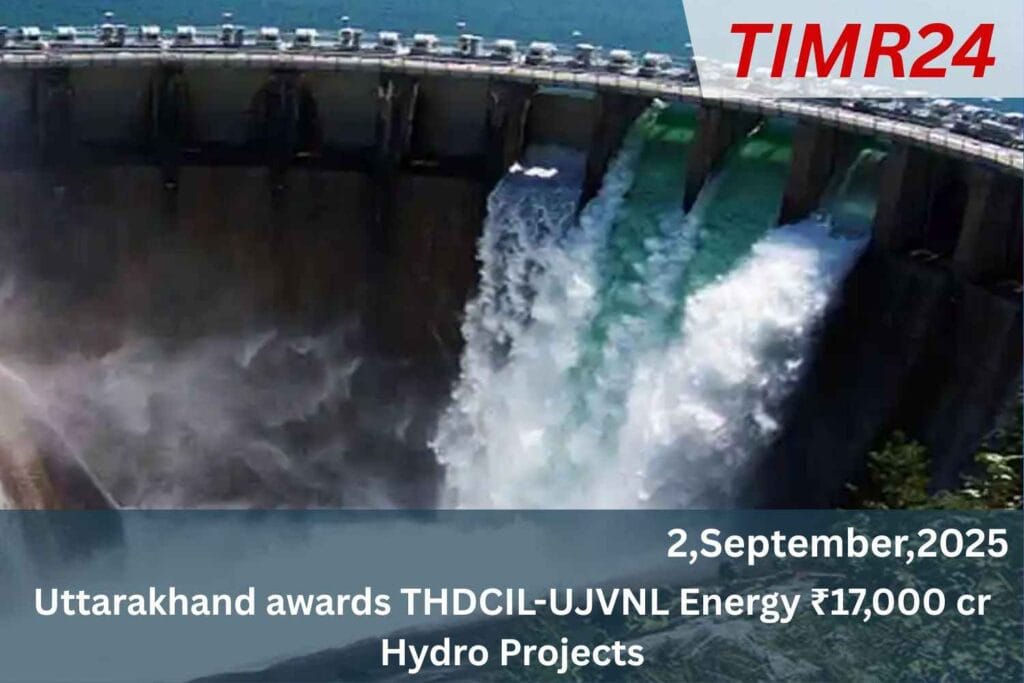
Uttarakhand State Government awarded contracts worth ₹17,000 crore to THDCIL-UJVNL Energy Company for five 1,719 MW hydro-electric projects, aiming to create 900 job opportunities and contribute to net-zero emission targets. Uttarakhand has made headlines with its recent decision to award hydroelectric projects worth ₹17,000 crore to THDC India Limited (THDCIL) and Uttarakhand Jal Vidyut Nigam Limited (UJVNL), a move that underscores the state’s commitment to expanding its renewable energy capacity and sustainable infrastructure. These projects represent one of the largest investments in Uttarakhand’s energy sector in recent years and are poised to.
Significantly enhance the state’s power generation capabilities while supporting India’s broader energy transition goals. The partnership between THDCIL, a central government enterprise, and UJVNL, the state-owned hydroelectric utility, combines technical expertise, operational experience, and financial capability, ensuring that these projects are executed efficiently and effectively The awarded hydro projects include a combination of high-capacity dam-based plants and run-of-the-river projects. Run-of-the-river hydro plants are particularly valuable in regions like Uttarakhand, where river flows are robust but ecological sensitivities demand.
Careful management of water resources. Unlike traditional large reservoirs, run-of-the-river projects require minimal land submersion, helping to reduce environmental impact and displacement concerns. High-capacity dam projects, on the other hand, provide a reliable base load of electricity and allow for better regulation of water flow, which can be crucial during periods of peak demand (Hydro Projects) The balance between these types of projects demonstrates the state’s strategic approach toward maximizing energy output while minimizing ecological and social disruption From an economic perspective, the ₹17,000 crore investment is expected to create substantial employment opportunities.
Uttarakhand Jal Vidyut Nigam
Both directly and indirectly. The construction phase alone will generate jobs in engineering, construction, transportation, and ancillary industries, providing a significant boost to local communities. Post-construction, operational and maintenance roles will offer stable employment in the energy sector, while increased electricity supply can support industrial and commercial growth throughout the state. Additionally, infrastructure development associated with these hydro projects, such as access roads, bridges, and transmission lines, can catalyze regional development, improving connectivity and accessibility for remote areas.
These projects also have far-reaching implications for India’s national energy strategy. As the country strives to meet ambitious renewable energy targets, hydroelectric power remains a cornerstone of the clean energy mix. Unlike solar and wind power, which are intermittent and subject to weather conditions, hydroelectric power provides a stable and controllable source of electricity, capable of meeting peak demand and supporting grid reliability. Uttarakhand, with its mountainous terrain and abundant river systems, is uniquely positioned to contribute significantly to this national agenda. By awarding large-scale hydro projects to capable entities like THDCIL and UJVNL, the state is reinforcing its role as a leader in renewable energy development.
Environmental sustainability is a central focus of these projects. Modern hydroelectric plants employ advanced technologies designed to minimize ecological impact, such as fish-friendly turbines, sediment management systems, and precise water flow regulation mechanisms. Environmental impact assessments and continuous monitoring protocols ensure that river ecosystems are preserved while maximizing energy output. In regions like Uttarakhand, where biodiversity is rich and fragile, such measures are critical for balancing development with ecological conservation. The projects also align with India’s commitments under the Paris Agreement by contributing to reductions in greenhouse.
hydroelectric company, brings local knowledge
Gas emissions and reliance on fossil fuels, helping the country move toward a more sustainable energy future The operational and financial expertise of THDCIL and UJVNL is a key factor in the anticipated success of these projects. THDCIL, a joint venture under the Ministry of Power, has a proven track record in hydroelectric project development, execution, and operation. Its portfolio includes some of India’s largest and most successful hydro projects, demonstrating its ability to manage complex engineering challenges and large-scale construction projects. UJVNL, as the state-run hydroelectric company, brings local knowledge, regulatory experience, and operational management capabilities.
The combination of central and state expertise ensures that the projects are not only constructed efficiently but are also managed sustainably throughout their lifecycle The phased implementation of these projects allows for gradual integration into Uttarakhand’s power grid, ensuring stability and reliability. As sections of the projects become operational, they will progressively enhance electricity supply, helping to meet the growing demand in urban centers, industrial hubs, and rural areas. Increased power availability can support small and medium enterprises, promote industrial growth, and enable digital infrastructure expansion, ultimately contributing to overall economic development. Furthermore, by diversifying energy sources and increasing renewable capacity.
Uttarakhand is reducing dependency on thermal power, which is subject to fuel price fluctuations and environmental concerns In addition to energy production and economic benefits, these projects have social and community implications. Local populations may gain access to electricity more reliably, improving quality of life and supporting education, healthcare, and small business development. Infrastructure improvements associated with project construction, such as roads and bridges, provide additional benefits by enhancing connectivity and mobility for remote communities. Authorities have also committed to engaging with local stakeholders.
Ensuring that concerns related to land use, displacement, and cultural preservation are addressed through consultation and compensation programs The hydro projects in Uttarakhand also align with broader national policies promoting renewable energy development. Initiatives such as the Ministry of Power National Electric Mobility Mission Plan and the Renewable Energy Policy Framework (Renewable Energy) encourage investment in clean energy, grid stability, and sustainable development. By contributing significantly to the state’s renewable energy portfolio, these projects support India’s efforts to reduce carbon emissions, combat climate change, and ensure long-term energy security.
technical specifications
The announcement has been welcomed by energy experts, investors, and policymakers, who recognize the strategic importance of hydroelectric power in India’s energy transition For readers seeking further information, updates on project timelines, and technical specifications can be accessed through Additionally, the provides authoritative insights into India’s hydroelectric initiatives and policy frameworks. These resources offer detailed perspectives on project progress, environmental considerations, and energy sector trends, making them valuable for researchers, investors, and stakeholders Uttarakhand’s decision to award ₹17,000 crore hydroelectric projects to THDCIL and UJVNL marks a transformative step in the state’s energy sector.
By leveraging technical expertise, strategic planning, and sustainable practices, these projects are poised to enhance power generation, support economic growth, create employment, and contribute to India’s renewable energy targets. The focus on environmental sustainability, community engagement, and technological innovation ensures that the hydro projects serve not only as a source of electricity but also as a model for responsible and forward-looking energy development. With phased execution and strategic oversight, Uttarakhand is positioning itself as a leader in clean energy infrastructure, setting an example for other states in India and contributing meaningfully to the nation’s green energy future.
Q1. Who has been awarded the hydro projects in Uttarakhand?
THDC India Limited (THDCIL) and Uttarakhand Jal Vidyut Nigam Limited (UJVNL) have been awarded the projects.
Q2. What is the total investment for these hydro projects?
The total investment amounts to ₹17,000 crore.
Q3. What type of hydro projects are being developed?
The projects include both high-capacity dams and run-of-the-river hydro plants.
Q4. When will these projects be operational?
The projects will be commissioned in phases over the next few years.
Q5. How will these projects benefit Uttarakhand?
They will enhance power supply, generate jobs, boost the local economy, and support renewable energy targets.