





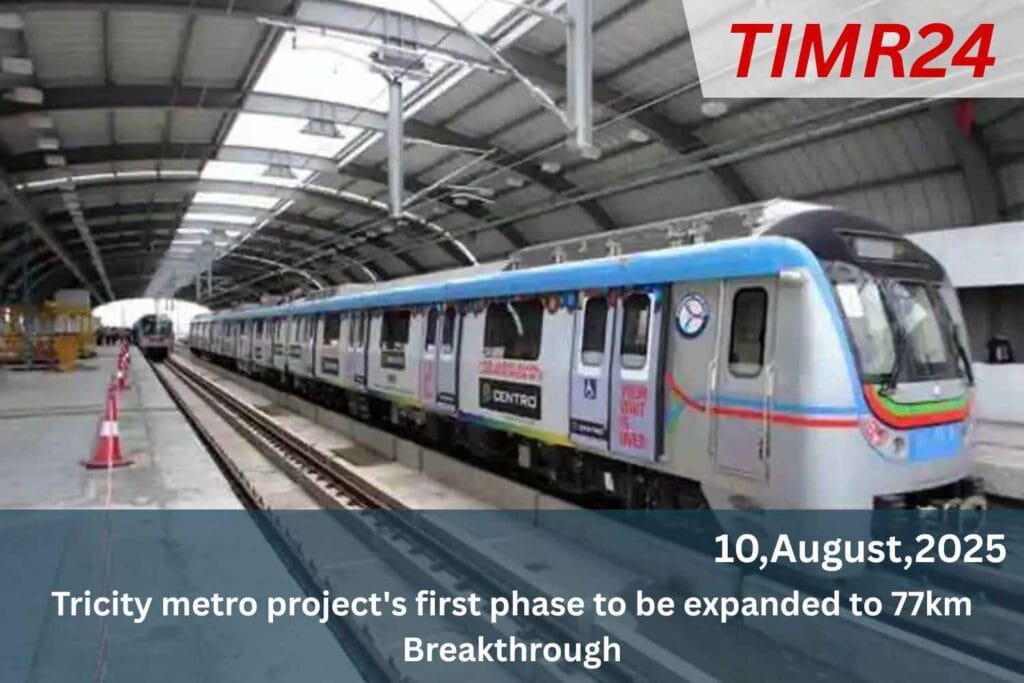
The Punjab metro , Haryana, and Chandigarh administrations and UMTA have approved construction for the first phase of the Trinity Project, which will span 77km. Phase 1 connects Parole to Panchkula Extension, with a timeline of 2027-2037. Phase 2 expands the network to Airport Chowk and ISBT Srirampur. The project’s estimated cost is around Rs 10,570 crore, with 20% from states, 20% from the Centre, and 60% from a lending agency. The Trinity project has taken a major step forward with the announcement that its first phase will be expanded to a total of 77 kilometres. This expansion aims to improve connectivity, reduce traffic congestion, and enhance the commuting experience for thousands of residents and travellers.
Background of the Trinity Metro Project
The Trinity Metro project is a comprehensive urban rail transit system designed to serve fast-growing urban and suburban regions. Initially planned with a smaller network, the first phase now covers a much larger area, ensuring that more residential, commercial, and industrial zones are connected. (India’s Metro Rail) The expansion will introduce multiple new corridors, extend existing lines, and add interchange stations to enhance network connectivity. The first phase, now stretched to 77 km, will serve as the backbone of the region’s public transport system, offering modern trains, high-frequency services, and seamless integration with other modes of transport.
Benefits for Commuters
- Reduced Travel Time – Direct routes and faster services will cut commuting times significantly.
- Lower Costs – Public transport offers a cost-effective alternative to private vehicles.
- Comfort and Safety – Air-conditioned coaches, CCTV surveillance, and better station amenities.
- Environmental Gains – Fewer cars on the road mean lower emissions and improved air quality.
Economic and Developmental Impact
Large-scale metro projects are known to boost local economies. The Trinity Metro expansion is expected to:
- Encourage real estate growth near metro stations.
- Increase footfall for businesses in connected commercial zones.
- Generate employment opportunities during both construction and operation.
- Support tourism and hospitality by improving accessibility.
Technology and Infrastructure Upgrades
The expanded Trinity phase will feature cutting-edge technology, including:
- Automated Fare Collection (AFC) for faster ticketing.
- Platform Screen Doors for safety and efficiency.
- Energy-Efficient Rolling Stock to reduce operational costs.
- Smart Passenger Information Systems for real-time updates.
Funding and Partnerships
Metro expansions require massive funding, often involving a mix of government support, loans from international banks, and private investments. The Trinity Metro’s 77 km expansion is expected to follow a similar model, with clear timelines and milestone-based fund releases to keep construction on track. Once the expanded first phase is operational, the Trinity Metro will be among the largest urban metro networks in its category. Plans for future phases already include further connectivity to satellite towns, industrial hubs, and airports. This positions the metro as a long-term solution for the region’s mobility needs. (Urban Transport Department)
Challenges Ahead
While the expansion is promising, it comes with challenges:
- Land Acquisition – Ensuring timely acquisition without legal disputes.
- Integration with Existing Transport – Smooth transfers between metro, buses, and suburban rail.
- Cost Management – Avoiding budget overruns while maintaining quality.
- Public Awareness – Encouraging more commuters to switch to the metro.
The expansion of the Trinity project’s first phase to 77 km marks a milestone in urban transport development. By improving connectivity, reducing congestion, and promoting sustainable mobility, it has the potential to transform the way people live, work, and travel. The success of this phase will depend on timely execution, effective funding, and strong integration with other transport systems, ensuring that the benefits reach the widest possible population.
Q1. What is the latest update on the Trinity Metro project?
The first phase of the Trinity Metro project will now be expanded to cover 77 km.
Q2. Which cities are included in the Trinity Metro network?
The project will connect Chandigarh, Mohali, and Panchkula.
Q3. Why is the project being expanded?
The expansion aims to improve connectivity, reduce traffic congestion, and support urban growth.
Q4. When is the completion expected?
The first phase is targeted for completion within the next few years, depending on approvals and construction progress.
Q5. How will this benefit commuters?
It will provide faster, eco-friendly travel, reduce road traffic, and improve regional connectivity.