













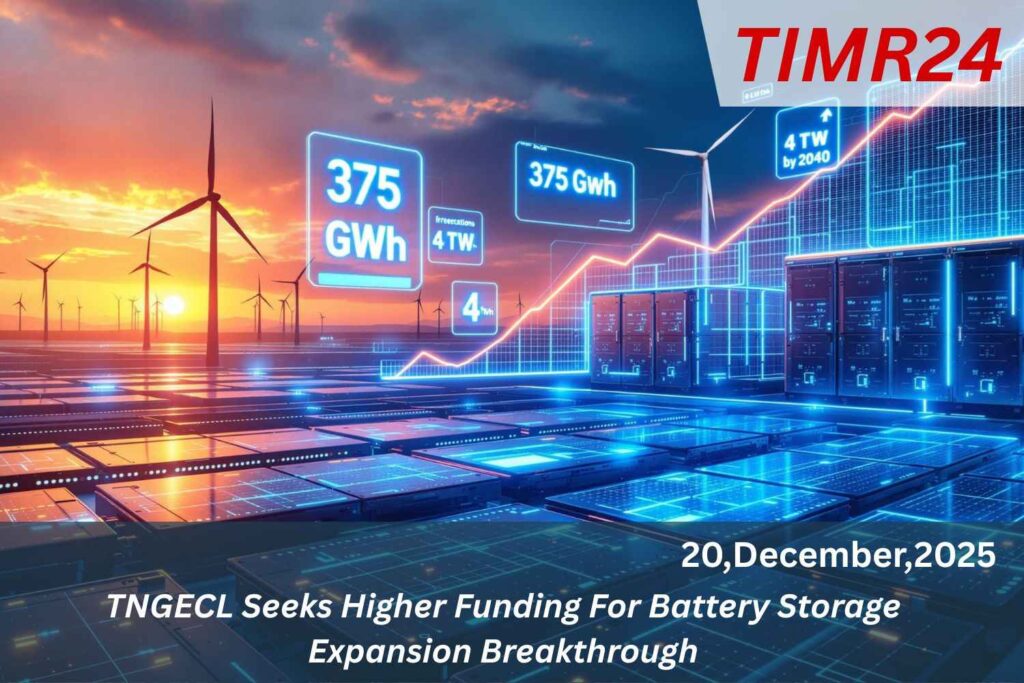
Tamil Nadu Green Energy Corporation Limited (TNGECL) is seeking Union government approval for ₹1.8 million per megawatt in additional funding for its battery energy storage system (BESS) projects. The Ministry of Power has authorized the establishment of BESS units totaling 2,500 MW, with 1,000 MWh already allocated, achieving annual savings of around ₹900 million. TNGECL plans to expand by adding another 1,000 MW of storage, driven by the state’s potential in renewable energy, which currently makes up 55% of its 44 GW power capacity. With an anticipated need for 13 GW of energy storage by 2035, TNGECL highlights the necessity of battery storage to.
Establishment BESS Units Totaling
Manage excess renewable energy generation during non-peak hours, addressing grid stability concerns. The corporation emphasizes compliance with tariff-based (MNRC) bidding guidelines for procurement of renewable sources to balance supply and demand effectively Tamil Nadu Generation and Electricity Corporation Limited (TNGECL) has sought enhanced financial support to accelerate the expansion of battery energy storage systems across the state, reflecting the growing urgency to modernise electricity infrastructure in line with Tamil Nadu’s ambitious renewable energy targets. As one of India’s leading states in wind and solar power capacity.
Tamil Nadu faces increasing challenges related to grid stability, peak demand management, and renewable intermittency. Battery storage has emerged as a critical solution, enabling the state utility to store excess renewable power and deploy it during periods of high demand or low generation. The funding request underscores TNGECL’s strategic intent to future-proof the state’s power ecosystem while ensuring uninterrupted and affordable electricity supply Tamil Nadu’s power sector has undergone significant transformation over the past decade, with large-scale investments in wind and solar generation reshaping the energy mix.
Buffer Generation And Consumption
However, the variability of renewable energy sources has placed operational stress on the grid, particularly during evening peak hours when solar generation drops sharply. Battery energy storage systems help bridge this gap by acting as a buffer between generation and consumption. TNGECL’s proposal for higher funding aims to scale up existing storage capacities and deploy new projects at strategic grid locations, aligning with national clean energy objectives promoted by institutions such as the Ministry of Power and the Ministry of New and Renewable Energy The proposed battery storage expansion is expected to play a pivotal role in improving grid reliability and reducing.
Dependence on costly peaking power plants. Traditionally, utilities have relied on thermal power stations to manage peak demand, often resulting in higher operational costs and increased emissions. By integrating battery storage, TNGECL can optimise the use of renewable energy generated during off-peak hours, lower fuel expenses, and reduce carbon intensity. This shift not only supports environmental sustainability but also enhances long-term financial efficiency for the state utility and electricity consumers alike Another key driver behind TNGECL’s funding request is the rapid growth in electricity demand across Tamil Nadu, fuelled by urbanisation, industrial expansion.
Systems Provide Fast Response Capabilities
And the electrification of transport. Electric vehicle adoption, data centres, and manufacturing clusters require a resilient and flexible power supply, which traditional grid infrastructure alone cannot fully support. Battery storage systems provide fast response capabilities, helping manage sudden fluctuations in demand and maintaining voltage and frequency stability. By investing in storage, TNGECL is positioning itself to support emerging sectors while strengthening the overall power network a policy perspective, the push for battery storage aligns closely with India’s broader energy transition goals. National regulators and planning bodies such as the Central Electricity.
Authority have repeatedly emphasised the importance of storage technologies in achieving high renewable penetration. Tamil Nadu, being a frontrunner in clean energy deployment, is well-placed to demonstrate how state utilities can integrate storage at scale. TNGECL’s funding proposal is therefore not just a financial request but a strategic move that could set benchmarks for other states exploring similar initiatives The financial structure of battery storage projects, however, remains a challenge. High upfront capital costs and evolving regulatory frameworks often deter large-scale deployment. TNGECL’s appeal for higher funding reflects the need for.
Technology Providers, And Leverage Economies
Supportive financing mechanisms, including viability gap funding, concessional loans, and potential public-private partnerships. By securing adequate financial backing, the utility can accelerate project implementation, attract technology providers, and leverage economies (India) of scale. This approach could also help reduce storage costs over time, making battery solutions more accessible across the power sector In addition to grid-scale installations, TNGECL’s expansion plans may include distributed storage solutions integrated with substations and renewable generation hubs. Such decentralised storage can enhance local reliability, minimise transmission losses, and improve disaster.
Resilience during extreme weather events. Tamil Nadu’s coastal geography makes it particularly vulnerable to cyclones and flooding, and battery-backed power systems can ensure critical services remain operational during grid disruptions. The proposed funding would enable TNGECL to explore these advanced applications while strengthening disaster preparedness The economic implications of expanded battery storage are also significant. Large-scale projects can stimulate local manufacturing, create skilled employment opportunities, and support India’s push for domestic battery production. By aligning procurement strategies with national manufacturing.
Public Perception And Consumer Benefits
Initiatives, TNGECL can contribute to supply chain development while reducing reliance on imports. This synergy between infrastructure investment and industrial growth further strengthens the case for increased funding support Public perception and consumer benefits form another important aspect of the storage expansion. Improved grid stability and reduced peak power costs can translate into fewer outages and more predictable tariffs for consumers. As electricity becomes increasingly central to daily life and economic activity, reliable power supply enhances quality of life and business confidence. TNGECL’s proactive approach to storage investment.
Signals a commitment to consumer-centric reforms and long-term service improvement the success of TNGECL’s battery storage expansion will depend on timely approvals, regulatory clarity, and coordinated action among stakeholders. Collaboration with central agencies, financial institutions, and technology providers will be crucial in translating funding commitments into on-ground capacity. If executed effectively, the initiative could significantly enhance Tamil Nadu’s energy resilience and reinforce its leadership in India’s clean energy journey.
TNGECL’s request for higher funding for battery storage expansion marks a critical step in addressing the challenges of renewable integration, rising demand, and grid reliability. By prioritising storage infrastructure, the utility is embracing a forward-looking strategy that balances sustainability, affordability, and operational efficiency. As Tamil Nadu continues to lead India’s renewable energy growth, investments in battery storage will serve as a cornerstone of a modern, resilient, and future-ready power system.
Q1. Why is TNGECL focusing on battery energy storage?
Battery storage helps manage renewable energy variability, improves grid stability, and supports peak demand management.
Q2. How will higher funding benefit Tamil Nadu’s power sector?
It will enable faster deployment of storage projects, reduce reliance on thermal peaking plants, and improve reliability.
Q3. What role does battery storage play in renewable integration?
It stores excess renewable power and releases it when generation is low or demand is high.
Q4. Will consumers benefit from battery storage expansion?
Yes, improved stability and efficiency can reduce outages and long-term power costs.
Q5. Is this aligned with national energy policies?
Yes, it supports India’s clean energy and energy storage objectives promoted by central agencies.