















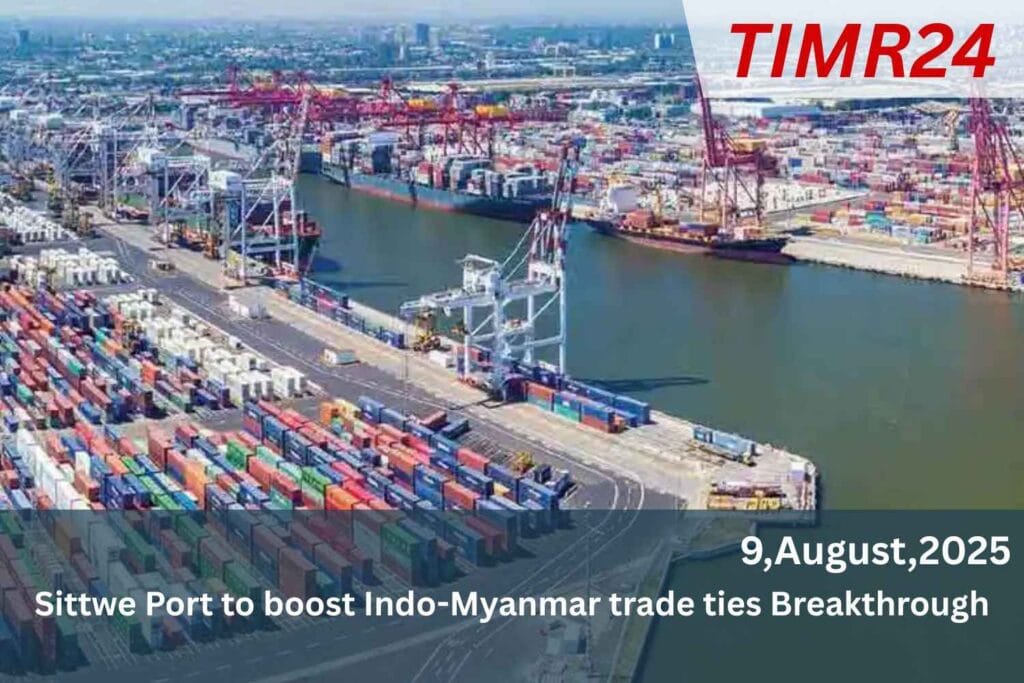
Myanmar is eagerly anticipating the potential of the India-built Sittwe Port, a key component of the Kaladan multi-modal transit transport project. The port is part of a joint initiative between India and Myanmar to establish a multimodal transportation network connecting India’s eastern coast with Myanmar’s waterways and road networks. The port will connect to Paletwa in Myanmar via an inland waterway and a road segment to Zorinpui in Mizoram, India. Local communities in the Arakan state are optimistic about direct trade with India through the Sittwe Port, which is expected to bring economic prosperity to the region.
The development of Sittwe Port in Myanmar marks a significant milestone in strengthening Indo-Myanmar trade relations and enhancing regional connectivity. Strategically located on the Bay of Bengal in Myanmar’s Rakhine State, Sittwe Port serves as a crucial gateway for India to access Southeast Asian markets more efficiently, bypassing the longer traditional routes. This port is a vital component of the larger India-Myanmar-Thailand Trilateral Highway project, which aims to connect India’s Northeastern states with Southeast Asia, facilitating seamless movement of goods and people. Myanmar. (Kaladan Project).
Strategic Importance of Sittwe Port
The port is situated close to India’s Northeastern region, especially states like Mizoram and Manipur, which are otherwise landlocked and have limited access to maritime trade routes. By utilizing Sittwe Port, India can significantly reduce transportation costs and time for imports and exports, which will directly boost trade volumes. This connectivity also complements India’s Act East Policy, which focuses on strengthening economic and strategic relations with Southeast Asia.
Economic Impact on Indo-Myanmar Trade
The operationalization of Sittwe Port is expected to amplify bilateral trade between India and Myanmar. Currently, trade volumes remain modest due to logistical constraints; however, enhanced port facilities and improved road connectivity will open new avenues for industries on both sides. Indian businesses, particularly in sectors such as textiles, pharmaceuticals, and agricultural products, stand to benefit immensely from easier access to Myanmar’s markets. Conversely, Myanmar can export goods like timber, natural gas, and agricultural produce more efficiently to India (India-Port).
Integration with Regional Connectivity Projects
Sittwe Port is not just an isolated infrastructure project but part of a broader vision to create a network of regional trade routes. The port connects with the Kaladan Multi-Modal Transit Transport Project, which includes river and road transport links from Sittwe to India’s Mizoram state. This multimodal approach reduces dependency on the vulnerable Siliguri Corridor — the narrow land strip connecting India’s northeast to the rest of the country. The combined infrastructure projects pave the way for improved trade, tourism, and people-to-people contact, fostering stronger regional ties.
Beyond trade, Sittwe Port holds significant geopolitical value for India. As China expands its influence in Myanmar through projects like the Kauppi port under the Belt and Road Initiative, India’s investment in Sittwe acts as a strategic counterbalance. It helps secure India’s presence in the Bay of Bengal and maintains the balance of power in the region. Moreover, enhanced connectivity and economic cooperation strengthen diplomatic ties, contributing to regional stability and security.
Challenges and Future Prospects
Despite its promise, the development of Sittwe Port and associated projects face challenges such as infrastructural delays, political instability in Myanmar’s Rakhine State, and security concerns. However, sustained cooperation between India and Myanmar, along with international support, can mitigate these risks. In the long term, the full operationalization of Sittwe Port will transform trade dynamics, making it a hub for Indo-Myanmar commerce and a catalyst for economic growth in India’s northeast.
In Sittwe Port is a game-changer in Indo-Myanmar trade ties. By improving connectivity, reducing transportation costs, and enhancing geopolitical influence, the port reinforces India’s strategic and economic outreach in Southeast Asia. As infrastructure projects mature and bilateral cooperation deepens, Sittwe Port will play a pivotal role in shaping the future of regional trade and diplomacy.
Q1. What is the significance of Sittwe Port in Indo-Myanmar trade?
Sittwe Port serves as a strategic gateway for enhancing trade connectivity between India and Myanmar, reducing transportation time and costs.
Q2. How will Port benefit India’s northeastern states?
The port will provide direct access to sea routes, improving trade flow and economic development in India’s Northeastern region by connecting it to international markets.
Q3. What kind of goods will be transported via Sittwe Port?
Both countries plan to transport various goods, including agricultural products, minerals, manufactured goods, and energy resources, through the port.
Q4. How does Port fit into the India-Myanmar bilateral relations?
Sittwe Port is a key infrastructure project under the India-Myanmar-Thailand Trilateral Highway initiative, strengthening economic and strategic ties between the countries.
Q5. What are the future prospects of trade through Port?
With improved infrastructure and connectivity, trade volume is expected to grow significantly, boosting regional economic integration and cooperation.