

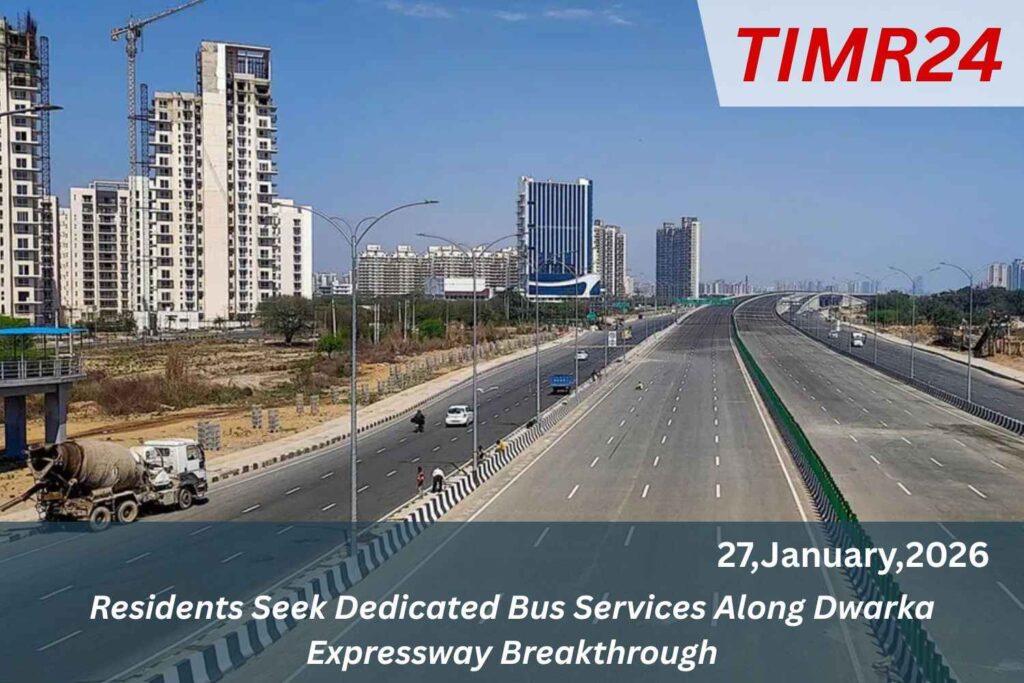
Residents along the Dwarka Expressway in Gurugram have requested the government to establish dedicated bus services connecting city sectors to key Delhi Metro stations. They highlighted poor connectivity that forces reliance on private vehicles, leading to traffic congestion, increased travel times, and deteriorating air quality. The Dwarka Expressway Development Association noted the growth in local infrastructure, but the lack of public transport hampers its potential. Rising commuting costs due to tolls have exacerbated the issue, with existing bus services proving insufficient for last-mile connectivity. The demand emphasizes the urgent need for sustainable public transport solutions in this rapidly developing area The rapid residential development along the Dwarka Expressway has transformed.
Improved Road Connectivity
The region into one of the most promising real estate corridors in Delhi-NCR. Over the last few years, thousands of families have moved into newly constructed housing societies in Gurugram, New Palam Vihar, and adjoining sectors of Dwarka. While the expressway has improved road connectivity between (India) Delhi and Gurugram, the absence of a structured public transport system has emerged as a serious concern for daily commuters. Residents now strongly feel that road infrastructure alone is not sufficient to meet the growing mobility needs of this expanding population One of the biggest challenges faced by residents is the lack of reliable and affordable commuting options. At present, most people depend on private cars, two-wheelers, app-based taxis, and a limited number of shared autos.
This not only increases daily travel expenses but also adds to traffic congestion during peak hours. Office-goers, students, and senior citizens find it particularly difficult to manage daily travel without a dependable bus service. Many residents have raised this issue through Resident Welfare Associations and civic forums, urging authorities to introduce dedicated bus routes along the expressway The demand for a dedicated bus service is also closely linked to the issue of last-mile connectivity. Although the Dwarka Expressway connects major urban centres, access to nearby metro stations remains inconvenient for many residential pockets. A well-planned bus network can act as a feeder service to metro corridors such as the Dwarka Sector-21 station and upcoming metro extensions.
Eco Friendly Commuting Habits
This integration can significantly reduce travel time and improve the overall efficiency of public transport in the region. Urban planners believe that multimodal connectivity is essential for sustainable city growth From an environmental perspective, the introduction of public buses can play a crucial role in reducing carbon emissions. The increasing number of private vehicles on the expressway has already begun to impact air quality and noise levels. Public transport can help reduce the overall vehicle load and promote eco-friendly commuting habits. Experts from the sustainable mobility sector suggest that electric or CNG-powered buses should be considered to further enhance environmental benefits. This step can align with India’s broader goals of reducing urban pollution and promoting green transport solutions.
Local authorities are gradually acknowledging the importance of this demand. Transport departments in Delhi and Haryana have reportedly started preliminary discussions on route planning and feasibility assessments. Coordination between municipal bodies, transport corporations, and traffic police will be essential to ensure smooth implementation. Proper bus bays, shelters, and traffic management systems will also need to be developed to support the new services. Without proper planning, even a dedicated bus service may fail to deliver the expected results The economic impact of improved public transport along the Dwarka Expressway cannot be ignored. Better connectivity can increase property values, attract new businesses, and support commercial growth in the surrounding areas.
Commuting Options Residents Continue
Many real estate developers are already highlighting the need for public transport in their project communications. A reliable bus network can make the corridor more attractive for working professionals and middle-income families who depend on cost-effective commuting options Residents continue to play a vital role in pushing this initiative forward. Through petitions, social media campaigns, and meetings with local representatives, the community is actively participating in shaping transport policy. This reflects a broader shift in urban India, where citizens are becoming more involved in infrastructure planning and governance. The success of this movement will depend on sustained public pressure and timely government action.
In the long term, the introduction of dedicated bus services along the Dwarka Expressway can serve as a model for other emerging urban corridors in India. As cities expand beyond traditional (India) boundaries, planned public transport will be the backbone of sustainable urban living. The current demand is not just about buses; it is about creating a more inclusive, accessible, and environmentally responsible urban transport system for the future.
Q1. Why are residents demanding dedicated bus services on Dwarka Expressway?
Residents face daily transport issues due to lack of affordable and regular public buses, increasing dependence on private vehicles.
Q2. How will dedicated bus services benefit daily commuters?
It will reduce travel cost, improve connectivity to metro stations, and decrease traffic congestion.
Q3. Which areas will benefit most from the new bus routes?
New residential sectors in Gurugram, New Palam Vihar, and Dwarka zones will benefit significantly.
Q4. Are any government authorities reviewing this demand?
Local transport departments and urban development authorities are reviewing feasibility reports.
Q5. Can this initiative improve environmental sustainability?
Yes, public transport will reduce carbon emissions and promote greener mobility.