















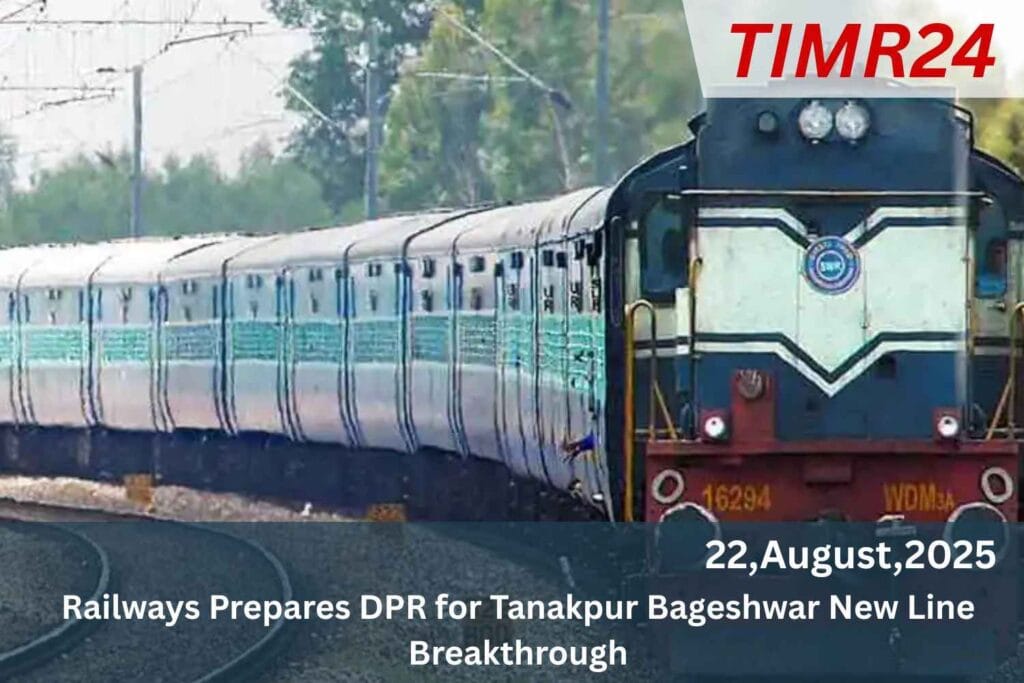
The Ministry of Railways has submitted a Detailed Project Report for the proposed 170 km Tanakpur Bageshwar new line in Uttarakhand, indicating low traffic potential and requiring government consultations and approvals. The Indian Railways has recently initiated the preparation of a Detailed Project Report (DPR) for the proposed Tanakpur–Bageshwar new railway line, a move that could change the future of transportation in Uttarakhand. This ambitious project is aimed at connecting Tanakpur, an existing railhead in the plains, with Bageshwar, a key district located in the picturesque Kumaon region. By bridging this gap, the project not only promises to improve passenger.
Convenience but also opens up fresh avenues for trade, commerce, and tourism in the hill state. According to officials, the DPR will outline the feasibility, cost estimates, alignment, and environmental considerations necessary before moving ahead with construction. The Kumaon region of Uttarakhand has long faced challenges in connectivity due to its rugged terrain and limited infrastructure. Road transport has remained the primary mode of travel, often restricted by weather conditions and steep geographical barriers. The proposed Tanakpur–Bageshwar rail line is therefore being seen as a game changer. With the DPR underway, the Indian Railways aims to offer.
The people of districts like Champawat, Almora, and Bageshwar easier access to the national rail network. This will not only shorten travel time but also provide a cost-effective, reliable, and safe means of transport. For those following the development of similar projects, the ongoing work on the (Rail Line) provides a valuable reference for how rail connectivity can transform remote Himalayan areas. One of the key highlights of the proposed line is its potential to boost tourism. Kumaon is home to renowned tourist destinations such as Almora, Kausani, Choukri, and the sacred temples of Bageshwar. Currently, tourists must endure long road journeys from Kathgodam or Tanakpur to.
Reach these destinations. A direct railway line would significantly reduce travel fatigue, making the region more accessible to domestic as well as international visitors. This development complements other infrastructure initiatives in Uttarakhand such as aimed at supporting pilgrimage and tourism. The DPR for Tanakpur–Bageshwar will carefully study the alignment to ensure that tourist hubs benefit directly from the proposed stations. Beyond tourism, the railway line has strong economic implications. Bageshwar and Almora are known for their handicrafts, agro-based industries, and horticulture products like apples, walnuts, and herbs. Currently, the absence of a rail link makes.
It costly and time-consuming to transport goods to markets in Delhi, Lucknow, and beyond. With the Tanakpur–Bageshwar line in place, local producers will have greater market access, reducing logistics costs and enhancing competitiveness. The state government has also highlighted how such projects can support employment generation by boosting local trade and small industries. Similar benefits were observed after the improved freight movement in Jammu & Kashmir. Constructing a railway line in the Himalayan terrain is no small feat. The DPR will analyse the technical challenges such as tunnelling, bridges, and slope stabilization while keeping in mind.
The fragile ecology of the region. The Indian Railways has increasingly adopted sustainable construction practices, including advanced tunnelling technology and bioengineering for slope protection, as seen in the Rishikesh–Karnaprayag project. These learnings are expected to play a crucial role in the Tanakpur–Bageshwar line as well. Moreover, careful environmental assessments will ensure that the natural beauty of the region is preserved while delivering modern infrastructure This project aligns with the central government’s larger vision of enhancing connectivity in border and hill states. Uttarakhand, with its strategic location, not only holds cultural and ecological.
Importance but also plays a significant role in security and development. The new line is expected to strengthen socio-economic integration by linking remote hill districts with the heart of India’s railway network. While the completion timeline will depend on the DPR’s findings, funding approvals, and clearances, the project has already generated optimism among residents, policymakers, and businesses. For readers tracking infrastructure updates in the state, our coverage on the and provide further insights into how new investments are shaping India’s future.
The preparation of the DPR for the Tanakpur–Bageshwar new railway line marks the beginning of a transformative journey for Uttarakhand’s Kumaon region. By blending improved connectivity with opportunities for tourism, trade, and economic growth, the project has the potential to er (Indian Railways) redefine the socio-economic landscape of the state. As the Indian Railways takes this step forward, all eyes will remain on how quickly the DPR translates into on-ground progress and brings long-awaited benefits to the people of the hills.
Q1. What is the Tanakpur–Bageshwar new railway line project?
It is a proposed rail line to connect Tanakpur with Bageshwar, improving accessibility in Uttarakhand’s Kumaon region.
Q2. Who is preparing the DPR for the project?
Indian Railways is preparing the Detailed Project Report (DPR) for the Tanakpur–Bageshwar line.
Q3. How will this new line benefit the region?
It will boost tourism, enhance connectivity, support local trade, and generate employment opportunities.
Q4. What is the estimated length of the new line?
The project is expected to cover around 150 km, linking key towns in Uttarakhand.
Q5. When is the Tanakpur–Bageshwar rail line likely to be completed?
The timeline will be decided after DPR approval, funding, and clearance from authorities.