














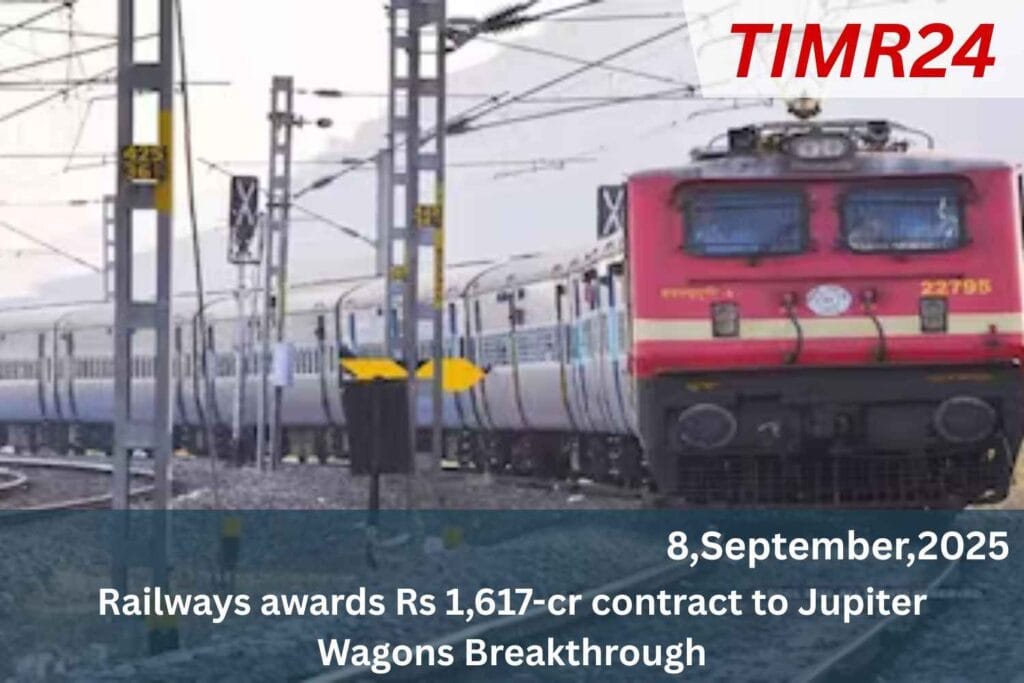
Indian Railways has awarded a Rs 1,617 crore contract to Jupiter Wagons for manufacturing and supplying 4,000 BOXNS Wagons, a Bogie Open Wagon with Pneumatic Brake, capable of carrying heavy loads. Jupiter Group, a leading producer of railway wagons and passenger coaches, also offers load bodies for commercial vehicles. Indian Railways has once again demonstrated its commitment to modernization, indigenous manufacturing, and sustainable transport by awarding a landmark ₹1,617 crore contract to Jupiter Wagons. This breakthrough is more than a business deal; it reflects the evolving role of India’s railway network as the backbone of the country’s.
Economy and infrastructure push. To appreciate the depth of this development, it’s worth exploring its impact across freight logistics, Make in India, sustainability, job creation, and how it ties into broader railway reforms already underway. At the heart of this contract lies the manufacture and supply of freight wagons, a crucial segment of the transport chain. Freight movement in India has been growing steadily, with industries like steel, coal, agriculture, and cement relying heavily on railways for cost-effective logistics. By entrusting Jupiter Wagons with such a large order, Railways is sending a signal that freight modernization is a national priority. More wagons mean faster cargo.
Turnaround, lower logistics costs, and reduced dependency on road transport, which often leads to congestion and higher emissions This development aligns closely with the Dedicated Freight Corridor (DFC) project, a transformative initiative to improve freight capacity and efficiency. The new wagons manufactured under this deal will seamlessly integrate with DFC operations, ensuring smoother logistics across industrial zones and ports. To understand how DFC is changing India’s cargo landscape, you can check the For readers interested in similar progress, our coverage of the (NHAI) shows how integrated freight infrastructure is becoming the norm in India.
Strengthening the Make in India Initiative
The award of this contract is also a testament to the government’s Make in India mission, encouraging homegrown companies like Jupiter Wagons to build world-class rolling stock. Until a few years ago, a significant portion of high-tech wagon and coach requirements had to be met through imports or joint ventures with foreign players. By empowering domestic firms, Railways is building industrial strength while simultaneously reducing reliance on external supply chains Jupiter Wagons’ facilities are designed to deliver large orders on time while meeting global quality standards. This also positions India as a potential exporter of freight wagons in the coming years. Similar.
Trends have been noted in the defense and aerospace sectors, where indigenous companies are rising to global prominence. For instance, our story on the (GIFT City) highlights how Indian firms are increasingly scaling their operations to match international demand Sustainability is no longer optional in the transport sector. Indian Railways, one of the world’s largest networks, is also one of the biggest energy consumers. In this context, wagon design and manufacturing have to balance efficiency, durability, and eco-friendliness. Jupiter Wagons’ order is not just about numbers; it’s about introducing next-generation wagon models that will optimize fuel consumption, carry heavier loads, and reduce maintenance costs.
Railways has already committed to achieving net-zero carbon emissions by 2030, and contracts like this push that vision forward. With electrification expanding rapidly across the network, energy-efficient wagons will multiply the sustainability gains. If you’re curious about how Indian Railways is approaching this transformation This sustainability push also resonates with our earlier report urban transport integration is designed to cut emissions and improve efficiency.
Employment and Wider Economic Ripple Effects
A ₹1,617 crore investment is not just a contract on paper; it carries immense economic implications. Manufacturing wagons at this scale requires a supply chain that spans steelmakers, parts suppliers, logistics providers, and skilled labor. Thousands of direct and indirect jobs are likely to be created, from shop-floor workers to engineers and logistics personnel. Beyond employment, such investments stimulate local economies around manufacturing hubs, creating opportunities for small and medium enterprises that provide supporting services The broader ripple effect is seen in the way such deals increase investor confidence. Infrastructure projects generate momentum, attracting.
Private sector participation in areas like logistics, warehousing, and allied industries. We saw a similar trend which sparked parallel investments in nearby towns. This contract is not an isolated event. It fits into a larger story of railway modernization that includes station redevelopment programs, electrification drives, and high-speed corridor planning. The government’s vision of doubling freight traffic share by 2030 cannot be achieved without such large-scale partnerships Consider which are designed to complement rail infrastructure. Together, road-rail synergy is transforming the way goods move across India. By awarding this contract, Railways ensures that.
Positioning India on the Global Rail Map
When these expressways and industrial corridors are fully operational, the wagon capacity will be ready to handle the surge in demand Globally, railway logistics is undergoing rapid change with smart technologies, automated systems, and greener rolling stock. Countries like Japan and Germany have long led this space, but India is catching up fast. By giving Jupiter Wagons such a significant role, Indian Railways is not only addressing domestic demand but also signaling readiness to meet international standards In the long run, this could open avenues for export markets, where India can supply wagons and rail components to neighbouring countries in South Asia.
Africa, and beyond. The successful execution of this contract could position Jupiter Wagons as a competitive global supplier The ₹1,617 crore contract awarded to Jupiter Wagons represents more than just numbers on paper. It is a bold step toward freight efficiency, industrial self-reliance, and sustainable transport. By expanding wagon capacity, encouraging indigenous manufacturing, promoting innovation, and generating jobs, this breakthrough sets a new benchmark in Indian Railways’ modernization story The move also complements broader reforms such as freight corridors, urban transport integration, and multi-modal logistics, creating a unified ecosystem where railways continue to serve as the backbone of India’s economic growth.
For those following India’s infrastructure journey, this is a development to watch closely. The long-term benefits will unfold not just in the railway sector but across the economy, impacting trade, employment, and sustainability goals.
Q1. What is the value of the contract awarded to Jupiter Wagons by Railways?
The contract value is ₹1,617 crore, focused on freight wagon manufacturing.
Q2. How does this contract support Make in India?
It boosts local manufacturing capacity and reduces reliance on imports.
Q3. What role will Jupiter Wagons play in railway modernization?
The company will supply advanced freight wagons to improve logistics efficiency.
Q4. How does this benefit the Indian economy?
It creates jobs, strengthens the supply chain, and supports infrastructure growth.
Q5. What are the long-term goals of this partnership?
Enhancing sustainability, freight corridor growth, and rail capacity expansion.