
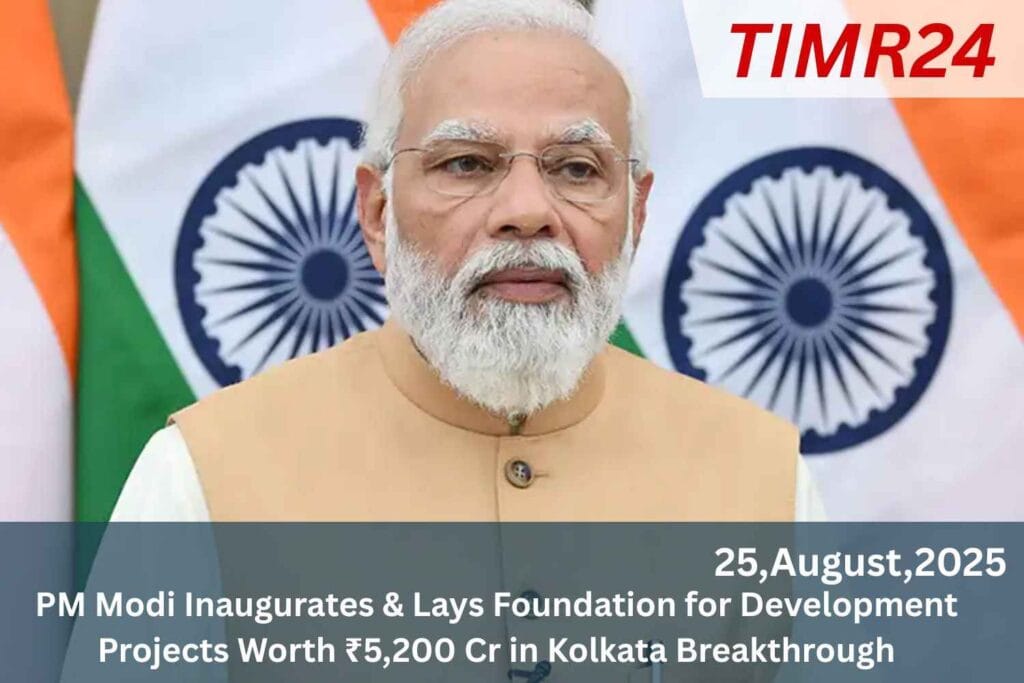
Prime Minister Narendra Modi inaugurated development projects worth over ₹5,200 crore in Kolkata, West Bengal. He emphasized the importance of cities like Kolkata and Dum Dum in India’s growth journey. Modi inaugurated metro railway projects, including a 13.61 km long metro network and services. He also inaugurated a subway at Howrah Metro Station, enhancing multimodal connectivity and improving access to airports. He also laid the foundation stone for a 7.2 km long Kona Expressway, worth over Rs 1,200 crore, to improve connectivity between Howrah and Kolkata. Modi emphasized the need for a modern transport system in India, stating that modern facilities are being developed and integrated to ensure seamless connectivity.
Prime Minister Narendra Modi’s visit to Kolkata brought a wave of development promises as he inaugurated and laid the foundation of projects worth ₹5,200 crore. This initiative is seen as a landmark step for West Bengal’s capital, aiming to strengthen its infrastructure, uplift public amenities, and accelerate its role as a vital economic hub in eastern India. One of the biggest focuses of these Delhi Metro’s projects lies in urban infrastructure. The city, known for its blend of tradition and modernity, has long struggled with outdated facilities. The new investments include modern housing, urban redevelopment, and sustainable public facilities. With a planned push toward smart infrastructure, Kolkata is expected to witness improved quality of life and better living conditions.
Transport has always been a backbone for Kolkata, famously home to India’s first metro system. The newly announced projects will expand metro connectivity and upgrade road networks. This expansion will not only ease daily commutes for millions but also attract businesses to invest in the city due to improved logistics. The ₹5,200 crore plan also invests significantly in healthcare and education. New hospitals, medical colleges, and modernized schools are on the agenda. These facilities will improve access to essential services for the people of Kolkata, particularly in underserved areas. With healthcare being a key government priority post-pandemic, such investments will enhance both capacity and quality of services.
Healthcare and Education Reforms
Kolkata, once considered an industrial hub, is regaining its momentum. The foundation of new industrial parks, logistics centers, and tech hubs is part of the development vision. These projects are expected to generate thousands of jobs, supporting youth employment and local businesses. This aligns with the government’s ‘Make in India’ and ‘Digital India’ campaigns, strengthening Make in India Bengal’s role in the national growth story. Kolkata’s charm lies in its cultural heritage, and the government emphasized that development would not compromise tradition. Projects include heritage conservation along with modernization of public facilities. This balance ensures that while the city grows into a modern metropolis, it continues to retain its historical significance.
Prime Minister Narendra Modi’s announcement of development projects worth ₹5,200 crore in Kolkata marks a turning point for the city’s future. Known for its cultural richness, Kolkata has long needed modern infrastructure to match its potential as a leading metro city. The new projects cut across transportation, housing, healthcare, and industrial growth, reflecting a vision to make Kolkata not only a heritage city but also a competitive hub of the future.
Q1. What is the total worth of projects inaugurated by PM Modi in Kolkata?
The projects are worth ₹5,200 crore
Q2. Which sectors will benefit from these projects?
Transport, housing, healthcare, education, and industrial development.
Q3. How will Kolkata citizens benefit from these projects?
Better connectivity, jobs, improved amenities, and upgraded infrastructure.
Q4. Are there metro and road projects included in the ₹5,200 crore plan?
Yes, metro expansions and road upgrades are major highlights.
Q5. How do these projects align with India’s growth vision?
They support urban modernization, sustainable infrastructure, and economic growth.