




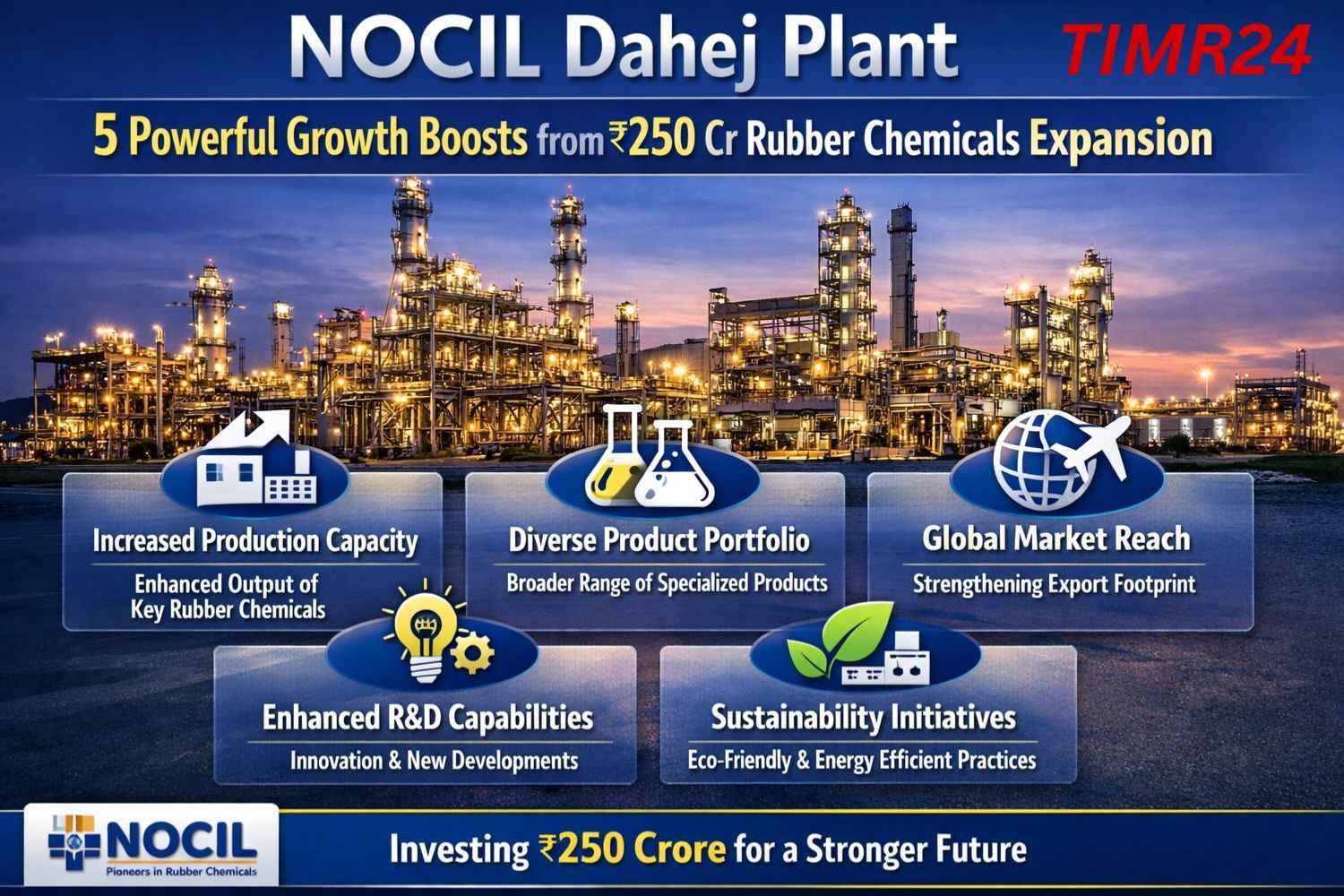








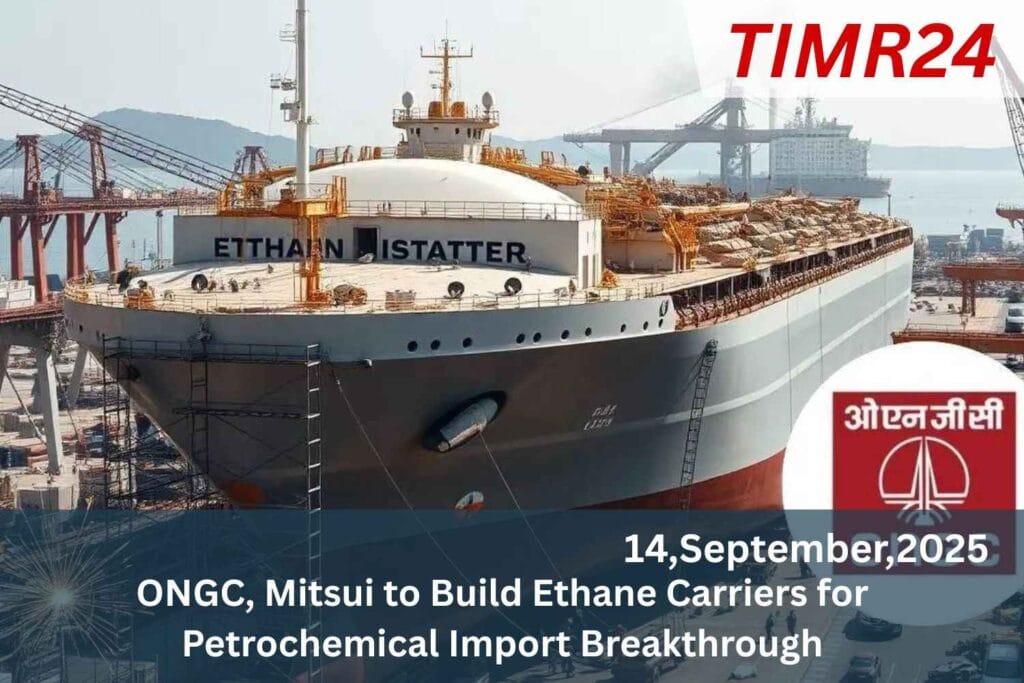
Japanese shipping firm Mitsui O.S.K. Lines will operate two large ethane carriers (VLECs) for Oil and Natural Gas Corporation (ONGC) to import petrochemical feedstock for a subsidiary of the state-owned company. ONGC has entered into a partnership to build, own, and operate the two VLECs. Mitsui is expected to hold a majority stake in the ships, which will be constructed at Korean shipyards. Ethane imports are expected to begin around mid-2028. The specialised ships, estimated at USD 370 million for both vessels, are aimed at securing petrochemical feedstock for ONGC Petro Additions Ltd.’s (OPaL) facility at Dahej. The ONGC board is set to decide on the final partnership.
Arrangement. ONGC plans to start importing ethane in mid-2028 to offset the altered composition of LNG sourced from Qatar. India’s petrochemical industry is entering a new era of transformation with the announcement that Oil and Natural Gas Corporation (ONGC) has partnered with Japanese conglomerate Mitsui & Co. to develop advanced ethane carriers dedicated to petrochemical imports. This breakthrough initiative is set to redefine the supply chain of petrochemical feedstock in India and ensure long-term energy security for a rapidly expanding industrial base. Ethane, a byproduct of natural gas extraction, is a critical feedstock for the production of ethylene.
Which in turn is used in the manufacturing of plastics, fibbers, packaging materials, and other high-demand petrochemical products. For India, which is witnessing a consistent rise in petrochemical consumption due to rapid urbanization, industrialization, and consumer market expansion, ensuring the availability of ethane at competitive costs is crucial. The decision of ONGC to collaborate with Mitsui marks a strategic shift in how India plans to balance domestic demand with global supply chains, especially when reliance on traditional naphtha-based petrochemical production is becoming less cost-effective and less sustainable The collaboration between ONGC and Mitsui comes.
At a time when India is focusing on diversifying its energy mix and improving its industrial competitiveness through initiatives like (Make in India) and Atmanirbhar Bharat. Petrochemicals form the backbone of countless industries ranging from textiles to automobiles, and the availability of ethane will significantly enhance India’s ability to compete with countries such as China, South Korea, and the United States, which already have advanced ethane-based petrochemical systems in place. ONGC, being India’s flagship oil and gas company, has been expanding into downstream sectors to ensure vertical integration, while Mitsui brings unmatched global experience in shipping and logistics infrastructure.
Together, they are not only addressing a supply chain gap but also paving the way for a more resilient petrochemical ecosystem in India The importance of ethane carriers in this context cannot be overstated. Unlike traditional oil tankers or LPG carriers, ethane carriers are specialized vessels designed to transport liquefied ethane under controlled pressure and temperature. Building such vessels requires sophisticated technology, international expertise, and significant investment. By bringing Mitsui on board, ONGC is ensuring that the carriers meet the highest global standards of safety, efficiency, and reliability. This also indicates that India is gearing up to import.
Ethane on a much larger scale, most likely from the United States, which has emerged as one of the largest ethane exporters in the world thanks to its shale gas revolution. Establishing a steady and reliable ethane import supply chain will allow India to shift a significant portion of its petrochemical feedstock dependency towards ethane, reducing both costs and environmental impact compared to naphtha-based alternatives.
The downstream implications of this project are immense. As India secures ethane for domestic use, industries such as (Manufacturing) packaging, textiles, pharmaceuticals, and automotive components will witness lower input costs, improved quality standards, and higher competitiveness in the global market. This will also directly support the expansion of India’s petrochemical clusters in regions like Gujarat, Maharashtra, and Andhra Pradesh, which are already emerging as hubs for industrial development. Furthermore, by ensuring feedstock availability, ONGC and Mitsui are indirectly contributing to job creation, foreign investment attraction, and enhanced export potential for India’s petrochemical products.
Another important dimension to consider is the sustainability angle. Ethane-based petrochemicals are generally regarded as more energy-efficient and environmentally sustainable compared to naphtha-based systems. With India committing itself to a net-zero pathway by 2070, shifting towards cleaner and more efficient feedstocks is critical. The ONGC-Mitsui partnership aligns with India’s broader climate commitments, as it not only strengthens industrial capacity but also reduces the carbon footprint of the petrochemical supply chain. At the same time, global investors and partners are increasingly evaluating industrial projects through the lens of Environmental, Social, and Governance.
Compliance, and this project positions India favourably in that context On the maritime front, the project also highlights the growing importance of and shipping modernization. Ethane carriers will require specialized port facilities, cryogenic storage systems, and advanced safety mechanisms. This could trigger a wave of investments in port upgrades, logistics, and coastal infrastructure, enabling India to handle larger volumes of not just ethane but other specialized petrochemical imports as well. Ports in Gujarat, such as Dahej and Hazira, or facilities along the east coast, may emerge as key nodes in the ethane import network, and this will have a multiplier effect on regional.
Development. With ONGC already operating several offshore projects, the integration of shipping and port logistics with downstream petrochemical processing will create a seamless supply chain that enhances India’s competitiveness Globally, this development also strengthens India’s position in the energy trade network. By sourcing ethane primarily from the United States, India deepens its energy and trade ties with North America while also diversifying away from its traditional dependence on the Middle East for hydrocarbons. This diversification is crucial in a world where geopolitical tensions and supply disruptions are increasingly common. Moreover, with Mitsui being a.
Global player in shipping and logistics, the project ensures that India is connected to best practices and global benchmarks in ethane transport. This collaboration could also set the stage for future expansions into other specialized shipping solutions, reinforcing India’s ambition to become a maritime and manufacturing powerhouse From a policy perspective, this initiative is aligned with the goals of and India’s industrial roadmap under the PLI (Production Linked Incentive) schemes. By investing in ethane carriers and securing feedstock, India is signaling to global investors that it is serious about creating a stable and predictable environment for petrochemical growth.
This is particularly important as demand for petrochemicals is expected to double in the next decade, driven by rising consumer demand, urban infrastructure expansion, and the growth of sectors such as renewable energy and electric vehicles, which also require advanced petrochemical products The ONGC-Mitsui collaboration is therefore not just about building ships but about reimagining India’s entire petrochemical supply chain. It is a long-term bet on industrial growth, sustainability, and global competitiveness. By ensuring feedstock security, strengthening shipping infrastructure, reducing reliance on naphtha, and aligning with climate goals, the project represents a multi-dimensional breakthrough.
As India prepares to enter the next phase of its economic development, partnerships like this will define the country’s ability to meet industrial demand, attract global investments, and create millions of jobs. With ONGC leading from the front and Mitsui bringing global expertise, the ethane carrier project stands as a symbol of India’s ambition to be not just a consumer market but also a producer, innovator, and leader in the global petrochemical industry
Q1 Why are ONGC and Mitsui building ethane carriers?
To strengthen India’s petrochemical supply chain by enabling bulk ethane imports.
Q2 How will ethane imports benefit India’s economy?
By supporting petrochemical production, reducing costs, and boosting industrial growth.
Q3 Where will India import ethane from?
Primarily from the United States, which is a leading exporter of ethane.
Q4 What industries will benefit most from this project?
Petrochemicals, plastics, packaging, and downstream manufacturing.
Q5 Will this project contribute to sustainability?
Yes, ethane is a cleaner alternative to naphtha and supports India’s energy transition.