













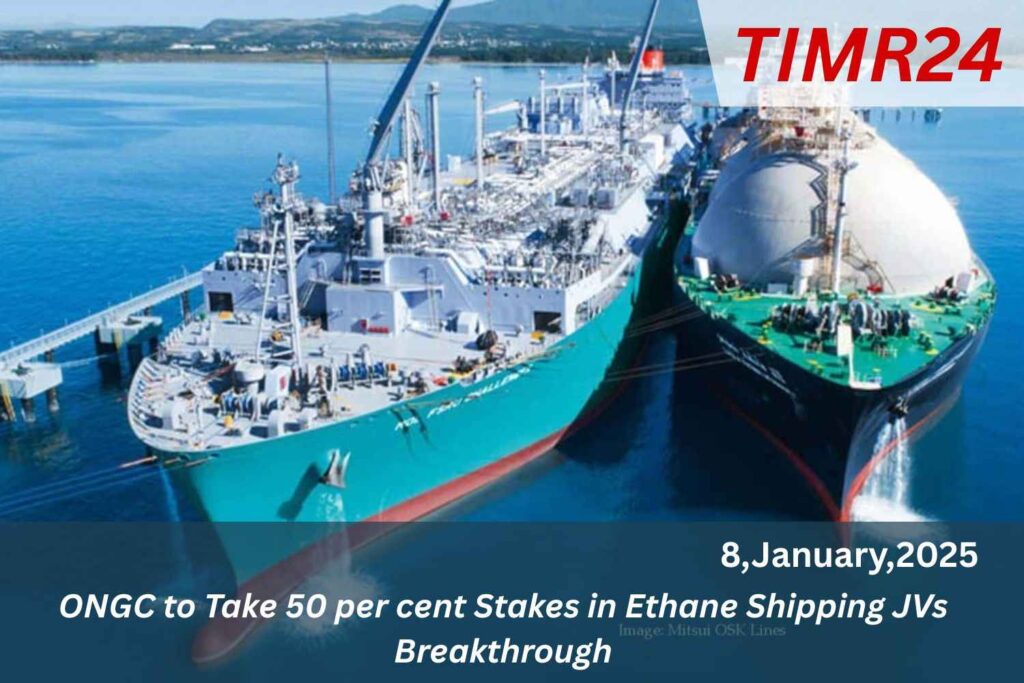
State-owned Oil and Natural Gas Corporation (ONGC) plans to acquire a 50% stake in two joint venture companies with Mitsui OSK Lines to operate ethane carriers. ONGC will subscribe to 200,000 equity shares in Bharat Ethane One IFSC Private Limited and Bharat Ethane Two IFSC Private Limited, both located in GIFT City, Gandhinagar. Each joint venture will manage one very large ethane carrier, facilitating transport of ethane from the U.S. to ONGC Petro Additions Limited. This strategic initiative integrates ONGC’s operational capabilities with Mitsui’s maritime expertise and aims to enhance its energy logistics operations and value chain diversification.
Country’s Energy Logistics And Petrochemical
Oil and Natural Gas Corporation (ONGC), India’s largest upstream oil and gas producer, is set to take a major strategic leap by acquiring a 50 per cent stake in ethane shipping joint ventures, marking a significant breakthrough in the country’s energy logistics and petrochemical supply ecosystem. This move reflects ONGC’s long-term vision of securing critical raw material transportation while reducing dependence on volatile global shipping markets. By entering ethane shipping partnerships, ONGC is not only strengthening its integration across the energy value chain but also ensuring supply certainty for India’s growing petrochemical demand.
Ethane plays a crucial role in the petrochemical industry, particularly as a feedstock for producing ethylene, which is essential for plastics, packaging, textiles, and industrial chemicals. India’s domestic ethane availability remains limited, compelling companies to rely on imports from energy-rich regions such as the United States and the Middle East. ONGC’s decision to take equity ownership in ethane shipping joint ventures allows the company to exercise greater control over transportation costs, fleet availability, and scheduling, thereby enhancing the reliability of supply to downstream users The proposed joint ventures are expected to involve specialized Very.
Conventional LNG Or Crude Oil
Large Ethane Carriers (VLECs), which are technologically advanced vessels designed to transport ethane under specific temperature and pressure conditions. These ships are significantly more complex and capital-intensive than conventional LNG or crude oil carriers. By investing directly in these shipping assets, ONGC reduces exposure to charter rate volatility and mitigates geopolitical risks that often disrupt international energy logistics. This strategy aligns with ONGC’s broader objective of securing critical infrastructure that supports India’s industrial expansion From a strategic standpoint, the move complements ONGC’s existing and planned petrochemical initiatives.
India’s petrochemical sector is witnessing rapid growth driven by rising urbanization, manufacturing expansion, and consumer demand. Reliable ethane imports can support higher capacity utilization at cracker units and reduce dependence on naphtha, which is more expensive and carbon-intensive. This transition supports India’s push toward cost-efficient and cleaner feedstock options while enhancing global competitiveness The joint venture structure, with ONGC holding a 50 per cent stake, ensures shared risk and expertise. Shipping partners are likely to bring technical know-how, operational experience, and fleet management capabilities, while ONGC contributes.
Shipping Alliances Formed By Middle Eastern
Long-term cargo assurance and financial strength. Such partnerships are increasingly common among national oil companies aiming to de-risk capital-intensive maritime investments. Similar global models can be observed in energy shipping alliances formed by Middle Eastern and Asian oil majors This initiative also has broader implications for India’s energy security framework. Ethane shipping capacity has historically been constrained due to limited vessel availability worldwide. By securing equity stakes in shipping ventures, ONGC ensures that India is not sidelined during periods of high global demand. This is particularly important as geopolitical tensions.
Trade disruptions, and climate-related challenges increasingly affect global supply chains. A dedicated ethane shipping arrangement offers resilience against such uncertainties From a financial perspective, the investment is expected to provide stable, long-term returns. Ethane shipping contracts typically operate under long-term charter agreements, ensuring predictable cash flows. For ONGC, this aligns well with its objective of balancing upstream volatility with steady midstream and downstream revenues. Investors often view such diversification positively, as it cushions earnings against crude oil price fluctuations The development also supports India’s ambition to become a.
Effect On Employment Exports And Industrial
Global petrochemical hub. As capacity expansions are planned across western and southern India, assured ethane supplies can help attract further investments into polymer and specialty chemical manufacturing. This creates a multiplier effect on employment, exports, and (India) industrial growth. The shipping joint ventures, therefore, extend beyond logistics and play a catalytic role in national economic development In addition, ONGC’s participation in ethane shipping aligns with evolving environmental standards. Modern ethane carriers are designed with advanced fuel efficiency systems and lower emission profiles compared to older vessels. By investing in newer fleets.
ONGC can indirectly contribute to reducing the carbon footprint of maritime transport. This complements the company’s broader sustainability initiatives and India’s commitments under international climate frameworks The policy environment in India has also become more supportive of such strategic overseas and maritime investments. Government emphasis on energy security, self-reliance, and infrastructure development provides a favorable backdrop for ONGC’s move. The joint ventures are expected to comply with international maritime regulations while aligning with India’s shipping and trade policies ONGC’s ethane shipping strategy could serve as.
Global Competition Intensifies
A blueprint for similar investments in LNG, hydrogen, and ammonia transport as India transitions toward cleaner energy sources. Ownership in specialized shipping assets may become increasingly important as new energy carriers emerge and global competition intensifies. This forward-looking approach positions ONGC not just as a resource producer, but as an integrated energy logistics player From an international perspective, similar developments in ethane shipping can be tracked through organizations such as the U.S. Energy Information Administration and International Energy Agency , which provide insights into global ethane trade flows and energy transport trends.
Additionally, maritime technology updates can be referenced from Clarksons Research , a leading authority on shipping markets Overall, ONGC’s decision to acquire a 50 per cent stake in ethane shipping joint ventures represents a decisive step toward securing India’s energy future. It underscores the importance of integrated planning across production, transportation, and (India) consumption, while reinforcing ONGC’s role as a strategic national energy champion. As global energy dynamics continue to evolve, such forward-thinking investments are likely to define the next phase of India’s energy and industrial growth.
Q1. Why is ONGC investing in ethane shipping joint ventures?
ONGC aims to secure long-term ethane transportation, reduce logistics risks, and support India’s growing petrochemical demand.
Q2. What is the significance of a 50% stake in these JVs?
A 50% stake allows shared control, risk diversification, and access to operational expertise while ensuring cargo security.
Q3. How does ethane benefit India’s petrochemical sector?
Ethane is a cost-effective and cleaner feedstock for producing ethylene, supporting large-scale polymer manufacturing.
Q4. Will this investment improve India’s energy security?
Yes, dedicated shipping capacity reduces dependence on volatile spot markets and enhances supply reliability.
Q5. Are these shipping ventures environmentally compliant?
Modern ethane carriers use advanced technology to improve fuel efficiency and lower emissions.