









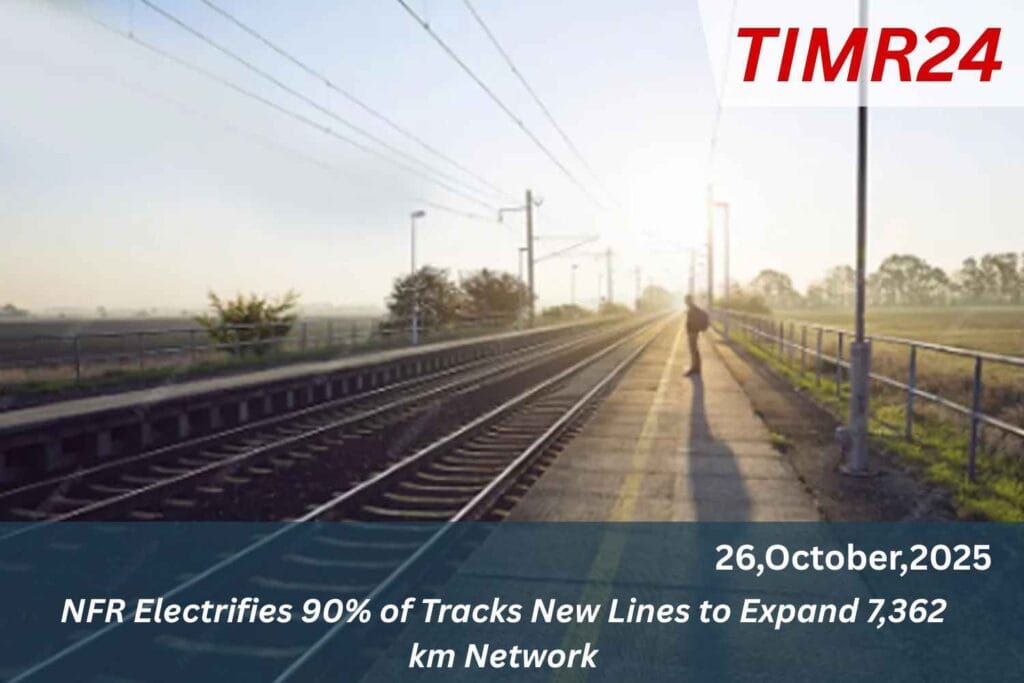
The Northeast Frontier Railway (NFR) has achieved a remarkable milestone in 2025 by electrifying 90% of its operational tracks, marking a major step towards sustainable and efficient rail transport in India’s Northeastern region. This ambitious electrification drive is part of Indian Railways’ larger vision to achieve 100% electrification across the national network, enhancing connectivity and reducing dependence on fossil fuels. With an expanding network projected to reach 7,362 km, NFR is poised to play a pivotal role in transforming regional infrastructure and economic growth.
Modernization and Electrification Progress
Over the past few years, Northeast Frontier Railway has accelerated its modernization agenda by focusing on complete electrification of routes spanning Assam, Tripura, Nagaland, and parts of West Bengal. The transition from diesel to electric traction has significantly improved energy efficiency while minimizing environmental impact. According to senior railway officials, this move has reduced carbon emissions by nearly 25% and enhanced the average train speed across major routes. The electrified network is also enabling smoother operations of Rajdhani Express, Vande Bharat, and other premium trains, thereby boosting passenger convenience.
To complement electrification, the NFR has invested heavily in upgrading signaling systems and track infrastructure. Advanced track monitoring technologies and AI-based maintenance systems are being integrated to ensure higher reliability and safety. This modernization is not just about sustainability but also about delivering faster and more comfortable travel experiences. For more updates on similar railway modernization projects, readers can explore The NFR’s expansion plan to reach 7,362 kilometers is a critical component of its long-term development roadmap. New lines under construction across Arunachal Pradesh, Manipur, and Mizoram.
Aim to connect remote and border regions with the national rail grid. These strategic projects, such as the Jiribam–Imphal–Moreh line and the Bairabi–Sairang rail corridor, are designed to improve trade and accessibility within the Act East Policy framework The enhanced network is expected to facilitate regional integration with neighboring countries such as Bangladesh and Myanmar, boosting cross-border trade and tourism. The Agartala–Akhara international rail link, for instance, is nearing completion and will significantly reduce travel time between the two nations. These new lines are a testament to India’s commitment to inclusive.
Sustainability and Environmental Benefits
Development and connectivity under the North East Infrastructure Development Plan. Readers interested in such transnational infrastructure updates can refer to Electrification of railway tracks directly aligns with India’s environmental goals under the National Mission on Climate Change and the Paris Agreement commitments. By replacing diesel locomotives with electric engines, the NFR is cutting down operational costs and carbon footprints simultaneously. Electric trains are not only energy-efficient but also quieter, contributing to better living conditions around railway zones Additionally, Indian Railways is promoting the installation of solar panels at station.
LED lighting, and rainwater harvesting systems to further improve energy conservation. With these efforts, NFR is positioning itself as a green transport leader in the region. This transformation also supports India’s aim to achieve net-zero carbon emissions by 2070. For readers interested in sustainable transport updates The network expansion and electrification drive have substantial socio-economic implications for the northeast. The ongoing infrastructure projects have created thousands of jobs for local youth, contractors, and engineers. Enhanced rail connectivity will also facilitate the transportation of agricultural produce, handloom products, and industrial goods, thereby strengthening the region’s economic backbone.
Integration with National Rail Initiatives
States like Assam, Tripura, and Nagaland are witnessing improved logistics efficiency as freight movement becomes faster and more cost-effective. Industrial hubs near Guwahati and Silchar are already benefiting from reduced transit times and improved reliability of cargo services The tourism sector too stands to gain, as scenic routes and improved access to remote destinations attract more visitors. (Ministry of Power Energy) For related updates The electrification success of NFR is closely aligned with national projects like the Mission 100% Electrification, PM Gati Shakti Yojana, and Amrit Bharat Station Scheme. The integration of these programs ensures.
That infrastructure development is not fragmented but strategically linked to national priorities Under PM Gati Shakti, the Northeastern states are getting multimodal connectivity through synchronized road, rail, and air networks. Similarly, the Amrit Bharat Station Scheme aims to redevelop over 50 railway stations under the NFR zone with modern passenger amenities, digital ticketing kiosks, and improved safety standards. The goal is to create a seamless travel experience while supporting regional economic corridors. Interested readers To support the expanded electrified network, NFR has deployed cutting-edge technologies for train control and signaling.
The adoption of the Train Collision Avoidance System (TCAS) ensures real-time safety monitoring and reduces the risk of accidents. The implementation of Automatic Train Protection (ATP) further enhances operational reliability Moreover, the use of drone-based inspections for track surveillance and predictive maintenance systems is revolutionizing railway safety management. NFR is also upgrading its freight terminals with smart sensors and digital control rooms for efficient monitoring. These digital upgrades reflect India’s growing emphasis on Smart Railways as part of its broader Digital India initiative. For in-depth insights.
Looking ahead, the Northeast Frontier Railway Vision 2030 emphasizes complete electrification, high-speed corridors, and increased cross-border rail connectivity. The vision also includes establishing logistics parks, modern maintenance depots, and green freight terminals to strengthen the supply chain ecosystem The NFR aims to electrify the remaining 10% of its network by 2026, after which focus will shift toward high-speed electrified corridors and double-line expansions in major sectors like New Jalpaiguri–Guwahati and Lumping–Tinsukia. Once achieved, the entire Northeastern region will have one of the most efficient and sustainable railway systems in the country.
By connecting remote and rural areas with industrial and urban hubs, the NFR is helping bridge socio-economic disparities while propelling India’s growth trajectory. This achievement (Indian-Railways) underscores the railway’s vital role not just in transportation but in regional development and national integration.
Q1. What percentage of the NFR network has been electrified in 2025?
Northeast Frontier Railway has completed electrification of 90% of its total network.
Q2. How much new railway line is being added under NFR’s expansion plan?
NFR will expand its network by 7,362 kilometers to enhance regional connectivity.
Q3. How does electrification benefit the environment?
Electric trains emit significantly less CO₂ and reduce diesel consumption, supporting India’s green goals.
Q4. What areas does the NFR network cover?
It serves Assam, Arunachal Pradesh, Nagaland, Tripura, and parts of Bihar and West Bengal.
Q5. When will Indian Railways achieve 100% electrification?
Indian Railways aims to achieve complete electrification by the end of 2025.