

















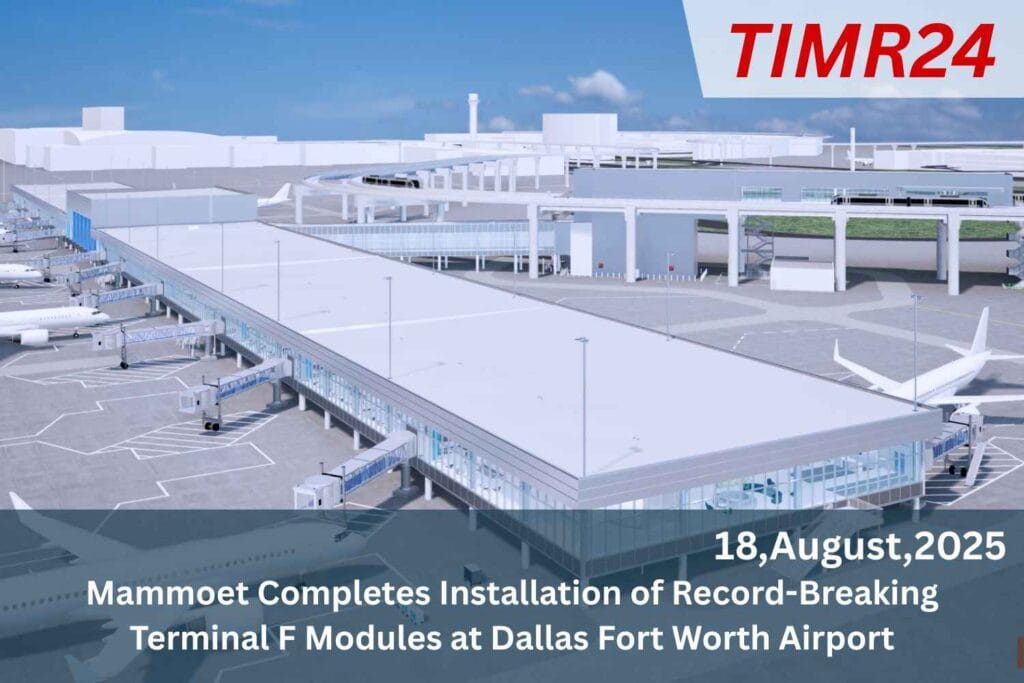
Mammoet has successfully installed six modules in the first phase of the future sixth terminal at Dallas Fort Worth International Airport (DFW), marking a significant milestone in a multi-phase project to expand capacity at the major US hub. The initial phase of Terminal F was built using modular Construction Techniques, enabling large construction projects to be completed faster, safer, and more cost-effectively. Mammate worked with Walsh Group to build the initial 15-gate terminal concourse and new Skyline Station, moving the largest airport terminal modules ever transported. The project demonstrates Mammut’s expertise in heavy lift and transport.
The aviation sector is witnessing another milestone as Mammoet, the global leader in engineered heavy lifting and transport, has successfully completed the installation of record-breaking Terminal F modules at Dallas Fort Worth (DFW) International Airport. This breakthrough marks a defining chapter in the ongoing expansion of one of the busiest airports in the United States, underlining both the complexity of modern infrastructure projects and the engineering excellence required to execute them. Dallas Fort Worth International Airport has consistently ranked among the top airports in terms of passenger traffic, connecting travellers from around the globe. With an ever-growing demand for air travel, the expansion through Terminal F is more than just an architectural addition
It is a strategic move to increase airport capacity, streamline passenger services, and prepare for future aviation growth. Internal expansion projects such can be referenced alongside similar upgrades seen in global hubs, positioning DFW as a forward-looking gateway. The addition of Terminal F promises to accommodate millions of new passengers annually, reduce congestion in existing terminals, (Airport) and enhance operational efficiency What sets this project apart is the record-breaking scale of the modules handled by Mammoet. Known for its specialized heavy-lifting technologies, Mammoet undertook the complex task of transporting, positioning, and installing massive prefabricated structures that form the backbone of Terminal F.
Each module was engineered to precision and moved using state-of-the-art self-propelled modular transporters and heavy-duty cranes, ensuring safety, stability, and accuracy. By completing this installation, Mammoet has once again demonstrated its ability to handle infrastructure megaprojects that push the boundaries of size, weight, and logistics. This achievement also highlights the importance of global expertise in local projects, offering lessons that could be applied in future developments The installation of Terminal F modules at DFW Airport was not without its engineering challenges. The size of the modules made manoeuvrability within confined airport spaces a significant hurdle, especially when balancing ongoing flight operations and construction safety.
Airlines operating at DFW
To overcome these barriers, Mammoet deployed advanced simulation models to plan every step of the lifting and placement process, minimizing disruption and ensuring absolute precision. The use of prefabricated modules also demonstrates a growing trend in construction where large components are built offsite and then assembled on location, reducing project timelines and improving quality control. This innovative method sets a benchmark for future aviation projects worldwide. For passengers, the expansion of Terminal translates into shorter waiting times, more streamlined check-in facilities, and an overall improved travel experience. Airlines operating at DFW will also benefit from additional gates, modern service areas, and increased operational flexibility.
As one of the most important hubs for domestic and international flights, DFW’s expansion will strengthen its position in global aviation, allowing it to handle higher traffic volumes with improved efficiency. Linking this breakthrough with can provide further insights into why infrastructure upgrades of this scale are both timely and necessary. Beyond aviation, the Terminal F project carries immense economic significance. Large-scale expansions like this create thousands of jobs during construction and contribute to long-term regional growth by attracting more businesses, increasing tourism and enhancing connectivity. Dallas Fort Worth’s central location makes it a vital economic engine.
For Texas and the broader United States. By choosing to invest in expansion, the airport not only secures its role as a major transport hub but also contributes to the resilience of the American economy. Future comparisons with [global airport investments] could further showcase how such projects shape regional development. With Mammut’s record-breaking installation completed, the next steps involve finalizing interior development, systems integration, and regulatory approvals before Terminal opens its doors to passengers. Once operational, the terminal will serve as a model of modern airport design, blending advanced engineering with passenger-centric facilities. The breakthrough achieved here signals a new era for DFW, reaffirming the airport’s commitment to innovation and adaptability in an evolving aviation (International Airport)
Q1. What project did Mammoet complete at Dallas Fort Worth Airport?
Mammoet installed record-breaking Terminal F modules as part of the airport’s major expansion.
Q2. Why is this installation considered record-breaking?
It involved moving and placing some of the heaviest and largest terminal modules ever at DFW.
Q3. How will Terminal F benefit passengers?
The new terminal will increase capacity, improve services, and enhance travel efficiency at the airport.
Q4. What role did Mammoet play in this project?
Mammoet used advanced heavy-lifting technology to safely install the massive modules.
Q5. When will Terminal F be operational for passengers?
The terminal is expected to open after completion of the remaining construction phases.