










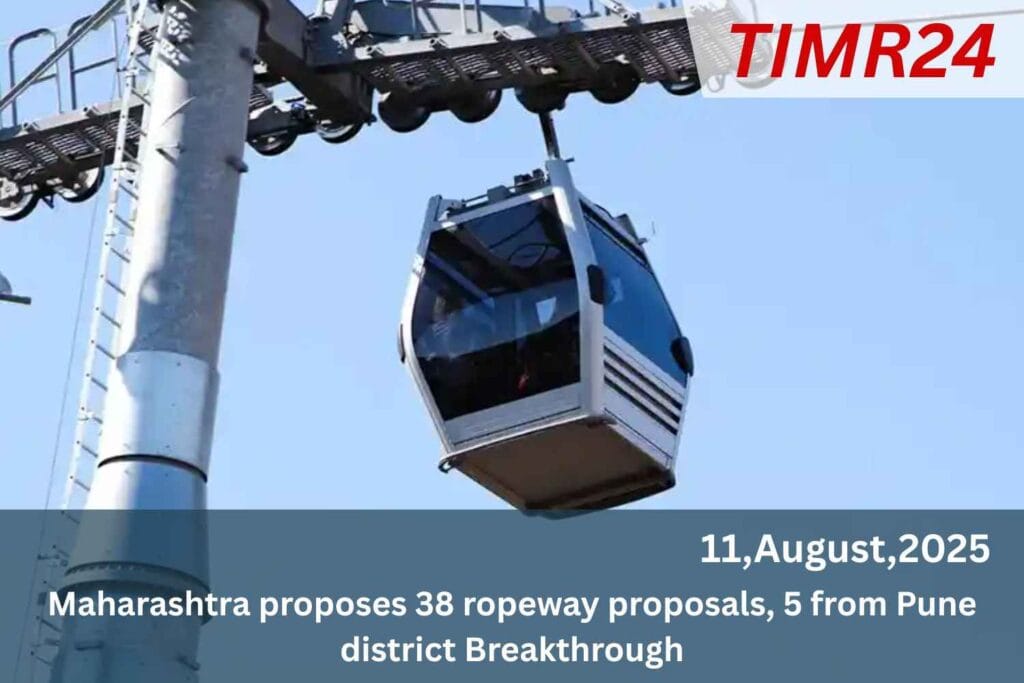
Maharashtra government submits 38 ropeway proposals to Central government, mainly from Mumbai, Sitara, Raigad, Nashik, Nanded, Ratnagiri, Sindhudurg, and Pune, for evaluation under the Centre’s National Ropeways Development Programme. Maharashtra is witnessing a transformative phase in urban and tourism infrastructure with the announcement of 38 new ropeway projects across the state. These initiatives are poised to revolutionize transportation, boost tourism, and improve connectivity in some of the most challenging terrains of Maharashtra. Notably, five of these ropeway proposals are planned in Pune district, reflecting the region’s growing importance as a hub of tourism and urban expansion. Ropeways, traditionally known for their use in hilly and difficult terrains, are becoming an increasingly popular mode of transport in Maharashtra. (Maharashtra Tourism)
They offer a sustainable, environment-friendly alternative to road transport, especially in congested and ecologically sensitive areas. The state government’s push for ropeway projects aligns with the broader vision to enhance public transport, reduce traffic congestion, and promote eco-tourism. The 38 ropeway proposals include projects both in urban centres and popular tourist destinations. Maharashtra’s diverse geography—with its hills, forts, and religious sites makes it an ideal candidate for such infrastructure. These ropeways will serve not only tourists but also local commuters, thereby fostering economic growth and improved mobility. Out of the 38 proposed ropeways, five are earmarked for Pune district. Pune, known for its educational institutions.
IT hubs, and rich cultural heritage, is rapidly expanding its urban infrastructure. The addition of ropeways here aims to connect key tourist sites, reduce vehicular traffic, and offer a convenient travel option for both residents and visitors. One of the significant ropeway proposals in Pune includes linking popular hill stations and forts, such as Sinha gad Fort and Mohamad Fort, which attract thousands of tourists annually. These ropeways will ease the climb for trekkers and tourists, making these heritage sites more accessible while reducing the environmental impact caused by road traffic.
Benefits of Ropeway Projects
The ropeway projects are expected to bring multiple benefits:
- Sustainable Transport: Ropeways produce minimal pollution and require less land compared to roads, helping conserve Maharashtra’s fragile hill ecosystems.
- Tourism Boost: Improved access to tourist destinations like forts, temples, and hill stations will attract more visitors, benefiting local economies.
- Traffic Decongestion: Urban ropeways, especially in Pune and Mumbai, will offer alternatives to road travel, helping reduce city traffic jams.
- Employment Opportunities: The construction and operation of ropeways will generate jobs, including roles in maintenance, tourism, and local businesses.
- Safety and Convenience: Ropeways provide a safe mode of transport in hilly areas prone to landslides or roadblocks during monsoons.
Government Initiatives and Funding
The Maharashtra government has been actively promoting ropeway infrastructure under its urban and tourism development schemes. These projects are receiving attention under initiatives like the Maharashtra Tourism Development Corporation (MTDC) and various urban development authorities. The government is exploring public-private partnerships (PPP) to fund and operate these ropeways efficiently. Moreover, state agencies are collaborating with experts in ropeway technology to ensure modern, safe, and efficient installations. These include cable car systems equipped with advanced safety measures, ensuring passenger comfort and reliability (Smart City).
Specific Ropeway Projects in Pune District
Among the five Pune district proposals, notable projects include:
- Sinhagad Fort Ropeway: Aiming to facilitate easier access to this historic fort, the ropeway will reduce the 2,000-foot climb, enabling more tourists and locals to visit comfortably.
- Lohagad Fort Ropeway: Another significant project focusing on enhancing connectivity to this popular trekking spot known for its scenic views and historical significance.
- Pune Urban Ropeway: This project proposes a cable car system within Pune city to connect busy areas prone to traffic jams, providing a quick and eco-friendly commute option.
- Parvati Hill Ropeway: Facilitating access to the Parvati temple and hill, which is a major pilgrimage site and tourist attraction in Pune.
- Rajmachi Fort Ropeway: This ropeway will serve to connect the base village to the fort, attracting adventure enthusiasts and history lovers alike.
Challenges and Future Prospects
While the proposed ropeway projects hold immense promise, challenges remain. Terrain complexities, environmental clearances, and funding arrangements can impact project timelines. Additionally, ensuring integration with existing transport infrastructure is crucial for maximizing benefits. Despite these challenges, Maharashtra’s ropeway initiative represents a forward-thinking approach to urban mobility and tourism. The successful completion of these projects will set a precedent for other states with similar geographies. The ropeway projects complement other ongoing infrastructure efforts such as the Mumbai Metro Expansion, Nagpur Smart City Development, and the Konkan Railway upgrades. These combined efforts aim to make Maharashtra a leader in sustainable transport and tourism infrastructure in India.