













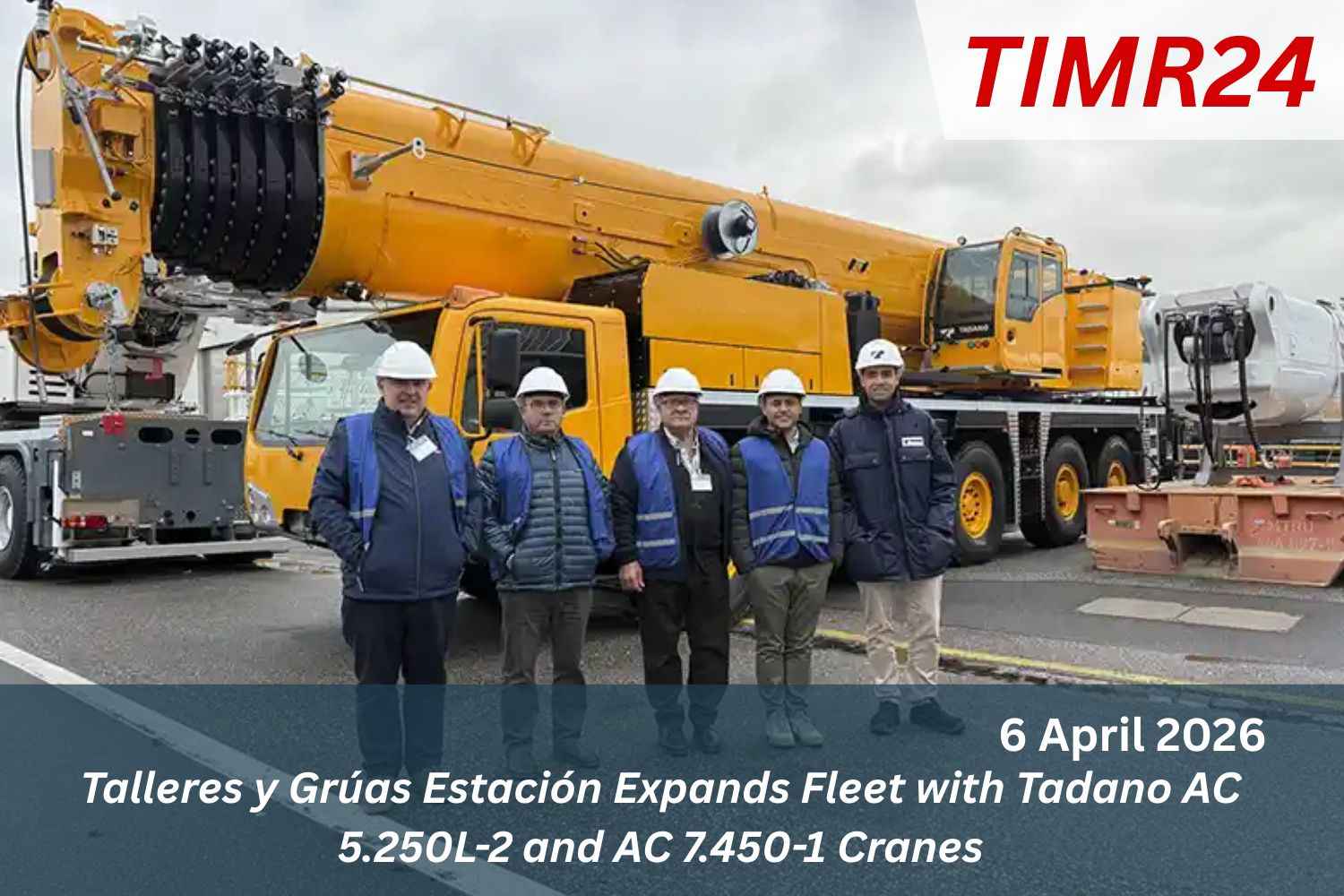


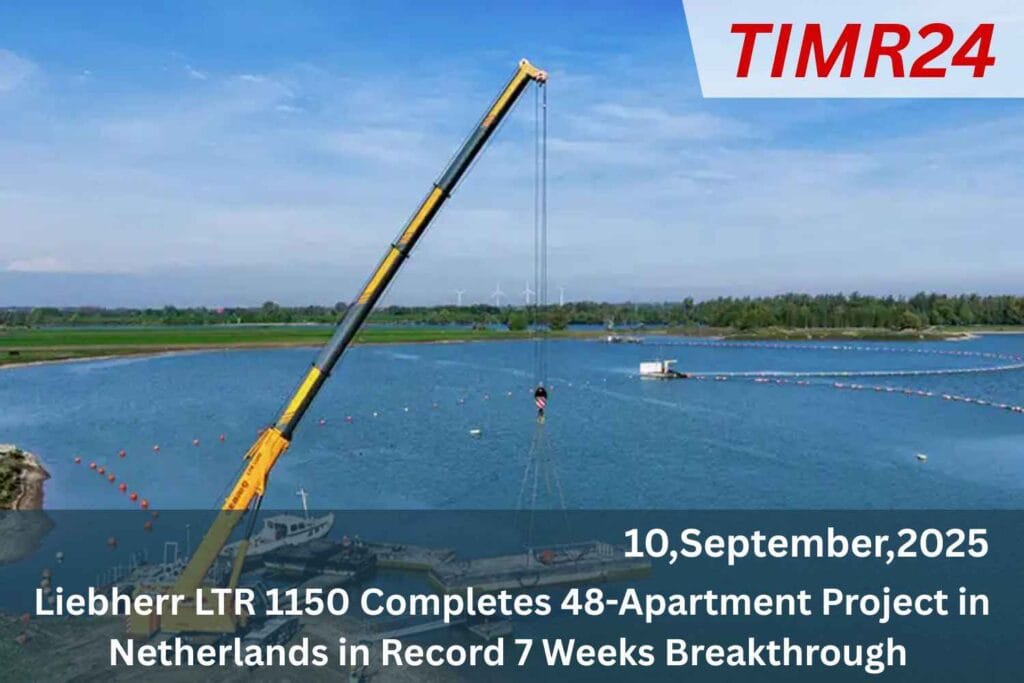
Dutch rental Project company Gebri has used its first Liebherr LTR 1150 telescopic crawler crane to construct a seven-storey, 48-apartment building on a compact 800 sqm site in just seven weeks. The crane was ideal due to its high load capacity, long boom radius, and ability to move with heavy loads. Its flexibility allowed construction to progress from the inner courtyard outwards before completing the structure from the roadside. The LTR 1150 was the ideal tool for lifting pre-fabricated elements with unit weights of up to 13 tonnes and a boom radius of around 18 metres.
The crane’s small, agile, and fast design allowed for fast progress on site, allowing for the delivery of pre-fabricated components “just in time.” Gebri’s new telescopic crawler crane will be used for various construction projects, including precast concrete elements and large sand dredger assembly. The company’s fleet includes specialist cranes, mobile construction cranes, and over a dozen mobile cranes from Liebherr. The completion of a 48-apartment residential project in the Netherlands within a record seven weeks using the Liebherr LTR 1150 telescopic crawler crane has created ripples across the global construction industry, not just because of the speed but also.
Because of what it symbolizes about the future of building technology, efficiency, and sustainability; the crane, a robust machine designed for heavy-duty lifting, brought together engineering precision, rapid deployment, and urban planning needs in a way that shows how equipment can accelerate housing delivery timelines in regions where demand is soaring, and this project has become a case study in blending advanced machinery with modern construction methodologies, making the Netherlands a reference point for how to balance fast-paced development with long-term structural integrity. The most remarkable aspect of this breakthrough is not only the delivery of nearly.
Fifty homes in less than two months but also how it demonstrates the viability of prefabricated construction when paired with cutting-edge lifting solutions; prefabrication has been growing in Europe as a sustainable and efficient practice, but the speed of installation often hinges on equipment, and with the Liebherr LTR 1150, the integration of modular housing sections became seamless, offering a template that other cities worldwide can replicate to tackle urgent housing shortages. The speed factor is significant because in traditional methods a similar project might have taken several months, even years, due to delays in foundation work, material handling, and safety checks, but the LTR 1150.
With its telescopic boom and crawler tracks, not only minimized downtime but also maneuverer easily in tight spaces, reducing logistical challenges common in densely populated European urban centers, and this adaptability is particularly important in regions like Amsterdam and Rotterdam where space constraints demand agile machinery. Beyond speed, sustainability forms the second major pillar of this achievement; in a continent committed to green building goals, reducing carbon emissions during construction is paramount, and the fact that fewer working hours, optimized material placement, and reduced machinery use were required directly supports eco-friendly benchmarks.
Aligning with global efforts to create smart, sustainable cities. (Sustainable Construction) are not just optional add-ons in Europe anymore but an expectation, and by completing such a large housing unit in record time with lower environmental impact, the project enhances the Netherlands’ reputation as a leader in responsible urban development, showing how cranes and modularity can coexist with climate goals. Urban growth in Europe can also be compared to the rapid expansion happening in India, where studies such as show how demand pressures are forcing.
Governments and developers to seek faster solutions, and the Netherlands breakthrough demonstrates that housing demand in high-density zones can be met with a mix of technology, planning, and smart equipment deployment. Globally, the implications stretch even further because countries across Asia, Africa, and Latin America are grappling with housing shortages, and the model of using powerful crawler cranes like the Liebherr LTR 1150 to integrate prefabricated structures quickly could be the answer to backlogs in affordable housing projects, while in developed nations it may redefine the standards of luxury or mid-segment residential timelines, making seven-week delivery.
More of a norm than a marvel. The integration of such machinery also connects with infrastructure trends worldwide; for example, in India, projects like the reflect how speed in infrastructure delivery boosts real estate and economic growth, and just as highways reduce commute times, cranes like the LTR 1150 reduce building times, accelerating an entire ecosystem of growth. For the Dutch project, the crane’s technical specifications also played a crucial role; its telescopic boom allowed efficient lifting of modular units without frequent reassembly, while the crawler system gave it stability on soft or uneven terrain, reducing risks associated with delays or accidents, and this aspect.
Underscores the importance of matching machinery to project type, something that global contractors are now paying greater attention to as they balance cost, speed, and safety. Safety, in fact, cannot be understated; when construction happens at such a fast pace, ensuring structural soundness and worker protection becomes critical, and the Liebherr LTR 1150 is known for its safety systems, making the project’s speed not a compromise but a benchmark that could set the bar for future housing development standards. Looking at the future, the Netherlands project may serve as a stepping stone toward a construction paradigm that is no longer measured by years or.
Months but by weeks, and as cities push toward smart housing, digital modeling, and advanced machinery, cranes like the LTR 1150 will increasingly become symbols of speed, efficiency, and resilience in real estate; in fact, as global investors track trends in construction technology, breakthroughs like this shape where capital flows, because faster delivery equals faster returns. The collaboration between machine manufacturers, real estate developers, and urban planners is crucial here; without alignment, machines remain underutilized, but with strategic integration, projects transform into milestones that redefine industries. This synergy is what made the Dutch project stand out.
Not just machinery but the whole ecosystem working together, and for countries looking to replicate such success, the lesson is clear—technology alone does not guarantee speed, but technology combined with planning, sustainability, and safety can transform timelines and outcomes. On a broader scale, this achievement also highlights how cranes are no longer just construction tools but enablers of urban transformation; they connect housing, infrastructure, and economic development, just as airports like (Delhi IGI Airport’s) or metro systems like.
Reshape transport timelines, showing how machinery innovations tie into the bigger picture of city growth. In conclusion, the Liebherr LTR 1150’s record-setting contribution in the Netherlands is not simply about building forty-eight apartments in seven weeks; it is about signaling a shift in how the world may view housing delivery, moving from slow, resource-heavy processes to agile, sustainable, and technologically powered systems, and as other countries adopt similar approaches, the ripple effects may redefine what “fast housing” means in the 21st century, making the Dutch milestone not an isolated breakthrough but a global benchmark.
Q1. What makes the Liebherr LTR 1150 unique in construction projects?
Its telescopic boom and crawler base allow mobility, speed, and strong lifting capacity.
Q2. How fast was the Netherlands apartment project completed?
The 48-apartment building was delivered in just 7 weeks.
Q3. Why is this project important for European construction?
It demonstrates efficiency, sustainability, and scalability in urban housing.
Q4. Can this technology be applied outside Europe?
Yes, global cities facing housing challenges can adopt similar practices.
Q5. How does it support sustainability goals?
Faster build times reduce emissions, and pairing with prefabrication limits waste.