








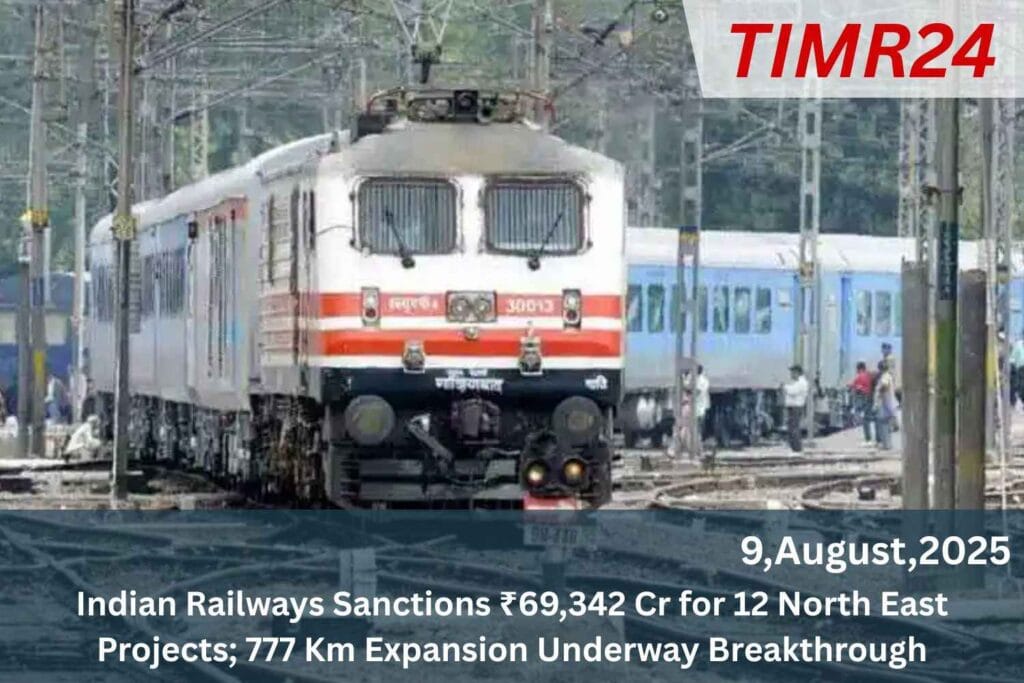
Indian Railways has sanctioned 12 major projects, including eight new lines and four doubling works, to improve rail connectivity in the North East Region (NER). The projects span 777 km and have invested ₹69,342 crore. As of March 2025, 278 km of new track have been commissioned and ₹41,676 crore spent. The average annual infrastructure budget for the region has surged from ₹2,122 crore to ₹10,440 crore in FY 2025-26. Key completed projects include the Bogies Bridge and Lumding-Silchar gauge conversion. The Indian Railways has sanctioned a massive investment of ₹69,342 crore to fast-track 12 key railway projects in the North East, aimed at boosting regional connectivity and economic growth.
Background and Significance
The move comes as part of the central government’s continued focus on improving infrastructure in the remote and strategic Northeastern states. The North East region, with its challenging terrain and strategic importance, has long needed modern transport infrastructure. The sanctioned projects are designed to bridge the connectivity gap and enhance integration with the rest of India. For more details, see our feature on (Rail Infrastructure Development) The 12 approved projects collectively span 777 kilometres of railway expansion, including new lines, gauge conversion, and electrification works. These developments will improve passenger comfort, increase freight capacity, and reduce travel time.
Strategic Importance for the North East
Enhanced rail connectivity will improve access to markets, boost tourism, and strengthen trade routes with neighbouring countries like Bangladesh and Myanmar. This expansion also holds military and logistical value for border states. Apart from providing better transport options, the projects will stimulate local economies through job creation, supply chain development, and improved access to essential goods and services. This aligns with the goals of the (NITI Aayog) to uplift underdeveloped regions. Given the North East’s hilly terrain and ecological sensitivity, construction will involve advanced engineering solutions such as tunnels, bridges, and slope stabilization measures. Measures will also be taken to minimise the environmental footprint.
Environmental and Engineering Challenges
Given the North East’s hilly terrain and ecological sensitivity, construction will involve advanced engineering solutions such as tunnels, bridges, and slope stabilization measures. Measures will also be taken to minimise the environmental footprint, The projects are expected to be completed in a phased manner over the next few years. Dedicated teams are being deployed for surveying, land acquisition, and construction oversight to ensure timely delivery. Once completed, these projects will transform mobility in the North East, making it easier for people and goods to move across the region. The development is also likely to attract private investment in tourism, trade, and manufacturing.
Timeline and Implementation
In summary, the ₹69,342 crore allocation is a landmark step that underscores the government’s commitment to integrating the North East into India’s national growth story, while also addressing the unique challenges of the region. The Government of India has approved a record investment of ₹69,342 crore for Indian Railways to implement 12 large-scale projects in the North Eastern region. This initiative aims to accelerate rail connectivity, open up economic opportunities, and enhance accessibility for some of the most remote districts in the country.
Q1. How much has Indian Railways sanctioned for North East projects?
₹69,342 crore.
Q2. How many projects are included in this investment?
A total of 12 projects.
Q3. What is the total railway expansion planned?
777 kilometres.
Q4. Which states will benefit from these projects?
Assam, Arunachal Pradesh, Manipur, Mizoram, Meghalaya, Nagaland, and Tripura.
Q5. What are the main goals of the projects?
Boost connectivity, reduce travel time, and support economic growth.
Q6. What is the purpose of the new North East railway projects?
To enhance regional connectivity and boost trade.