










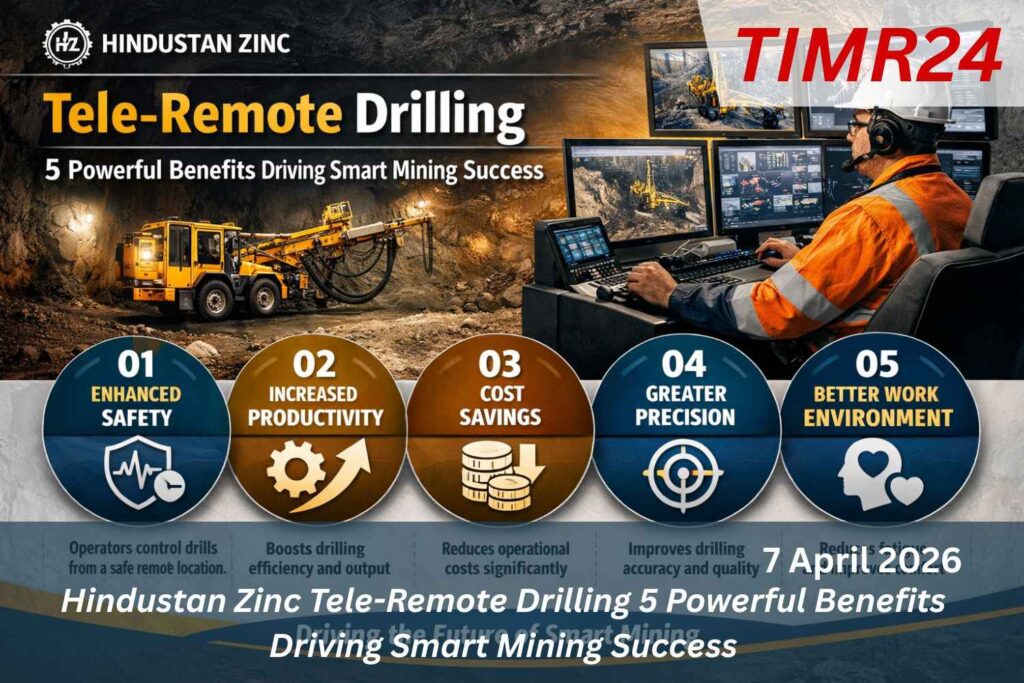
Hindustan Zinc Limited has implemented a tele-remote drilling system at its Rajpura Dariba mine to enhance safety and efficiency in underground operations. This system allows engineers to operate drills remotely, achieving drilling speeds of approximately 60 metres per hour and improving productivity by around 17%. The technology, effective up to 800 metres deep, has successfully improved operation at other mines, including Sindesar Khurd and Rampura Agucha. CEO Arun Misra emphasized the company’s commitment to automated, digital solutions that set industry benchmarks in India. Hindustan Zinc collaborates with over 20 tech startups on projects focused on production, safety, and sustainability.
Robotic Automation In Smelting
Incorporating technologies such as AI, robotics, and IIoT. Recent innovations include AI surveillance systems and robotic automation in smelting, and future plans involve LiDAR-enabled drone scanning for better mine mapping Hindustan Zinc has once again demonstrated its leadership in the Indian mining sector by deploying tele-remote drilling technology at the Rajpura Dariba underground mine. This move marks a significant milestone in the company’s ongoing journey toward automation and digital transformation. As mining operations become increasingly complex and safety-focused, the adoption of advanced technologies like tele-remote drilling is not just an option but a necessity.
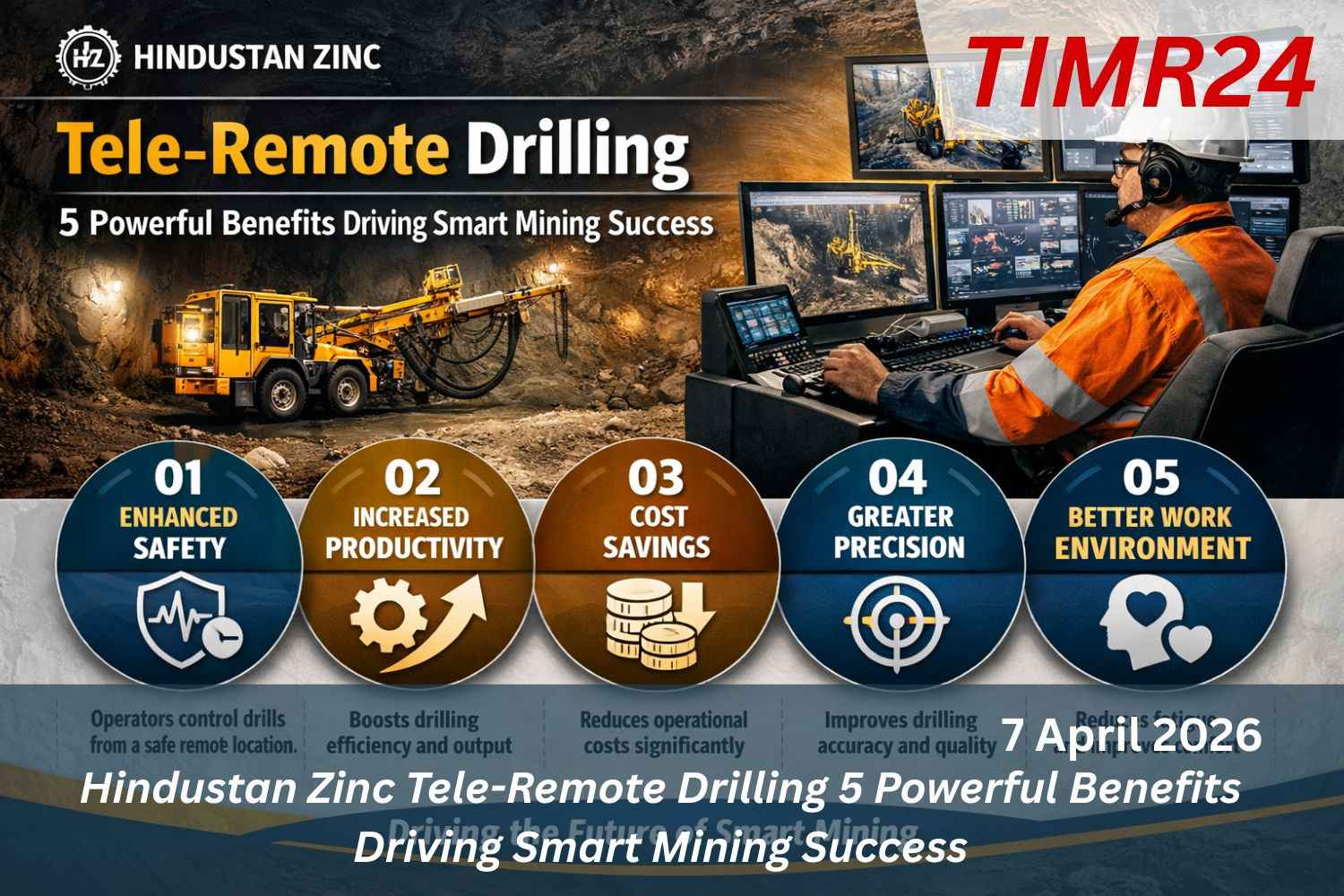
The Rajpura Dariba mine, already known for its operational excellence, is now stepping into the future with smart mining practices that combine innovation, efficiency, and safety Tele-remote drilling is a modern mining technique that allows operators to control drilling machines from a safe and remote location, often situated above ground or in a protected control room. This eliminates the need for workers to be physically present in potentially hazardous underground environments. By integrating advanced sensors, cameras, and real-time data systems, tele-remote drilling ensures that operations continue seamlessly without compromising on accuracy or productivity.
Underground Mining Environments Can Be Unpredictable
Hindustan Zinc’s decision to implement this technology reflects its commitment to protecting its workforce while also improving operational performance One of the most significant advantages of tele-remote drilling is enhanced safety. Underground mining environments can be unpredictable, with risks such as rock falls, gas leaks, and equipment-related hazards. By removing the human element from these high-risk zones, the company significantly reduces the chances of accidents and injuries. Workers can now operate machinery from a secure environment, which not only ensures their safety but also boosts their confidence and efficiency.
This shift aligns with global mining standards where safety is considered the top priority In addition to safety, tele-remote drilling contributes to improved productivity. Traditional drilling operations often face interruptions due to shift changes, safety checks, and environmental conditions. However, with remote operations, these challenges are minimized. Machines can be operated continuously with minimal downtime, leading to higher output and better resource utilization. Hindustan Zinc is leveraging this advantage to maximize its production capabilities at the Rajpura Dariba mine, ensuring consistent performance and operational excellence.
Mining Operations. By Adopting Such Advanced Systems
Another key benefit of this technology is precision and accuracy. Tele-remote drilling systems are equipped with advanced digital tools that allow operators to execute drilling tasks with high levels of precision. This reduces errors and ensures optimal use of resources. Accurate drilling also plays a crucial role in minimizing waste and improving the overall efficiency of mining operations. By adopting such advanced systems, Hindustan Zinc is setting a benchmark for precision mining in India The deployment of tele-remote drilling is also a step toward sustainability. Modern mining companies are under increasing pressure to reduce their environmental impact while maintaining profitability.
Automation and digitalization help achieve this balance by optimizing resource usage and reducing energy consumption. Tele-remote systems contribute to more efficient drilling processes, which in turn reduce emissions and environmental disturbance. Hindustan Zinc’s (India) initiative aligns with global sustainability goals and demonstrates its commitment to responsible mining practices Digital transformation is at the core of this technological shift. The integration of tele-remote drilling with data analytics, artificial intelligence, and IoT (Internet of Things) enables real-time monitoring and decision-making. Operators can access live data, analyze performance metrics, and make informed decisions quickly.
Rajpura Dariba Mine Serves As A Perfect
This level of connectivity and intelligence transforms traditional mining operations into smart, data-driven processes. Hindustan Zinc is actively investing in such technologies to stay ahead in the competitive mining industry The Rajpura Dariba mine serves as a perfect example of how innovation can redefine mining operations. By implementing tele-remote drilling, the mine is not only improving its operational efficiency but also setting new standards for safety and sustainability. This initiative is part of a broader strategy to adopt Industry 4.0 technologies across all operations. As the mining sector evolves, companies that embrace digital transformation will have a significant competitive advantage.
Growing Need For Skilled Professionals
This move is expected to have a positive impact on workforce development. As automation becomes more prevalent, there is a growing need for skilled professionals who can operate and manage advanced technologies. Hindustan Zinc is likely to invest in training and upskilling its workforce to ensure a smooth transition to automated systems. This not only enhances employee capabilities but also creates new opportunities in the mining sector The adoption of tele-remote drilling also positions Hindustan Zinc as a pioneer in the Indian mining industry While global mining companies have already begun integrating such technologies, their implementation in India is still in the early stages.
By taking this proactive step, Hindustan Zinc is setting an example for other companies to follow. It highlights the importance of innovation and adaptability in achieving long-term success The deployment of tele-remote drilling at the Rajpura Dariba mine is a significant step (India) toward the future of mining. It combines safety, efficiency, and sustainability in a way that benefits both the company and its workforce. As the industry continues to evolve, such initiatives will play a crucial role in shaping the future of mining in India. Hindustan Zinc’s commitment to innovation and excellence ensures that it remains at the forefront of this transformation, leading the way toward smarter and safer mining practices.
Q1. What is tele-remote drilling in mining?
Tele-remote drilling allows operators to control drilling equipment from a remote location using digital systems.
Q2. Where is Rajpura Dariba mine located?
It is located in Rajasthan and is one of India’s major underground zinc mines.
Q3. What are the benefits of tele-remote drilling?
It improves safety, increases productivity, and reduces downtime.
Q4. Why is Hindustan Zinc adopting automation?
To enhance operational efficiency and align with Industry 4.0 standards.
Q5. How does this impact workers?
It reduces their exposure to hazardous underground conditions and improves safety.