












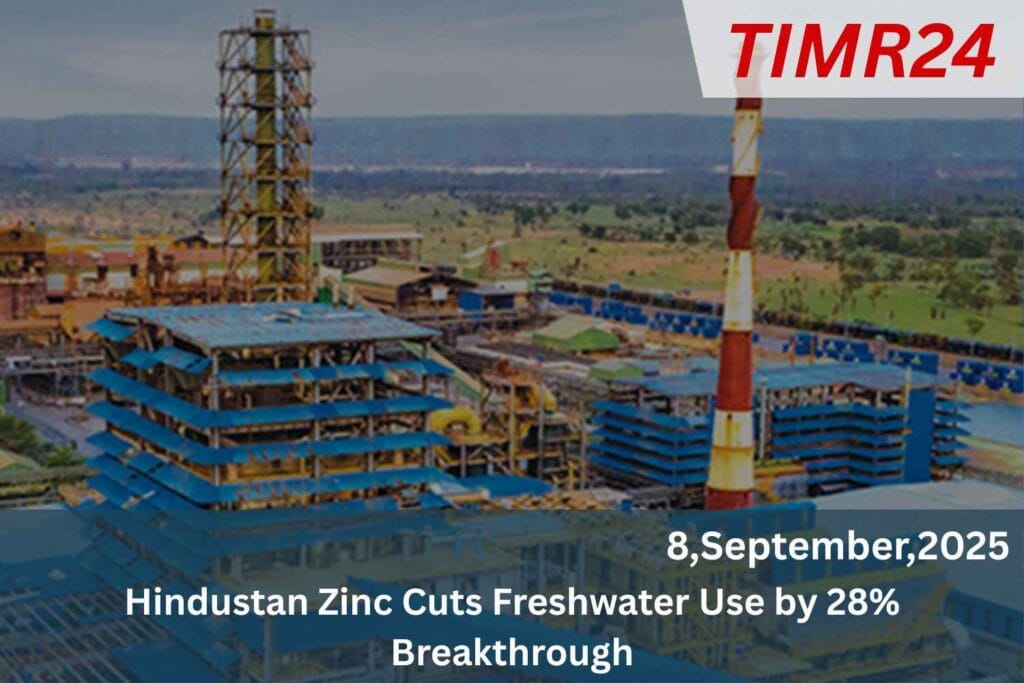
Hindustan Zinc, India’s largest integrated zinc producer, has achieved a significant sustainability milestone by recycling 71 billion litres of treated sewage water between FY 2016 and 2025, reducing its freshwater use by 28%. This volume is enough to meet Udaipur city’s water needs for over 500 days. The company is now 3.32x water positive, treating and reusing all process water across operations, minimizing freshwater dependence and strengthening its commitment to UN Sustainable Development Goal 6 on Clean Water and Sanitation. In partnership with the Government of Rajasthan, Hindustan Zinc pioneered Udaipur’s first sewage treatment plant in 2014.
Which has expanded to a capacity of 60 MLD. The company has also invested in community-led programs, such as the ‘Jal Sakhi’ initiative, which provides safe drinking water access to over 2.19 lakh people across 36 villages. Hindustan Zinc, a flagship company of Vedanta Group and one of the world’s leading integrated producers of zinc, lead, and silver, has taken a significant step forward in environmental stewardship by cutting its freshwater consumption by 28%. This breakthrough is more than just an operational milestone it reflects a broader vision of aligning mining with sustainability, community development, and global climate action. Mining is traditionally.
Redefining Water Management in Mining
Considered resource-heavy, especially in terms of water usage, but Hindustan Zinc’s initiative demonstrates how technology and responsibility can merge to reshape the industry’s future. Mining requires vast quantities of water for ore processing, dust suppression, slurry transport, and cooling systems. Dependence on freshwater sources has often led to ecological challenges, particularly in regions where communities already face water scarcity. Hindustan Zinc recognized this challenge early and began investing in advanced Zero Liquid Discharge (ZLD) technologies, water recycling plants, and closed-loop systems. By reusing treated water across operations, the company.
Significantly minimized its reliance on freshwater. This effort not only conserves natural resources but also ensures water remains available for local communities and ecosystems that depend on rivers, lakes, and groundwater reserves. Sustainability in modern industry is often evaluated through Environmental, Social, and Governance (ESG) metrics. Hindustan Zinc has consistently ranked among global leaders in this domain by setting measurable goals and delivering on them. The 28% freshwater reduction aligns with the company’s larger vision of achieving net-zero water dependency and contributing to India’s national climate action commitments. Internally, this shift has been tied.
To their ESG roadmap that also covers renewable energy adoption, waste recycling, and biodiversity protection On the corporate side, this milestone enhances Hindustan Zinc’s credibility with global investors who increasingly prefer companies prioritizing ESG compliance. By building a transparent sustainability record, Hindustan Zinc not only strengthens its operational foundation but also repositions itself as a benchmark for peers in the global mining sector. Water is not just an industrial input it is a lifeline for villages, towns, and farmlands near mining regions. Excessive industrial extraction often triggers community resistance, but by reducing freshwater use and investing in water conservation initiatives.
Hindustan Zinc has improved its relationship with local populations. Many of the company’s social responsibility projects focus on rainwater harvesting, groundwater recharge, and creating sustainable irrigation systems. This community-first approach ensures that the benefits of industrial growth are shared equitably Moreover, by curbing freshwater dependency, Hindustan Zinc is helping preserve fragile ecosystems around its mining sites. Rivers and groundwater bodies retain healthier flows, which in turn support agriculture, livestock, (NITI Aayog) and biodiversity. Such efforts reflect an integrated vision where industrial success coexists with ecological well-being.
Linking with Renewable Energy and Circular Economy
The water conservation breakthrough is not an isolated achievement; it is part of a much larger sustainability ecosystem. Hindustan Zinc has also been investing heavily in renewable energy sources, aiming to meet a significant portion of its energy requirements through solar and wind power. This dual approach conserving water while reducing carbon emissions pushes the company closer to its net-zero 2050 goal Additionally, Hindustan Zinc is adopting circular economy principles in its operations. Slag from smelting processes is being reused for cement production, tailings are managed with safety and reusability in mind, and waste-to-resource.
Innovations are being actively deployed. Together, these practices strengthen the sustainability foundation and make the company less dependent on external resources. The global mining sector faces mounting scrutiny for its environmental footprint. From Chile’s copper mines to Australia’s coal projects, industries worldwide are under pressure to balance economic output with ecological preservation. Hindustan Zinc’s water reduction initiative showcases how Indian mining companies can lead on sustainability, rather than lagging behind international standards. Nationally, India is grappling with acute water stress, with NITI Aayog warning that nearly 40% of the population.
Global and National Relevance
Could face water scarcity in coming years. In such a context, Hindustan Zinc’s breakthrough is more than corporate responsibility it is a national contribution to water security. By scaling such initiatives, India’s industrial sector can play a direct role in preventing future water crises. While the 28% freshwater reduction is commendable, Hindustan Zinc has a longer journey ahead. The company is working toward achieving 100% water recycling across operations, reducing carbon emissions in smelting and refining processes, and aligning with India’s target of becoming a net-zero economy by 2070. Continued investment in digital water monitoring, AI-driven process.
Optimization, and community partnerships will be critical in ensuring these goals are achieved Hindustan Zinc is also collaborating with global sustainability platforms to bring in best practices and innovative technologies. This forward-looking approach ensures that the company not only meets regulatory standards but also stays ahead of industry expectations. Hindustan Zinc’s 28% reduction in freshwater use is not just a corporate announcement it is a case study in how Indian industry can evolve to meet environmental and social responsibilities while continuing to grow economically. By combining technology, ESG vision, and community partnerships.
The company has set an example that goes beyond mining. It represents the kind of breakthrough India needs across sectors to balance growth with ecological preservation The story of Hindustan (Renewable Energy) Zinc’s sustainability journey is a reminder that industries can no longer afford to treat natural resources as unlimited. Each breakthrough, such as this freshwater reduction, serves as a building block toward a future where industrial progress strengthens, rather than undermines, environmental balance.
Q1. What is the key sustainability achievement by Hindustan Zinc?
Hindustan Zinc reduced its freshwater consumption by 28%, strengthening its commitment to eco-friendly mining.
Q2. How did Hindustan Zinc reduce freshwater usage?
Through advanced water recycling, zero-liquid discharge plants, and sustainable water management practices.
Q3. Why is reducing freshwater use important in mining?
Mining is water-intensive; cutting usage helps conserve resources and protect ecosystems.
Q4. How does this initiative benefit communities near Hindustan Zinc operations?
By preserving local water bodies, ensuring water availability, and supporting community development.
Q5. What are Hindustan Zinc’s future sustainability goals?
The company aims for increased renewable energy use, higher water recycling rates, and net-zero targets.