







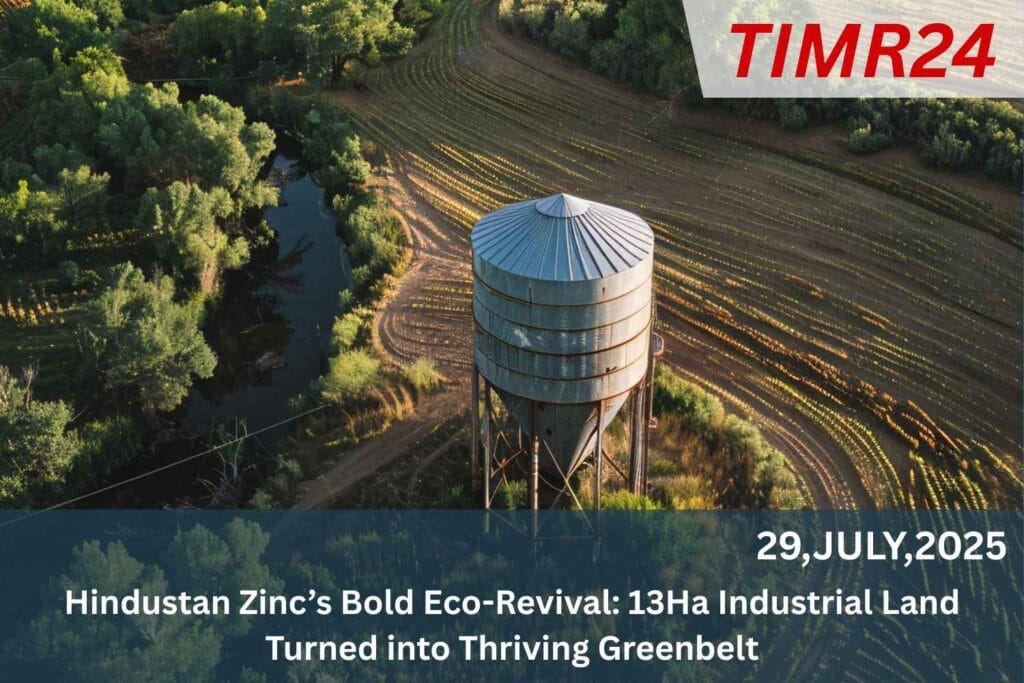
Hindustan Zinc Limited has completed the restoration of 7 hectares of Jarofix-laden industrial wasteland at the Chanderiya Lead Zinc Smelter in Rajasthan, transforming the world’s largest single-location zinc-lead smelter into a thriving greenbelt. The project, in collaboration with The Energy and Resources Institute (TERI), uses advanced Mycorrhiza technology to promote a symbiotic relationship between plant roots and fungi. Over 15,000 native saplings were planted in Phase 2, creating a high-density, self-sustaining ecosystem.
Hindustan Zinc is recognized as the world’s most sustainable metals & mining company by S&P Global CSA 2024. The company has also adopted the Miyawaki afforestation method, which accelerates ecosystem restoration and results in 30 times denser plantations than conventional methods. Hindustan Zinc continues to integrate nature-positive strategies into its core business planning, developing site-specific Biodiversity Management Plans for all operational units.
Introduction: Turning Barren Land into Green Wealth
Hindustan Zinc Ltd. (HZL), a Vedanta Group company and one of India’s leading zinc producers, has undertaken a noteworthy ecological restoration initiative in Rajasthan. By converting 13 hectares of unused industrial land into a fully-developed greenbelt, the company reinforces its environmental stewardship and long-term commitment to sustainable practices. This transformation supports India’s growing focus on ecological restoration and green industrial development. (India’s Warehousing)
Project Overview and Implementation
The greenbelt project is strategically located near HZL’s operational areas in Rajasthan, where industrial activity often results in degraded or unused lands. Hindustan Zinc adopted a comprehensive greening model that included soil conditioning, drip irrigation installation, and the plantation of over 25,000 native and adaptive plant species. The effort aims to restore biodiversity, reduce dust pollution, and enhance groundwater recharge. The greenbelt also acts as a buffer zone that improves the local microclimate.
Environmental Impact and Biodiversity
The development of the greenbelt is not only a visual transformation but also an ecological win. It contributes to carbon sequestration, habitat restoration for birds and small wildlife, and an overall increase in biodiversity. It helps improve soil quality and provides shade and moisture retention in the area. The site, once barren, now acts as a mini carbon sink—supporting India’s net-zero ambitions.
Community Engagement and Employment
HZL ensured that the local community was actively involved in the process. From sourcing saplings locally to employing villagers for plantation maintenance and upkeep, the project generated seasonal and semi-permanent employment opportunities. Training sessions were also conducted to ensure best practices in horticulture and irrigation management. This reflects a shared-value model where ecological progress also brings economic benefit to surrounding areas. (Social Affairs’)
Towards a Greener Industrial Future
Hindustan Zinc’s greenbelt transformation is a testament to how industrial players can contribute meaningfully to environmental goals. It sets a blueprint for other mining and resource-intensive industries to follow. The success of this project may lead to similar green conversions of unused industrial zones across the country. State authorities and pollution control boards are reportedly taking note, encouraging replication in other districts.
Conclusion
The 13-hectare greenbelt by Hindustan Zinc is more than an environmental gesture—it’s a model of integrated, long-term ecological planning. As India navigates its climate challenges and sustainable development goals, projects like these serve as vital examples of how industries can lead by example and reshape their environmental footprint.
Q1. What is the purpose of Hindustan Zinc’s greenbelt project in Rajasthan?
The project aims to restore degraded industrial land, improve biodiversity, and support environmental sustainability through large-scale plantation.
Q2. How large is the greenbelt developed by Hindustan Zinc?
Hindustan Zinc has transformed 13 hectares of unused industrial land into a thriving greenbelt.
Q3. What types of plants were used in the greenbelt?
The greenbelt includes over 25,000 native and adaptive species suited to Rajasthan’s climate.
Q4. How does the project benefit the local environment?
It reduces dust, enhances carbon capture, improves groundwater recharge, and creates a habitat for birds and small wildlife.
Q5. Were local communities involved in the initiative?
Yes, local villagers were engaged in plantation, maintenance, and nursery management, creating employment and environmental awareness.