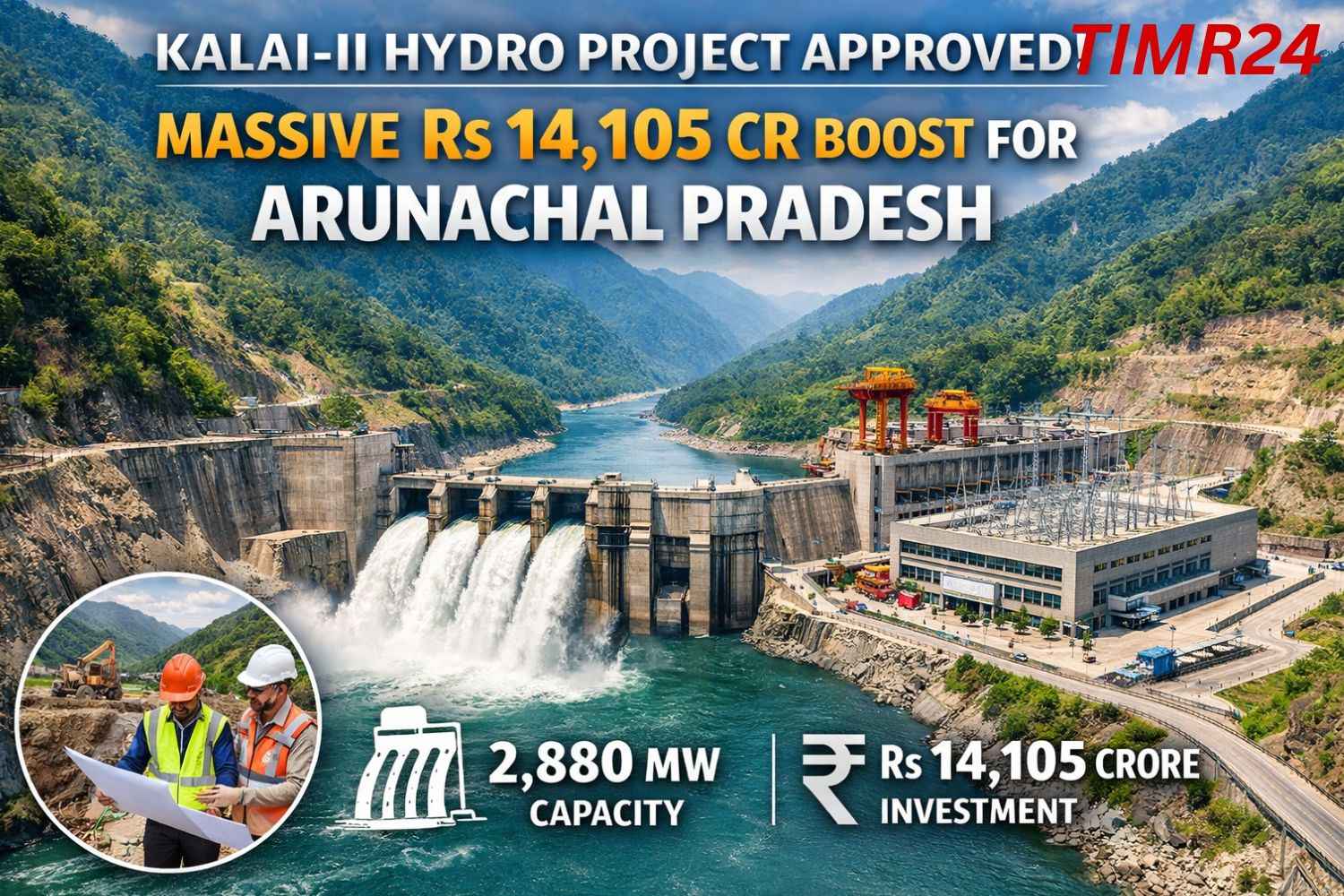














The Government Cabinet Committee on Economic Affairs, led by Prime Minister Narendra Modi, has approved an investment of Rs. 26,069.50 crore for the Kamala Hydro Electric Project (HEP) in Arunachal Pradesh, with a completion period of 96 months. The project, featuring an installed capacity of 1720 MW, is set to generate 6870 MU of energy, enhancing the state’s power supply and supporting national grid stability. The implementation will involve a Joint Venture between NHPC Limited and the Arunachal Pradesh government, with significant budgetary support for flood moderation and infrastructure development. The project will provide 12% free power to the state.
Local Area Development Fund Secured From project
Alongside additional benefits for local infrastructure such as roads, hospitals, and schools. Other major projects by NHPC in the region include Subansiri Lower, Dibang Multipurpose, and Etalin HEPs, all designed to foster local development through a Local Area Development Fund secured from project revenue The approval of the ₹26,069 crore Kamala Hydro Project in Arunachal Pradesh marks a significant milestone in India’s journey toward strengthening its renewable energy infrastructure and achieving long-term energy security. With increasing demand for electricity across the country and the urgent need to shift toward cleaner energy sources.
This project comes at a crucial time The northeastern region, particularly Arunachal Pradesh, has long been recognized for its vast untapped hydropower potential, and this development signals a renewed focus by the government on utilizing these natural resources efficiently and sustainably Hydropower plays a vital role in India’s renewable energy mix, offering a reliable and consistent source of electricity compared to solar and wind energy, which are dependent on weather conditions. The Kamala Hydro Project is expected to significantly contribute to this segment by generating a substantial amount of clean power.
This will not only reduce the country’s dependence on fossil fuels but also help in lowering carbon emissions, aligning with India’s commitments under global climate agreements. The government’s decision reflects its strategic intent to balance economic growth with environmental responsibility, ensuring that development does not come at the cost of ecological degradation.