









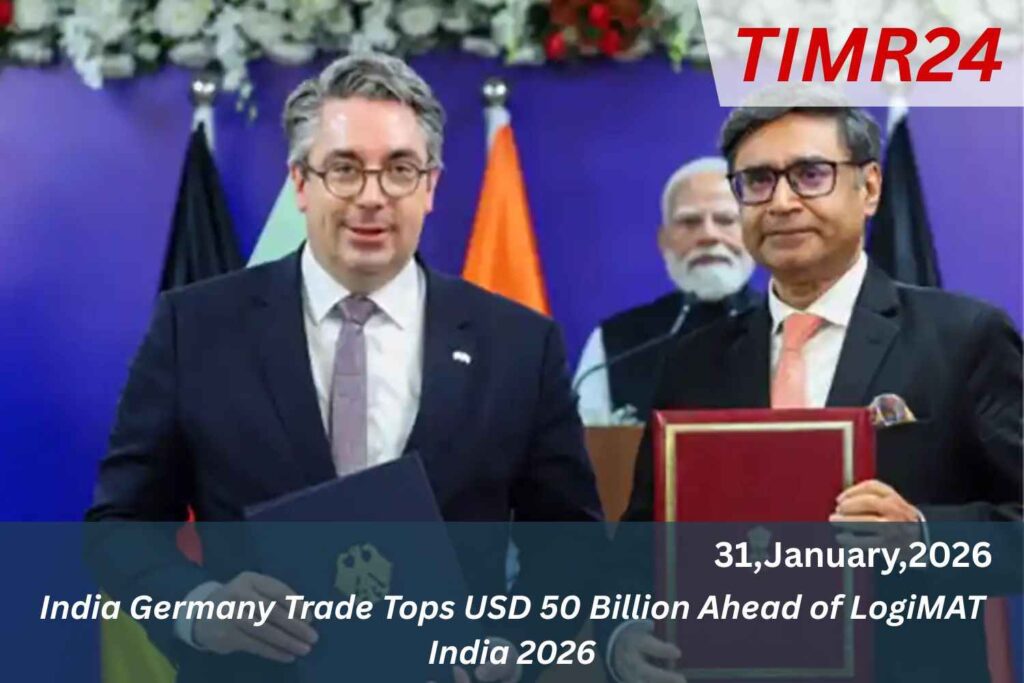
Bilateral trade between India and Germany surpassed USD 50 billion in 2024-2025, highlighting a strengthened partnership, especially in logistics and technology. VDMA India’s Managing Director announced that platforms like LogiMAT India could drive $7.5 billion in logistics and investment growth by 2026. Germany is India’s largest EU trading partner, accounting for over 25% of India’s EU trade, with exports to Germany reaching USD 10.5 billion and imports at USD 19 billion in the same year. The upcoming LogiMAT India 2026, featuring 43 German companies, aims to foster collaboration and innovation in the logistics sector. Recent agreements between the two.
Regulatory Transparency
Countries focus on enhancing cooperation in logistics, with an EU Free Trade Agreement expected to improve market access and regulatory transparency. The event will showcase innovations like warehouse automation and smart delivery systems, positioning India as a key manufacturing hub alongside German leadership in logistics India Germany trade relations have reached a significant milestone, crossing the USD 50 billion mark at a time when global supply chains are being reshaped and regional partnerships are gaining importance. This achievement comes ahead of LogiMAT India 2026, a major international trade fair focused on intralogistics and supply chain management.
The growing trade volume reflects not only the strength of economic ties between the two nations but also their shared commitment to innovation, sustainability, and long-term industrial cooperation. As India positions itself as a global manufacturing and logistics hub, Germany’s role as a technology and engineering powerhouse continues to be central to this evolving partnership Germany has long been one of India’s most important trading partners in Europe, particularly in high-value sectors such as engineering, automotive components, industrial machinery, chemicals, and logistics technologies. Indian exports to Germany have seen steady growth, supported by demand.
Advanced Manufacturing Equipment
For pharmaceuticals, textiles, engineering goods, and IT-enabled services. At the same time, German exports to India, including advanced manufacturing equipment, automation systems, and green technologies, have played a crucial role in strengthening India’s industrial ecosystem. This balanced trade relationship has helped both countries navigate global economic uncertainties while maintaining consistent growth momentum The rise in bilateral trade is closely linked to India’s focus on infrastructure development, industrial corridors, and logistics modernisation. Government initiatives such as Make in India, Gati Shakti, and the National Logistics Policy have created.
A favourable environment for foreign investments and technology partnerships. German companies, known for their precision engineering and supply chain expertise, have actively participated in these initiatives. Their involvement ranges from smart warehousing solutions to automated material handling systems, contributing to higher efficiency and lower logistics costs across Indian industries this momentum by serving as a strategic meeting point for Indian and German businesses. As the Indian edition of Europe’s leading intralogistics exhibition, LogiMAT India brings together solution providers, manufacturers, and decision-makers from across the supply chain ecosystem.
Automation Robotics And Digital
The timing of the event, coinciding with the USD 50 billion trade milestone, highlights the growing relevance of logistics and supply chain collaboration in bilateral trade growth. German exhibitors are likely to showcase advanced automation, robotics, and digital supply chain solutions, while Indian companies will present scalable, cost-effective innovations suited to emerging markets Another key factor driving India Germany trade is the shared emphasis on sustainability and green growth. Germany’s expertise in energy-efficient manufacturing, renewable energy integration, and circular economy practices aligns well with India’s climate goals.
Many German firms operating are investing in sustainable logistics solutions, such as energy-efficient warehouses, electric material handling equipment, and data-driven route optimisation systems. These technologies not only reduce environmental impact but also improve (India) operational efficiency, making them attractive to Indian businesses seeking long-term competitiveness From a policy perspective, regular high-level dialogues between India and Germany have helped remove trade barriers and encourage deeper industrial cooperation. Bilateral working groups on skill development, mobility, and advanced manufacturing have supported knowledge.
Vocational Training Models
Transfer and workforce upskilling. This has been particularly important for the logistics and manufacturing sectors, where skilled manpower is essential for adopting Industry 4.0 technologies. The increasing presence of German vocational training models in India reflects a long-term approach to strengthening industrial capabilities beyond immediate trade gains Small and medium enterprises (SMEs) also stand to benefit significantly from the growing trade relationship. German SMEs, often referred to as the Mittelstand, are known for their niche expertise and innovation-driven approach. Their collaboration with Indian SMEs creates opportunities for joint product.
Development, local manufacturing, and access to global markets. Events like LogiMAT India 2026 provide a platform for these smaller players to connect, collaborate, and scale their operations The USD 50 billion trade milestone should be seen not as an endpoint but as a foundation for future growth. With India’s logistics market projected to expand rapidly over the next decade, demand for advanced supply chain solutions is expected to rise. Germany’s continued investment in Indian manufacturing and logistics infrastructure will likely play a decisive role in meeting this demand. Post-LogiMAT India 2026, new partnerships, joint ventures, and technology transfers are anticipated.
Further deepening economic ties between the two countries The surge in India–Germany trade ahead of LogiMAT India 2026 underscores the strategic importance of logistics, manufacturing, and technology collaboration in today’s global economy. The partnership (India) reflects mutual trust, complementary strengths, and a shared vision for sustainable industrial growth. As both nations continue to invest in innovation and infrastructure, their trade relationship is well-positioned to move beyond USD 50 billion and set new benchmarks in global economic cooperation.
Q1. Why is India Germany trade significant in 2026?
It highlights strong growth in manufacturing, logistics, and technology collaboration.
Q2. What role does LogiMAT India 2026 play?
It acts as a key platform for Indo German logistics and supply chain partnerships.
Q3. Which sectors drive bilateral trade growth?
Engineering, automotive, logistics solutions, machinery, and green technologies.
Q4. How does Germany support India’s logistics sector?
Through automation, Industry 4.0, and advanced supply chain technologies.
Q5. Will trade grow further after LogiMAT India 2026?
Yes, new investments and partnerships are expected post event.