













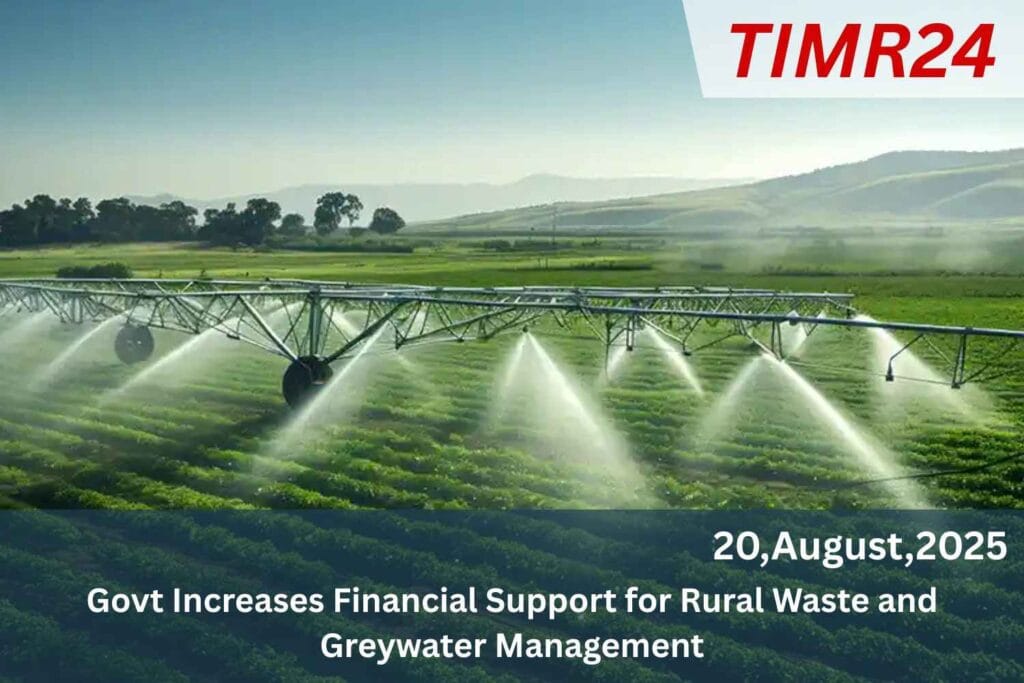
The Indian government has increased financial support for waste management in villages under the Swachh Bharat Mission (Grameen) Phase II. Villages with 5,000 or more populations can receive up to ₹60 per capita for community-level assets and ₹45 per capita for larger ones. The government also provides significant financial support for greywater management, with villages receiving a minimum allocation of ₹1 lakh for Waste Management infrastructure. Funding comes from various sources, including SBM-G, 15th Finance Commission grants, MGNREGS, CSR contributions, state government schemes, and local revenue The Government of India has taken
A significant step towards enhancing sanitation and sustainability in villages by increasing financial support for rural waste and greywater management. This move comes under the broader framework of rural development and environmental protection, which aims to ensure that villages across the country adopt systematic waste disposal methods and greywater recycling techniques. With the expansion of funding, Gram Panchayats and local bodies will now have more resources to implement scientific waste management solutions, thereby reducing pollution, improving health outcomes, and supporting long-term rural sustainability. One of the major objectives of this increased financial
Backing is to strengthen the Swachh Bharat Mission (Grameen), which has already played a transformative role in making villages open-defecation free. However, with changing lifestyles and increasing use of packaged goods even in rural households, the issue of solid waste disposal and greywater drainage has become critical. By enhancing financial assistance, the government ensures that villages can now focus not only on building toilets but also on adopting modern waste segregation, composting, and water treatment systems. This shift represents a move from basic sanitation to a more holistic model of rural cleanliness and hygiene.
For instance, many Gram Panchayats are already setting up community compost pits, bio-gas plants, and decentralized wastewater treatment systems, which are being scaled up under this new financial push The impact of this initiative on rural health and environment cannot be overstated. Poor waste disposal practices have long been linked to water contamination, mosquito breeding, and the spread of diseases such as cholera, diarrheal, and malaria. With structured waste management systems, these risks can be significantly reduced, creating healthier living conditions for rural families. Greywater, which often flows untreated into open drains, is a major source of contamination in villages. When recycled and reused properly,
It can serve as an additional water resource for irrigation and household cleaning, especially in water-stressed regions. Thus, this policy does not only tackle sanitation but also supports water conservation goals. In addition, the program supports the vision of Atmanirbhar Bharat by encouraging local solutions for local problems. Panchayats are being encouraged to mobilize community participation, employ local workers, and use eco-friendly technologies that can be maintained at the village level. This ensures that the solutions are sustainable, cost-effective, and culturally acceptable. For example, decentralized solid waste treatment plants are being promoted so that each.
Village can manage its waste without depending entirely on municipal facilities from nearby towns. This aligns with other rural development programs, such as (Jal Jeevan), where financial and labor support can be interlinked for maximum benefit. The government has also emphasized the importance of capacity building and awareness generation. Financial support is not limited to infrastructure alone but also includes training for Gram Panchayat members, awareness campaigns among villagers, and technical guidance for implementing waste and greywater projects. NGOs and community-based organizations are expected to play a critical role in spreading awareness
About waste segregation at source, recycling, and eco-friendly disposal practices. Internal linkages can be drawn here with the ongoing Swachh Surekha Grameen, where rankings are given to states and districts based on cleanliness performance, motivating villages to adopt innovative waste management solutions From an economic perspective, this initiative also creates opportunities for employment and entrepreneurship in rural areas. Waste collection, recycling, composting, and water treatment open avenues for small enterprises, self-help groups, and start-ups focusing on environmental solutions. Women’s self-help groups, in particular, are being encouraged to take.
Part in solid waste management initiatives, which not only promote cleanliness but also provide additional income opportunities. By linking with digital platforms and government schemes, rural entrepreneurs can now turn waste into wealth, producing compost, recycled products, and biogas energy In the broader context, the increased financial support also ties in with India’s climate change commitments and Sustainable Development Goals (SDGs). Effective waste and greywater management contribute to reducing greenhouse gas emissions, protecting groundwater sources, and promoting sustainable agriculture. Cleaner villages also mean better living standards.
Reduced rural-to-urban migration, and a stronger foundation for inclusive growth. Moreover, the government’s focus on community participation ensures that this is not just a top-down policy but a people-driven movement, where every rural household plays a part the government’s decision to enhance financial support for rural waste and greywater management marks a pivotal moment in India’s rural development journey. By empowering Gram Panchayats with resources and technical guidance, this initiative ensures a cleaner, healthier, and more sustainable rural landscape.
As villages adopt modern waste disposal and water recycling systems, the long-term benefits will reflect not only in improved sanitation but also in environmental conservation, livelihood generation, and overall community well-being. Internal linkages with flagship schemes like (Water & Sanitation) Swachh Bharat Mission (Grameen), Jal Jeevan Mission, and MGNREGA highlight how an integrated approach can transform rural India into a model of sustainable development.
Q1. What is the government’s new initiative on rural waste and greywater management?
The government has increased financial support to improve rural sanitation and waste management systems.
Q2. Who will benefit from this financial support?
Rural households, Gram Panchayats, and local communities will benefit directly from the scheme.
Q3. How will this support improve rural areas?
It will ensure better waste disposal, cleaner water, reduced pollution, and improved public health.
Q4. What type of projects are covered under this scheme?
Projects for solid waste disposal, greywater treatment, and sustainable sanitation systems are included.
Q5. How can local bodies access these funds?
Gram Panchayats can apply through the respective state rural development departments.