














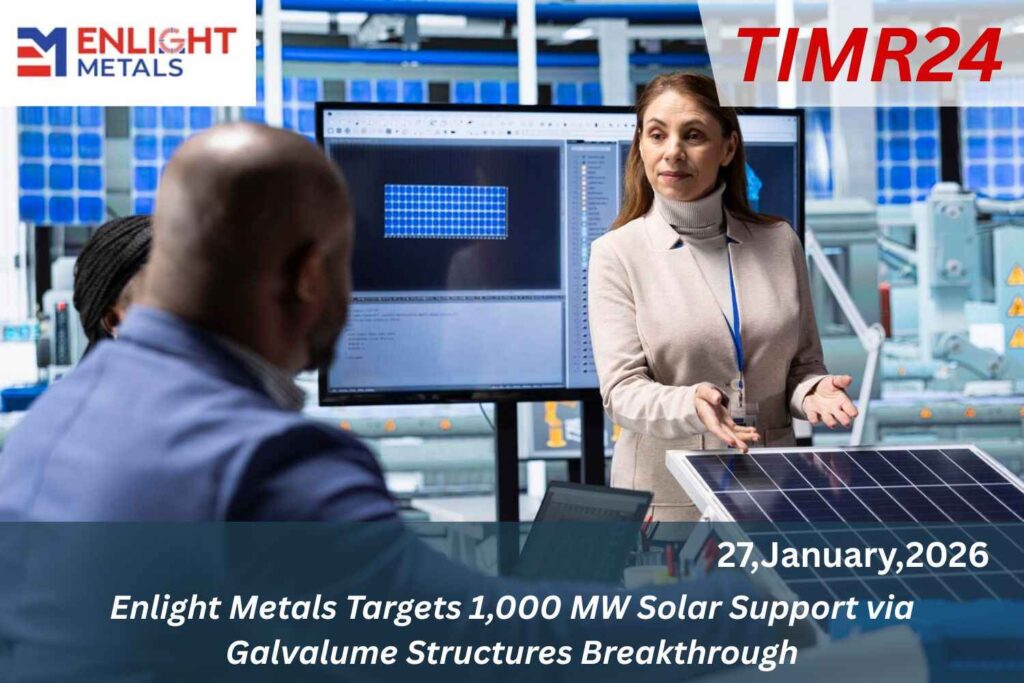
Enlight Metals plans to support over 1,000 MW of solar capacity in India over the next two years using Galvalume-based mounting structures, enhancing its role in the clean energy sector. Since entering the solar infrastructure market in July 2025, the company has developed a growing project pipeline, primarily in Western and Southern India. Their strategy relies on high-quality infrastructure and durable designs, integrating AI for enhanced project planning and material efficiency. Enlight Metals collaborates with EPC contractors and power producers, focusing on the reliability and lifecycle economics of solar projects.
Transition Toward Clean energy
Enlight Metals has announced an ambitious plan to support nearly 1,000 megawatts of solar power capacity through the supply of advanced Galvalume structures, marking a significant milestone in India’s renewable energy infrastructure journey. As the country accelerates its transition toward clean energy, the demand for reliable and durable structural solutions has increased sharply. Enlight Metals, known for its expertise in coated steel and precision engineering, is positioning itself as a key partner in the fast-growing solar ecosystem. This strategic move not only reflects the company’s long-term vision but also aligns closely with national renewable energy targets and sustainability commitments India’s solar sector has witnessed exponential growth over the past decade, driven by.
Government initiatives, falling technology costs, and increasing private sector participation. Large-scale solar parks, rooftop installations, and hybrid renewable projects are now being developed across multiple states. In this context, the role of supporting infrastructure becomes crucial. Solar modules may capture sunlight, but it is the mounting structures that ensure stability, optimal orientation, and long-term performance. By targeting 1,000 MW of solar support capacity, Enlight Metals aims to become a backbone supplier for utility-scale and commercial solar projects across the country. This initiative directly supports the broader goals outlined by the Ministry of New and Renewable Energy, which continues to push for higher renewable capacity through policies and incentives available.
Climatic Conditions Including
Galvalume structures, which combine the corrosion resistance of aluminum with the strength of steel and the protective qualities of zinc, are increasingly becoming the preferred choice for solar mounting systems. These structures offer superior durability in harsh climatic conditions, including coastal regions, high-humidity zones, and extreme temperature environments. Enlight Metals has invested in advanced manufacturing processes to ensure uniform coating, precise fabrication, and consistent quality across large production volumes. The use of Galvalume not only extends the life of solar installations but also reduces maintenance costs over time, making projects more financially viable for developers and investors From a manufacturing perspective.
The company’s expansion into large-scale solar support structures reflects a strategic diversification of its product portfolio. Traditionally associated with industrial and construction-grade steel products, Enlight Metals is now leveraging its metallurgical expertise to cater specifically to the renewable energy sector. This shift is supported by modernized production lines, automated quality control systems, and an increased focus on research and development. By integrating sustainable manufacturing practices, the company is also reducing its carbon footprint, which strengthens its positioning within the green supply chain The impact of this initiative extends beyond manufacturing. Large solar projects require a stable and timely supply of mounting systems to meet strict.
Logistics And Project Execution
Commissioning deadlines. Enlight Metals’ plan to support 1,000 MW capacity will improve supply chain reliability and reduce dependency on imports. This supports the government’s “Make in India” vision while also contributing to job creation in steel processing, logistics, and project execution. Industry stakeholders, including project developers and EPC contractors, are expected to benefit from shorter lead times and consistent product availability From a market perspective, this move places Enlight Metals in direct alignment with organizations such as the Solar Energy Corporation of India, which plays a central role in auctioning and implementing large renewable projects across the country. Collaboration with agencies like SECI, whose initiatives new avenues for.
Long-term supply contracts and multi-gigawatt opportunities. At the same time, global renewable energy bodies such as the International Renewable Energy Agency continue to emphasize the importance of resilient infrastructure in scaling clean energy worldwid Technically, the engineering design of solar mounting (Solar)systems is evolving rapidly. Fixed-tilt structures, single-axis trackers, and customized rooftop solutions each require different load-bearing capacities and corrosion resistance levels. Enlight Metals is developing modular and customizable Galvalume systems that can adapt to varied terrain, wind conditions, and project sizes. This flexibility is essential in a diverse market like India, where solar installations range from desert regions in Rajasthan to coastal belts in Tamil Nadu and high-altitude areas in Ladakh.
International Partners Looking
From a sustainability viewpoint, the use of Galvalume also supports circular economy principles. These structures are recyclable, require fewer replacements over time, and reduce material wastage during fabrication. Enlight Metals has publicly stated its intention to increase the share of recycled content in its raw materials, further lowering environmental impact. Such initiatives not only meet regulatory expectations but also enhance the company’s ESG profile, which is increasingly important for institutional investors and international partners Looking ahead, the 1,000 MW target is not merely a production number but a strategic foundation for future growth. As India moves toward its long-term renewable energy goals, including ambitious solar capacity targets for 2030 and beyond, the need for.
High-quality supporting infrastructure will only increase. Enlight Metals’ early investment in this segment allows it to build long-term relationships with developers, technology providers, and government agencies. This creates a strong platform for expansion into export markets in South Asia, the Middle East, and Africa, where similar climatic conditions make Galvalume structures highly suitable Internally, this initiative is also driving organizational transformation. The company is strengthening its project management teams, enhancing technical training for engineers, and adopting digital tools for supply chain planning and customer coordination. These internal upgrades ensure that large-volume orders can be executed efficiently without compromising quality or delivery schedules.
Over time, this operational maturity will become a competitive advantage in a crowded renewable energy supply market Enlight Metals’ plan to support 1,000 MW of solar capacity through Galvalume structures represents a timely and well-aligned strategic move. It connects manufacturing strength with (India) national energy priorities, supports sustainable development, and positions the company as a critical enabler of India’s clean energy future. As solar installations continue to expand across the country, reliable structural partners like Enlight Metals will play an increasingly central role in shaping the next phase of renewable infrastructure growth.
Q1. What is Enlight Metals’ 1,000 MW solar support plan?
Enlight Metals plans to supply Galvalume structures to support up to 1,000 MW of solar power capacity across India.
Q2. Why are Galvalume structures used in solar projects?
Galvalume structures offer high corrosion resistance, long life, and strong load-bearing capacity for solar mounting systems.
Q3. Which solar projects will benefit from this initiative?
Utility-scale solar parks, commercial rooftop projects, and hybrid renewable installations will benefit from this support.
Q4. How does this plan support India’s renewable goals?
It strengthens domestic infrastructure supply and supports India’s clean energy and Make in India initiatives.
Q5. When will the 1,000 MW support capacity be achieved?
The target will be achieved in phases as new solar projects are commissioned across different states.