










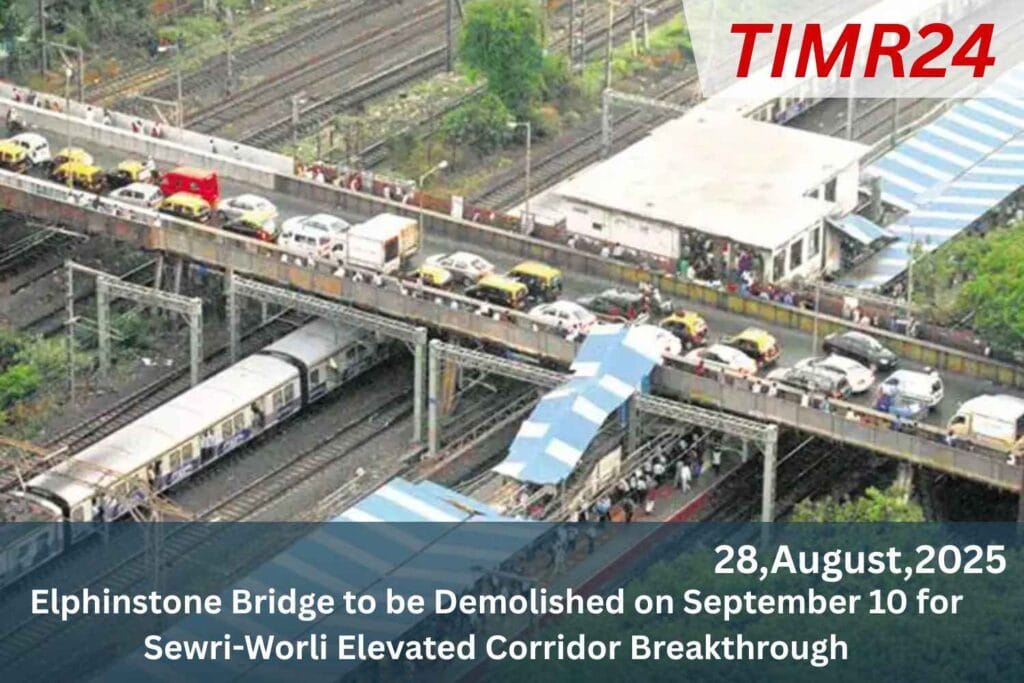
Mumbai traffic police approve MMRDA’s proposal to close Elphinstone Bridge for vehicles on September 10, followed by demolition work for a double-decker elevated corridor connecting with Tal Setu for signal-free travel The city of Mumbai is on the edge of yet another major transformation as the historic Elphinstone Bridge is scheduled for demolition on September 10, 2025. This step marks a significant breakthrough for the Sewri-Worli Elevated Corridor project, a crucial link in the city’s ever-growing network of transport infrastructure. While the bridge carries a strong historical identity for many residents, the demands of modern urbanization have made its demolition
Inevitable, setting the stage for faster connectivity, reduced traffic congestion, and smoother integration with mega projects like the Mumbai Trans Harbour Link (MTHL) and the Coastal Road Project The Elphinstone Bridge, located near Parel, has been a silent witness to the evolution of Mumbai from a colonial trading hub into a global metropolitan powerhouse. Built decades ago, the bridge once served as a crucial connector for pedestrians, vehicles, and trains in the bustling mill district. However, as the city’s vehicular density multiplied, the bridge gradually lost its efficiency and began to pose structural and logistical challenges. With continuous wear and tear, engineers repeatedly highlighted the limitations of retrofitting it for modern traffic needs.
The decision to demolish it was not taken lightly, as it represents the end of an era, but urban planners have emphasized that this sacrifice is necessary to pave the way for future-ready infrastructure. For more insights on Mumbai’s ongoing redevelopment of heritage sites, you can explore our (Smart City) The Sewri-Worli Elevated Corridor is not just another road project but an ambitious initiative aimed at reshaping connectivity in central and south Mumbai. Acting as a feeder to the MTHL, this elevated road will link Sewri to Worli seamlessly, reducing dependency on already overburdened arterial routes like Dr. Annie Besant Road, Dadar, and Parel junctions.
The corridor will also help integrate traffic movement towards Navi Mumbai, easing daily commutes and providing faster access to business hubs and residential areas What makes this corridor particularly significant is its role as a missing puzzle piece in Mumbai’s multi-layered transport map. Together with the Coastal Road and the upcoming Mumbai Metro network, it promises to drastically cut down travel time and improve the city’s logistics landscape. For more information on similar projects, you can refer to our section on
Benefits for Mumbai’s Daily Commuters
For everyday commuters, the demolition of Elphinstone Bridge and the subsequent rise of the elevated corridor will translate into tangible benefits. Currently, areas around Parel and Elphinstone Road are infamous for chronic traffic snarls, with bottlenecks often lasting hours during peak times. The elevated road will directly bypass these ground-level obstacles, ensuring smoother vehicular flow. Additionally, it will provide a reliable connection for office-goers, students, and logistics operators traveling between south-central Mumbai and the eastern corridors. The project also ties into the city’s vision of reducing carbon emissions by cutting down on idle traffic hours.
With fewer vehicles stuck in jams, there will be measurable environmental gains, aligning with Mumbai’s broader climate action commitments. To learn more about how transport projects impact urban sustainability, Of course, large-scale demolition in a city as densely packed as Mumbai cannot be executed without disruptions. The authorities, led by the Mumbai Metropolitan Region Development Authority (MMRDA) and the Mumbai Traffic Police, have already devised a plan to minimize inconvenience during the demolition phase. Alternate routes will be announced in advance, and commuters are urged to check daily traffic updates before planning their journeys. Public transport systems, including BEST buses and local trains, will be coordinated to accommodate redirected passengers.
Traffic Diversions and Management Plans
Authorities are also deploying advanced machinery to ensure that the demolition is carried out swiftly and safely. Special barricading and noise-control measures will be enforced to limit the impact on residents and businesses in the immediate vicinity. For real-time updates, commuters Every large infrastructure project invites its share of criticism, and the Sewri-Worli Elevated Corridor is no exception. Environmental activists have voiced concerns about potential air and noise pollution during demolition and construction. They also highlight the issue of displacing small businesses and informal settlements in the vicinity of the project site. While MMRDA has assured that rehabilitation and compensation measures are being implemented, questions about long-term sustainability remain.
Balancing growth with environmental stewardship is a recurring theme in Mumbai’s development journey. The city has witnessed similar debates during the execution of the Coastal Road Project and the expansion of the Mumbai Metro Rail network. For a broader perspective on balancing urban development and ecology The importance of the Sewri-Worli Corridor becomes even clearer when viewed as part of the larger transport ecosystem. Once completed, it will link directly with the Mumbai Trans Harbour Link, which connects Sewri to Nhava Sheva across the Arabian Sea. This integration will drastically cut travel times between Mumbai and Navi Mumbai, opening up new opportunities for trade, industry, and residential growth. Additionally.
Public Reactions and Future Outlook
It will complement the Mumbai Coastal Road, which is being built along the city’s western edge, thereby offering a parallel north-south connectivity corridor. Public opinion on the demolition of Elphinstone Bridge is mixed. For long-time residents, the bridge represents memories of Mumbai’s industrial era, its bustling textile mills, and its historic neighbourhoods. For younger commuters, however, it has become a symbol of inefficiency and outdated design. As the city bids farewell to this structure, there is also a sense of anticipation for the modern, efficient, and interconnected transport system that will replace it.
Looking ahead, the Sewri-Worli Elevated Corridor is expected to be a cornerstone in shaping Mumbai’s future. It will not only decongest one of the busiest stretches of the city but also strengthen its standing as a city prepared to handle 21st-century mobility challenges. The scheduled demolition of Elphinstone Bridge on September 10, 2025 is more than an infrastructural update; it is a symbolic moment in Mumbai’s relentless pursuit of modernization. By paving the way for the Sewri-Worli Elevated Corridor, the city is investing in smoother commutes, stronger economic connectivity, and sustainable urban growth. While challenges such as traffic diversions, environmental concerns, and heritage debates persist, the larger picture points to a transformative leap in how Mumbai moves and functions.
Q1. Why is Elphinstone Bridge being demolished?
The bridge is being demolished to make way for the Sewri-Worli Elevated Corridor, which will improve traffic flow and connectivity in Mumbai.
Q2. When will the demolition of Elphinstone Bridge take place?
The demolition is scheduled for September 10, 2025.
Q3. How will this project benefit commuters in Mumbai?
The elevated corridor will reduce congestion, cut travel time, and provide seamless connectivity between Sewri and Worli.
Q4. Will traffic be affected during the demolition?
Yes, diversions will be planned. Authorities have prepared alternate routes to manage vehicular flow.
Q5. Which agency is executing the Sewri-Worli Elevated Corridor?
The project is being implemented under the Mumbai Metropolitan Region Development Authority (MMRDA).