










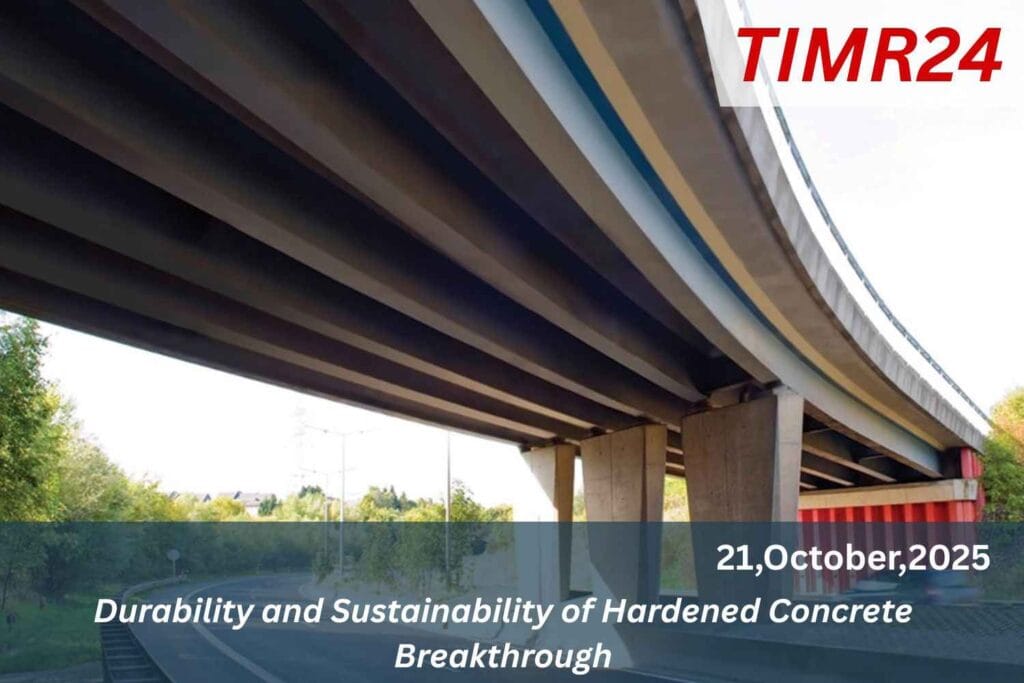
Concrete’s durability and sustainability are crucial for efficient construction practices. However, volumetric changes in the hardened state can reduce service life and accelerate deterioration, affecting the strength of concrete structures. Water is the main culprit for both durability and sustainability, with excess water accelerating degradation. External conditions like climatic changes and internal conditions like chemical reactions can also cause loss of durability. Durability mechanisms can be classified into deterioration mechanisms like corrosion of rebars and chemical attacks, and transport mechanisms like permeability and porosity. The strength of concrete structures may decrease over time if they are not impermeable.
Compromising their durability Physical durability refers to the durability of concrete structures caused by self-external factors. It can be divided into three categories: freezing and thawing effects, permeability to gases and liquids, and heat of hydration. Freezing and thawing effects occur in cold (Water) environments, causing cracks and damage in concrete structures. To protect against these effects, proper spacing, surface area, and Philleo factors are essential Air-entraining admixture, lowering the W/C ratio, adding supplementary cementitious materials (SCMs), and increasing cover depth can help protect concrete from freezing and thawing effects. The required entrained air content is based on the nominal maximum.
Aggregate size (NMAS) to protect the concrete from freezing and thawing effects Permeability to both gases and liquids refers to concrete’s ability to allow liquids or gases to pass through it. Concrete’s porosity refers to the ratio of the apparent volume of voids to the volume of solids, while permeability refers to the presence of voids in hardened concrete The heat of hydration of concrete structures is crucial for its strength, durability, and cracking due to thermal stresses. The application of SCMs in air-entrained concrete can help enhance resistance to these effects Hardened concrete forms the backbone of modern construction, serving as the essential material for buildings, bridges, dams.
Roads, and other critical infrastructure. Its durability is one of the most crucial aspects for long-term performance, as it determines how well the structure can resist environmental stresses, chemical attacks, physical wear, and the effects of time. The durability of concrete begins with proper mix design, where the choice of cement type, aggregate quality, and water-cement ratio directly influences its strength and resistance to cracking. Using high-quality aggregates ensures uniformity and minimizes the risk of weak zones in the structure, while controlling the water-cement ratio reduces porosity and prevents excessive shrinkage. Curing, an often-overlooked step, plays.
A pivotal role in concrete longevity. Techniques such as water curing, membrane curing, and steam curing allow the hydration process to continue optimally, ensuring that the hardened concrete achieves its maximum strength and density to understand the principles that guide the creation of durable concrete structures The integration of sustainable practices in concrete production has become increasingly important in the context of global environmental challenges. Traditional Portland cement production is highly energy-intensive and contributes significantly to greenhouse gas emissions. To address this, modern construction practices are incorporating.
Supplementary cementitious materials (SCMs) such as fly ash, silica fume, and slag, which reduce the cement content without compromising performance. These materials not only improve durability by filling micro-pores and refining the concrete’s microstructure but also reduce carbon emissions, aligning with eco-friendly construction goals. Additionally, the use of recycled aggregates from demolished structures provides an environmentally responsible alternative to virgin aggregates, promotes a circular economy, and helps conserve natural resources for emerging techniques that enhance both durability and sustainability in construction When it comes to reinforced concrete structures, durability.
Becomes even more critical due to the susceptibility of embedded steel reinforcement to corrosion. Moisture and chlorides can penetrate concrete and reach the steel, initiating corrosion that weakens structural integrity. Proper concrete cover, corrosion inhibitors, and protective coatings help shield steel and maintain long-term strength. Moreover, precise detailing in construction, such as avoiding cracks at joints, ensuring uniform compaction, and using expansion joints effectively, is essential to prevent stress concentrations and structural degradation. For design standards and best practices, engineers refer to guidelines from professional bodies such as (ASCE).
Which provide a comprehensive framework to ensure reinforced concrete structures are resilient against environmental and operational stresses Innovations in concrete materials have further enhanced durability and sustainability. High-performance concrete (HPC) and geopolymer concrete are examples of advanced materials that address both strength and environmental impact. HPC offers superior compressive strength, reduced permeability, and better resistance to chemical attack, making it suitable for structures exposed to harsh environments such as coastal areas or industrial zones. Geopolymer concrete, on the other hand, utilizes industrial by-products like fly ash.
And slag as a binder, significantly reducing carbon emissions compared to traditional Portland cement. These innovations are not only transforming the construction industry but also demonstrating how resilience and environmental responsibility can be combined effectively. Internal resources like provide detailed insights into applications, mix designs, and case studies for engineers and builders Another crucial factor affecting concrete durability is the quality of water used during mixing and curing. Impurities, salts, or excessive chlorides in water can negatively impact the hydration process and accelerate corrosion of reinforcement. Ensuring clean water and monitoring its chemical.
Composition during construction are simple yet highly effective measures for prolonging the lifespan of concrete structures. Environmental exposure conditions, including freeze-thaw cycles, aggressive chemicals, and marine environments, must also be considered during the design stage. Protective measures such as surface coatings, sealants, or integral water repellents can enhance durability, especially in regions with extreme climates. For practical guidance, the provide insights into managing environmental risks and adopting greener construction practices The long-term performance of hardened concrete is also influenced by structural maintenance and inspection.
Periodic assessment of cracks, surface wear, and signs of corrosion enables early intervention, preventing minor issues from developing into major structural failures. Techniques such as non-destructive testing, ultrasonic pulse velocity measurement, and corrosion monitoring allow engineers to evaluate the internal condition of concrete without compromising its integrity. This proactive approach complements the initial durability measures, ensuring that structures not only survive but thrive under operational and environmental stresses for decades In addition to structural performance, sustainability in concrete construction emphasizes energy efficiency and material optimization.
Innovations like lightweight aggregates, recycled content, and blended cements reduce the overall environmental footprint of construction projects. Lifecycle assessment (LCA) studies highlight how sustainable design choices can lower carbon emissions, reduce waste, and enhance resource efficiency, all while maintaining durability. This holistic approach to construction aligns with the growing demand for green buildings and environmentally responsible infrastructure, demonstrating that durability and sustainability are not mutually exclusive but mutually reinforcing principles. Internal links to related topics such as provide further context for professionals seeking comprehensive solutions.
Finally, the future of hardened concrete lies in integrating digital tools and smart technologies to monitor durability and sustainability. Sensors embedded in concrete can track moisture levels, temperature, and stress, providing real-time data to predict maintenance needs and optimize structural performance. Coupled with sustainable mix designs and advanced construction techniques, these technologies pave the way for smarter, longer-lasting, and environmentally conscious infrastructure. By combining innovation, material science, and proactive maintenance, the construction industry can ensure that hardened concrete continues to meet the demands of modern urban development while minimizing its ecological footprint.
In conclusion, the durability and sustainability of hardened concrete are essential for safe, resilient, and environmentally responsible construction. Through careful mix design, innovative materials, proper curing, reinforcement protection, and sustainable practices, concrete structures can achieve decades-long performance without compromising ecological goals. The integration of advanced technologies, recycled materials, and proactive maintenance strategies ensures that modern infrastructure is both strong and green. As the industry evolves, balancing durability with sustainability will remain a cornerstone of construction excellence.
Q1. What is hardened concrete and why is its durability important?
Hardened concrete is concrete that has set and gained strength over time. Its durability ensures long-lasting structures, reducing maintenance costs and increasing safety.
Q2. How does sustainability factor into concrete production?
Sustainable concrete minimizes environmental impact by using recycled materials, reducing carbon emissions, and optimizing resource consumption during production and construction.
Q3. What are the main factors affecting the durability of concrete?
Durability depends on water-cement ratio, quality of raw materials, curing process, exposure to environmental conditions, and the presence of additives or admixtures.
Q4. How can reinforced concrete maintain strength over decades?
Proper design, controlled curing, corrosion protection for steel reinforcement, and using high-quality materials help reinforced concrete resist cracks and degradation over time.
Q5. Are there innovative materials improving concrete sustainability?
Yes, materials like fly ash, silica fume, recycled aggregates, and geopolymer cement enhance both durability and environmental performance of concrete structures.