



















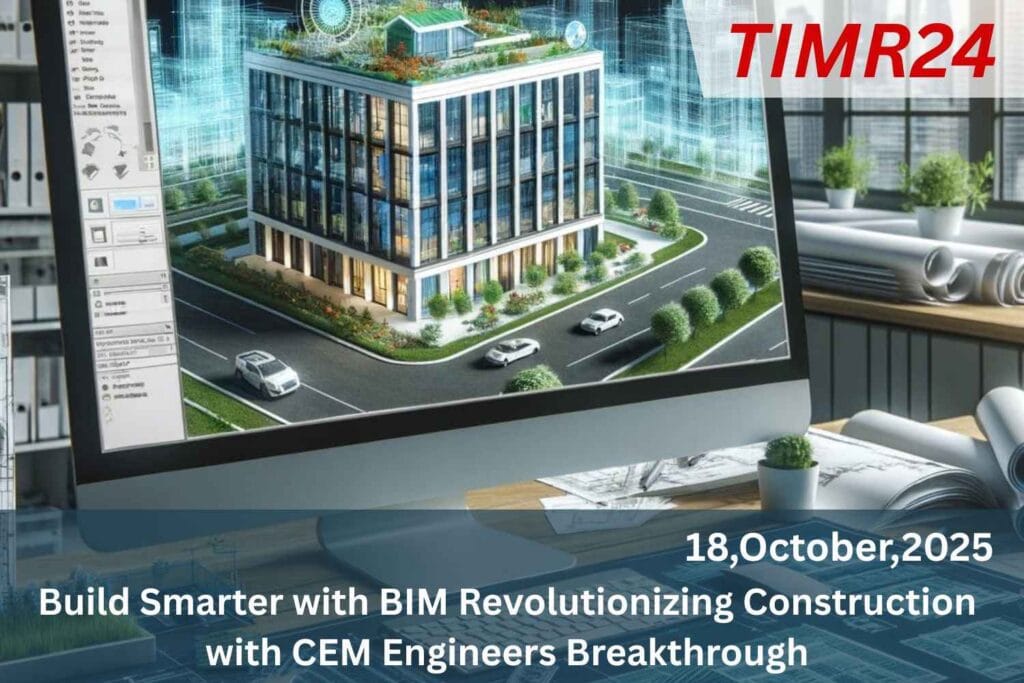
Build Information Modeling (BIM) is a revolutionary technology that has revolutionized the construction sector by transforming how projects are conceptualized, designed, and executed. BIM generates intricate 3D models that offer vivid visual representations of designs, fostering a profound understanding of spatial relationships and aesthetic considerations. It facilitates collaborative design endeavors, enabling architects, engineers, and contractors to collaborate seamlessly on a unified digital model. BIM also extends its utility to quantity surveying and cost estimation, providing valuable insights for decision-making during the initial design phases.
BIM’s impact extends beyond technological advancements. It promotes collaboration and communication among diverse project stakeholders, facilitating well-informed decision-making and prioritizing overall project quality. BIM’s clash detection and coordination functionalities streamline the identification and resolution of conflicts between disparate building components. BIM also enhances the accuracy of cost estimates and streamlines project budgeting processes, contributing to overall project efficiency and financial management BIM also plays a crucial role in facility management, facilitating a seamless transition from construction to operational phases. It enables granular analysis.
Of building performance metrics, energy consumption patterns, and sustainability indicators, empowering stakeholders to make data-informed decisions and drive positive environmental outcomes. BIM also promotes regulatory compliance measures, streamlining documentation processes, and fostering global standardization efforts The construction industry is undergoing a profound transformation, driven by digital technologies and innovative engineering practices. Among these innovations, Building Information Modeling (BIM) has emerged as a game-changer, reshaping how projects are designed, planned, and executed. CEM Engineers, recognized for their forward.
Thinking approach, have been at the forefront of adopting BIM to streamline construction workflows, improve collaboration, and ensure precise execution of complex projects. Unlike traditional methods, which rely heavily on two-dimensional drawings and fragmented project management, BIM provides a digital platform where architects, engineers, and contractors can work together seamlessly. This integration allows for early detection of design clashes, better planning of resources, and improved overall efficiency At the core of BIM is the creation of a 3D digital representation of the building, often referred to as a “digital twin.” This model contains not only geometric.
Data but also critical information about materials, structural loads, mechanical systems, and operational sequences. For CEM Engineers, leveraging BIM means that every decision, from conceptual design to on-site execution, is informed by accurate, real-time data. For example, integrating structural, electrical, and mechanical designs into a unified BIM model allows teams to identify potential conflicts before construction begins. This not only saves time and cost but also reduces the likelihood of rework and material waste. By using BIM, CEM Engineers can simulate various construction scenarios, optimize workflows, and deliver projects that meet both aesthetic and functional.
Collaboration is a fundamental aspect of modern construction, and BIM serves as the ideal platform to facilitate it. Traditionally, project teams worked in silos, with limited communication between architects, engineers, and contractors. This often led to delays, misunderstandings, and errors during construction. With BIM, all stakeholders can access a single, centralized model, make updates, and provide feedback in real-time. CEM Engineers utilize collaborative BIM dashboards to track progress, assign tasks, and ensure that every member is aligned with project goals. This integrated approach improves transparency, accelerates decision-making, and minimizes.
The risk of miscommunication. Clients also benefit from this collaboration, as they can visualize the project through interactive 3D models, making design approval processes faster and more accurate. Internal projects, such as showcase how CEM Engineers maintain coordination across multiple disciplines using BIM technology Beyond design and collaboration, BIM plays a crucial role in cost and resource management. One of the biggest challenges in construction is predicting material needs, labor allocation, and equipment usage. CEM Engineers use BIM to run simulations of construction sequences, allowing them to forecast these requirements with precision.
This predictive capability reduces over-ordering of materials, prevents schedule overruns, and ensures that labor resources are efficiently utilized. By analyzing project timelines and resource allocation within the BIM platform, engineers can identify potential bottlenecks and adjust plans proactively. External resources like (Construction) provide further guidance on minimizing expenditures while maintaining quality standards Sustainability has become a core consideration for modern construction projects. Environmental concerns, regulatory requirements, and corporate responsibility drive engineers to design buildings that are energy-efficient and resource-conscious.
BIM enables CEM Engineers to conduct energy analyses, assess environmental impacts, and design buildings optimized for natural light, ventilation, and reduced energy consumption. Using digital models, engineers can experiment with different materials and structural configurations to identify the most sustainable options. This approach also helps in planning for long-term maintenance, as BIM models can include lifecycle information about building components, ensuring that sustainability goals are met over time. Learn more about to understand how BIM contributes to greener infrastructure Risk management is another area where BIM demonstrates its value.
Construction projects are inherently complex, involving multiple stakeholders, dynamic schedules, and varying site conditions. BIM allows engineers to simulate construction sequences and identify potential safety hazards before work begins on-site. For example, sequencing construction activities digitally can reveal conflicts that may pose risks to workers or compromise structural integrity. CEM Engineers incorporate these insights into their planning processes, ensuring a safer work environment and reducing project delays caused by unforeseen challenges. By integrating safety protocols into the BIM workflow, projects benefit from improved compliance and operational efficiency.
The future of construction is increasingly digital, and BIM is central to this evolution. With advancements in Artificial Intelligence (AI), Internet of Things (IoT), and cloud computing, BIM models are becoming smarter and more interactive. Predictive maintenance, automated construction sequencing, and real-time monitoring are becoming feasible, transforming buildings into intelligent assets. CEM Engineers are actively exploring these innovations, positioning themselves as leaders in the digital construction revolution. Their adoption of advanced BIM practices not only improves project outcomes but also enhances client satisfaction, demonstrating the tangible.
Value of technology-driven construction management. For additional information on by CEM Engineers, their portfolio highlights successful case studies leveraging BIM across diverse sectors BIM also fosters innovation in design. Architects can experiment with complex forms and structures without worrying about practical execution limitations. Structural engineers can evaluate multiple configurations for efficiency and stability. MEP engineers can optimize systems for performance and integration. This collaborative and iterative approach allows CEM Engineers to deliver buildings that are not only structurally sound but also aesthetically compelling and functionally superior.
Clients benefit from interactive visualizations, virtual walkthroughs, and clear communication of design intent, enhancing confidence in the final deliverables Building Information Modeling has fundamentally changed the way construction projects are conceived, planned, and executed. By combining digital innovation, collaborative workflows, and sustainable practices, BIM empowers CEM Engineers to deliver smarter, more efficient, and more resilient structures. From reducing costs and improving safety to enhancing sustainability and client engagement, the advantages of BIM are clear. As the construction industry continues to embrace digital transformation.
The integration of BIM by forward-looking firms like CEM Engineers will set new standards for excellence, efficiency, and innovation. Construction projects are no longer just about bricks and mortar (MEP) they are about smart, data-driven, and sustainable building practices that meet the demands of the modern world. For more insights, and witness how BIM is revolutionizing construction in practice.
Q1. What is BIM and how does it benefit construction?
BIM is Building Information Modeling, a digital 3D representation of a project that improves accuracy, collaboration, and efficiency in construction.
Q2. How do CEM Engineers implement BIM?
They integrate architectural, structural, and MEP designs into a unified digital platform for seamless coordination.
Q3. Can BIM help reduce project costs?
Yes, by detecting design conflicts early, optimizing resources, and forecasting material requirements, BIM significantly reduces costs.
Q4. Does BIM improve sustainability in construction?
Absolutely, BIM allows energy analysis, eco-friendly design, and better resource management, enhancing sustainability.
Q5. Is BIM suitable for all types of construction projects?
BIM can be applied to residential, commercial, and industrial projects of all scales, making it a versatile tool.