

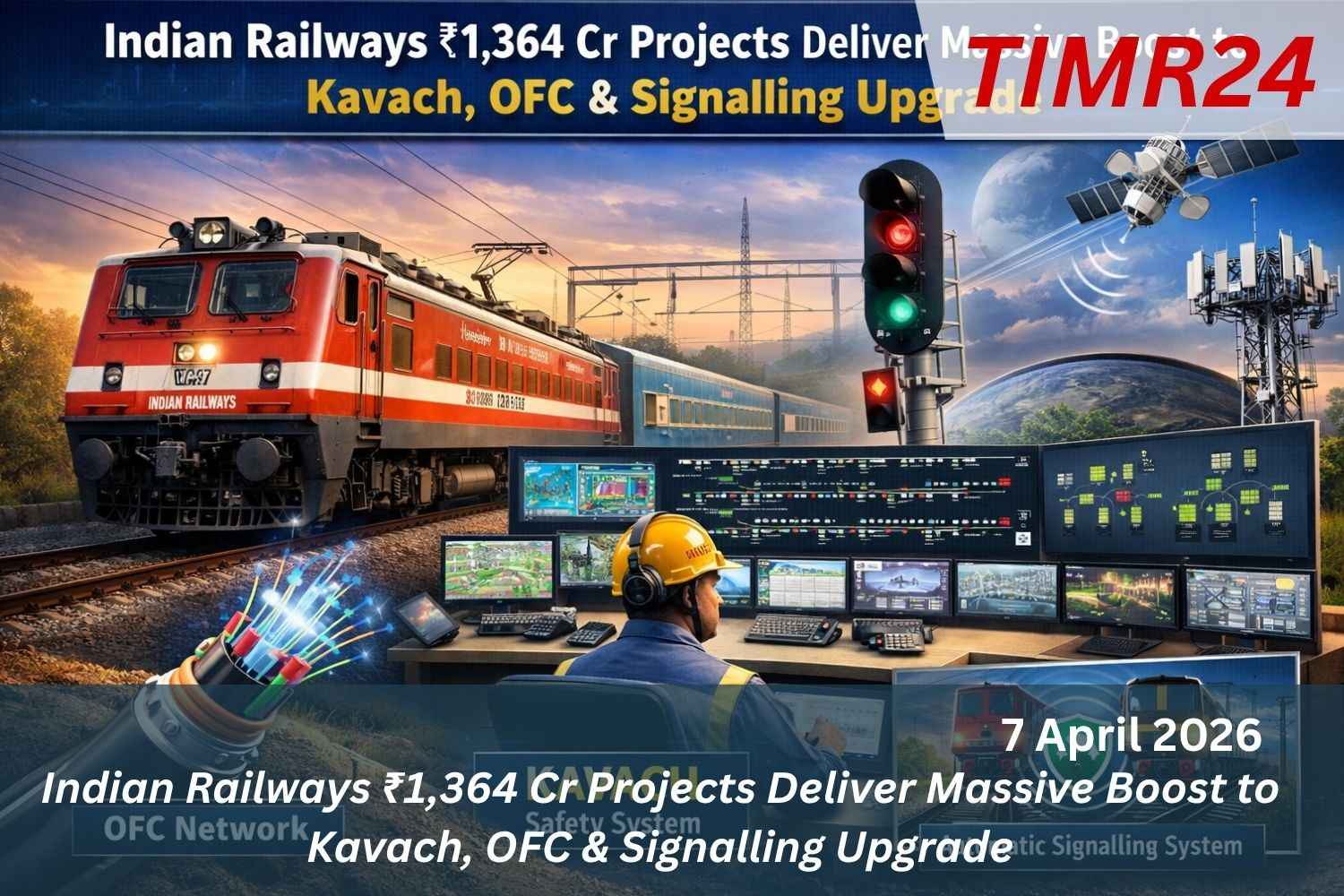







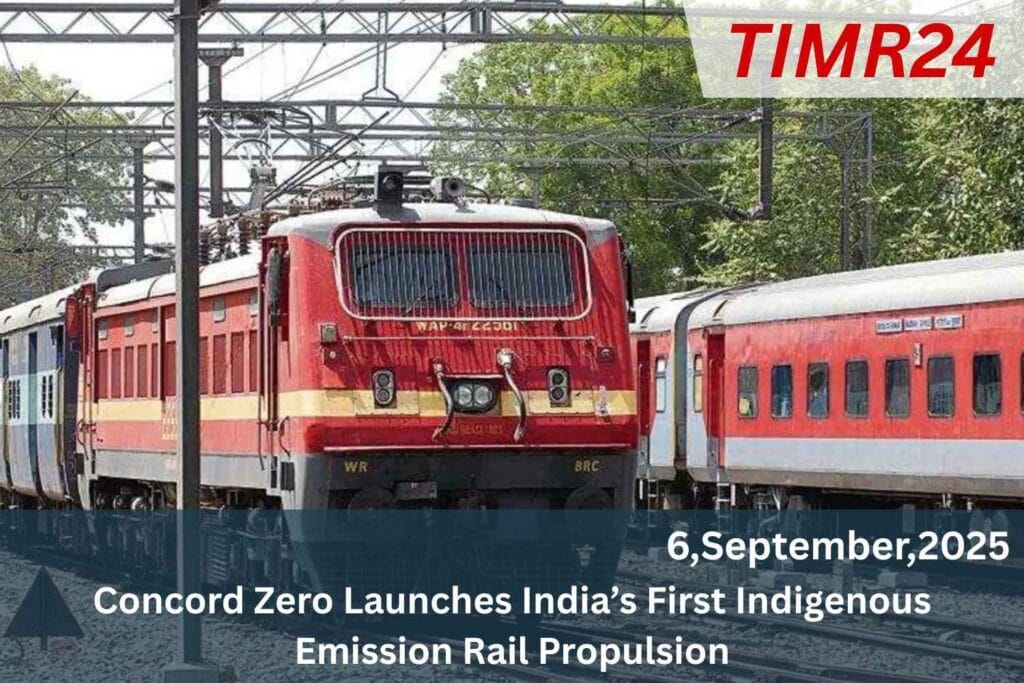
India’s “Concord Launches” Systems (CCSL) has developed India’s first fully indigenous zero-emission propulsion system, marking a significant step towards the country’s railway electrification and net-zero goals for 2030. The system, powered by Lithium Iron Phosphate batteries and featuring a DC chopper-based drive, eliminates idling losses common in diesel engines, offering higher efficiency, lower costs, and zero emissions. The system, retrofitted on a 700 HP diesel-electric platform, delivers 800A peak current to traction motors and integrates advanced features like driver-friendly digital displays, CCTV/DVR monitoring, and a Remote Monitoring System for predictive maintenance and real-time diagnostics.
The launch of India’s indigenous zero-emission rail propulsion by Concord marks a transformative moment in the country’s transportation and environmental journey. Railways have long been the backbone of India’s connectivity, facilitating the movement of millions of passengers and enormous volumes of freight every day. Traditionally powered by diesel engines and electricity generated from non-renewable sources, India’s rail network has contributed substantially to air pollution and carbon emissions. The introduction of a zero-emission propulsion system addresses these critical challenges while aligning with the nation’s broader environmental objectives, such as its commitment to.
Achieving Net Zero carbon emissions by 2070. Concord’s indigenous solution combines innovative technologies, sustainability-focused engineering, and domestic manufacturing expertise to offer a scalable, eco-friendly alternative to conventional rail engines The zero-emission rail propulsion system integrates advanced electric traction and hydrogen fuel cell technologies. This dual approach enables trains to operate efficiently across long distances without relying on fossil fuels. Electric traction is particularly effective for high-density urban and intercity routes, providing silent, smooth, and rapid acceleration while reducing maintenance needs compared to diesel locomotives.
Hydrogen fuel cells supplement energy requirements on routes where electrification is limited or intermittent, producing electricity through a chemical reaction between hydrogen and oxygen and emitting only water as a by-product. By incorporating this hybrid system, Concord ensures that its propulsion technology is versatile, energy-efficient, and adaptable to India’s diverse railway infrastructure. For readers interested in the science behind sustainable rail systems (Indian Bullet Technology).
Concord’s project reflects a broader vision of modernizing India’s railway infrastructure in alignment with global sustainability standards. Railways are among the largest contributors to transport-related emissions in India, and reducing this footprint is critical for urban air quality, climate resilience, and public health. The zero-emission propulsion system directly addresses these concerns by eliminating exhaust pollutants, reducing particulate matter, and minimizing greenhouse gas emissions. Cities with dense commuter populations, such as Delhi, Mumbai, Bengaluru, and Hyderabad, are expected to benefit first from this deployment, where trains can operate on both.
Electrified and hydrogen-compatible tracks. Such initiatives complement urban transport policies focused on sustainable mobility, reducing the reliance on fossil fuel-powered buses and personal vehicles, which are major contributors to urban air pollution. More insights can be explored at One of the most significant advantages of Concord’s indigenous propulsion technology is its alignment with domestic manufacturing and technological development. By producing critical components locally, India reduces dependency on foreign suppliers and strengthens its domestic industrial ecosystem. This approach creates jobs, fosters research and innovation.
Enhances the nation’s competitiveness in the global green technology market. The propulsion system’s modular design ensures that existing rail infrastructure can be upgraded without requiring complete track replacement, making it cost-effective and practical for widespread adoption provide context on ongoing initiatives to improve network efficiency and sustainability The economic benefits of zero-emission rail propulsion extend beyond operational cost reductions. Diesel locomotives involve high fuel and maintenance expenses, and their lifecycle costs are considerably higher than electric or hydrogen-powered alternatives. By transitioning to cleaner propulsion systems.
Indian Railways can achieve substantial long-term savings while contributing to environmental protection. Furthermore, these trains can serve as a catalyst for ancillary industries such as hydrogen production, battery technology, and renewable energy integration, creating an ecosystem of sustainable innovation that supports broader national goals. External resources provide additional perspectives on how such technologies drive economic and environmental benefits simultaneously From a public safety perspective, Concord’s zero-emission trains are engineered to meet international standards for reliability, redundancy, and operational safety. Hydrogen fuel cells.
Electric traction systems are inherently safer than conventional diesel engines, as they eliminate flammable fuels and reduce the risk of fires or toxic gas emissions. The technology has been tested extensively under varied climatic conditions to ensure dependable performance across India’s diverse geographic landscape, from the humid coastal plains to the arid interior regions. This reliability ensures uninterrupted passenger and freight services, which are crucial for India’s economic and social infrastructure. Readers can find related safety and operational guidelines at Environmentally, the propulsion system contributes to cleaner air, noise reduction, and lower ecological impact in urban and rural areas alike.
Diesel engines generate significant noise pollution, especially in densely populated areas, affecting public health and quality of life. By replacing diesel with silent electric and hydrogen-powered trains, urban communities can experience a noticeable reduction in noise levels. Additionally, zero-emission trains help preserve local ecosystems along railway corridors by minimizing chemical runoff, particulate deposition, and carbon emissions. As India continues to face challenges related to urbanization and industrial pollution, sustainable transport solutions like this are increasingly vital for preserving natural resources and ensuring public health. Readers may for deeper context.
The introduction of indigenous zero-emission rail propulsion also symbolizes India’s strategic approach to climate-friendly innovation. By investing in cutting-edge technology domestically, India not only addresses internal environmental challenges but also positions itself as a global leader in sustainable transportation solutions. International partnerships, knowledge exchanges, and research collaborations can further enhance these capabilities, allowing India to export technology, expertise, and best practices to other developing nations seeking green mobility solutions. This initiative strengthens India’s global image and contributes to broader goals like.
The United Nations Sustainable Development Goals (SDGs), particularly those focusing on climate action, industry innovation, and sustainable cities Concord’s launch of India’s first indigenous zero-emission rail propulsion represents a landmark achievement in sustainable mobility, environmental protection, and domestic technological innovation. The system combines electric and hydrogen-based energy solutions to reduce carbon emissions, operational costs, and noise pollution while enhancing safety and reliability. Its adoption is expected to transform India’s railways into a cleaner, more efficient, and future-ready transport network. By integrating this technology into.
Urban and intercity routes, India sets a precedent for eco-friendly transport solutions worldwide, inspiring further research, investment, and adoption of sustainable technologies (UITP) Concord’s initiative demonstrates how domestic innovation, when aligned with national environmental and economic priorities, can drive meaningful change across infrastructure, industry, and society. For further details on sustainable rail innovation.
Q1 What is India’s first indigenous zero-emission rail propulsion?
Concord has developed a cutting-edge rail propulsion system that operates without emissions, making Indian railways greener and more sustainable.
Q2 How does zero-emission rail propulsion work?
It uses advanced electric and hydrogen-based technologies that eliminate the need for fossil fuels, reducing air pollution and carbon footprint.
Q3 What are the benefits of Concord’s zero-emission rail propulsion?
Benefits include reduced environmental impact, lower operating costs, higher efficiency, and compliance with global sustainability goals.
Q4 Which Indian cities will implement this technology first?
Initial rollouts are expected on major metropolitan routes, connecting cities with high commuter density, improving eco-friendly transportation.
Q5 How does this innovation support India’s climate goals?
By replacing diesel engines with zero-emission propulsion, it aligns with India’s commitment to Net Zero 2070 and enhances sustainable infrastructure growth.