













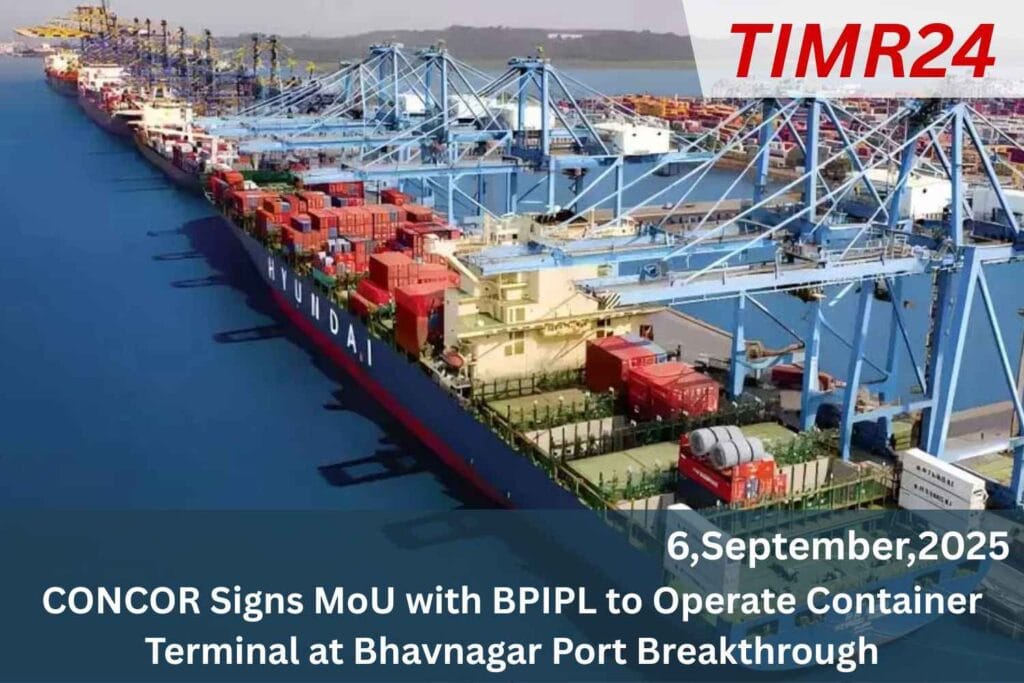
Container Corporation of India (CONCOR) has signed a Memorandum of Understanding with Bhavnagar Port Infrastructure (BPIPL) to operate and maintain a new container terminal in Gujarat. The agreement leases 235 hectares of land for 30 years, with potential for expansion. The terminal is expected to improve logistics connectivity for Central Gujarat, the Dholera Industrial Belt, and the National Capital Region. The signing of a Memorandum of Understanding (MoU) between Container Corporation of India (CONCOR) and Bhavnagar Port Infrastructure Pvt Ltd (BPIPL) represents a major breakthrough for India’s logistics and maritime industry.
This partnership focuses on the operation of a new container terminal at Bhavnagar Port in Gujarat, a region already known for its industrial strength and export potential. The development is expected to strengthen multimodal logistics, enhance cargo handling efficiency, and create new opportunities for both domestic and international trade. one of India’s largest public sector logistics companies, has played a pioneering role in promoting containerized transport in the country. By joining hands with BPIPL, a company focused on port infrastructure development, CONCOR is extending its expertise into terminal operations at a strategic location. Bhavnagar Port, operated under.
Bhavnagar Port’s Strategic Location
The historically served as a key regional hub, but its container handling capabilities were limited. With this new agreement, the port is poised to transform into a modern gateway for exporters and importers in western India. Gujarat is already home to major ports such as Mundra, Pipavav, and Kandla, which handle a significant portion of India’s maritime trade. However, congestion at these ports often delays cargo movement and increases logistics costs. Bhavnagar Port’s location provides an alternate route for exporters in Saurashtra, southern Gujarat, and even neighbouring states like Rajasthan and Maharashtra. This makes it an attractive destination for industries such as.
Chemicals, textiles, engineering goods, and pharmaceuticals that are seeking efficient supply chain solutions. The container terminal will also allow smaller and mid-sized exporters to directly access global markets without routing cargo through distant ports. CONCOR has built its reputation around integrated logistics solutions that combine rail, road, and shipping connectivity. Its expertise in operating inland container depots and domestic terminals ensures that Bhavnagar Port’s container terminal will be linked with India’s extensive freight corridors. By integrating rail services, cargo can move seamlessly from hinterland locations to the port, reducing dependence on.
Impact on Trade and Exporters
long-haul trucking and cutting down transit time. This not only lowers costs but also supports India’s sustainability goals by reducing carbon emissions from road transport. Exporters from Gujarat and surrounding regions stand to gain the most from this development. Industries engaged in producing dyes, chemicals, processed foods, ceramics, and engineering goods often face delays and higher costs at larger ports. Bhavnagar’s upgraded terminal will give them direct access to global shipping lines, reducing reliance on intermediaries and cutting logistical overhead. Importers too will benefit from quicker cargo clearance, faster delivery, and reduced inland transportation charges.
For businesses that compete globally, these cost savings can make a significant difference in maintaining competitiveness One of the highlights of the project is the emphasis on rail connectivity. Bhavnagar has proximity to the Western Dedicated Freight Corridor (DFC), a major infrastructure initiative under India’s logistics modernization drive. This ensures that cargo from industrial hubs in Delhi, Haryana, Rajasthan, and Madhya Pradesh can be efficiently routed to Bhavnagar. The use of multimodal solutions combining rail, road, and maritime routes creates flexibility for businesses and adds resilience to supply chains, especially during times of disruption at other ports.
Boost to Regional Economy and Employment
Beyond logistics, the MoU carries major economic implications for the Bhavnagar region. The new container terminal will create direct employment opportunities in operations, warehousing, and cargo handling. Indirectly, it will stimulate growth in ancillary sectors such as trucking, customs clearance, packaging, and hospitality. For local communities, the project promises long-term benefits, as improved trade infrastructure typically attracts investment from manufacturing and processing industries looking for reliable export routes The CONCOR-BPIPL collaboration strongly aligns with the Sagarmala Programme, India’s flagship port-led development initiative. Sagarmala.
Emphasizes modernizing existing ports, developing new terminals, and enhancing coastal connectivity to drive economic growth. Bhavnagar Port’s transformation into a container hub also supports the Make in India vision by enabling industries to compete globally with cost-efficient logistics. Furthermore, the initiative complements the government’s efforts to shift more freight traffic from roads to railways, thereby improving sustainability and efficiency in logistics. While ports like (Port) near Mumbai, Mundra, and Pipavav have already established themselves as major container-handling centers, Bhavnagar represents a second-tier port with untapped potential.
The advantage here lies in lower congestion, faster turnaround times, and more personalized services for exporters who may feel overshadowed at larger terminals. Over time, Bhavnagar’s rise could help decongest India’s west coast shipping network, balancing traffic across multiple ports and creating a more resilient logistics ecosystem Another important aspect of this development is the opportunity it presents for global shipping lines. As trade volumes at Bhavnagar grow, international carriers may introduce direct services, avoiding the need for feeder movements through other ports. This will reduce transit times and attract more exporters to choose Bhavnagar as their primary.
Gateway. The presence of CONCOR, with its global credibility and network, also makes it easier to negotiate with shipping lines for better service offerings In the long run, the CONCOR-BPIPL partnership has the potential to transform Bhavnagar into a regional container hub, capable of handling not just domestic cargo but also transshipment traffic. As India continues to expand its role in global supply chains, the demand for efficient, well-connected container ports will only increase. Bhavnagar’s rise will ensure that India’s maritime infrastructure remains diversified and resilient, reducing overdependence on a handful of large ports.
The signing of the MoU between CONCOR and BPIPL for operating the container terminal at Bhavnagar Port is more than just a business agreement it is a transformative step for India’s logistics and maritime sector. By creating a new gateway for exporters, ensuring seamless multimodal connectivity, and aligning with national infrastructure policies, this collaboration promises to deliver long-term (CONCOR) benefits for businesses, the economy, and the region as a whole. As Bhavnagar Port emerges as a strong alternative to larger western ports, it reflects India’s broader ambition of becoming a global logistics powerhouse, driven by efficient, modern, and sustainable infrastructure.
Q1. What is the MoU between CONCOR and BPIPL about?
The MoU allows CONCOR and BPIPL to jointly operate and manage a container terminal at Bhavnagar Port, enhancing logistics efficiency.
Q2. How will Bhavnagar Port benefit from this agreement?
The port will see improved container handling, better rail connectivity, and increased trade opportunities for exporters and importers.
Q3. Which industries will gain the most from this collaboration?
Pharmaceuticals, chemicals, textiles, and engineering goods exporters from Gujarat and nearby regions will benefit significantly.
Q4. How does this tie into India’s Sagarmala project?
It aligns with Sagarmala’s vision of modernizing ports, improving multimodal logistics, and boosting coastal trade.
Q5. When will operations at the container terminal begin?
The timeline depends on regulatory clearances and infrastructure readiness, with phased operations expected to begin soon.