













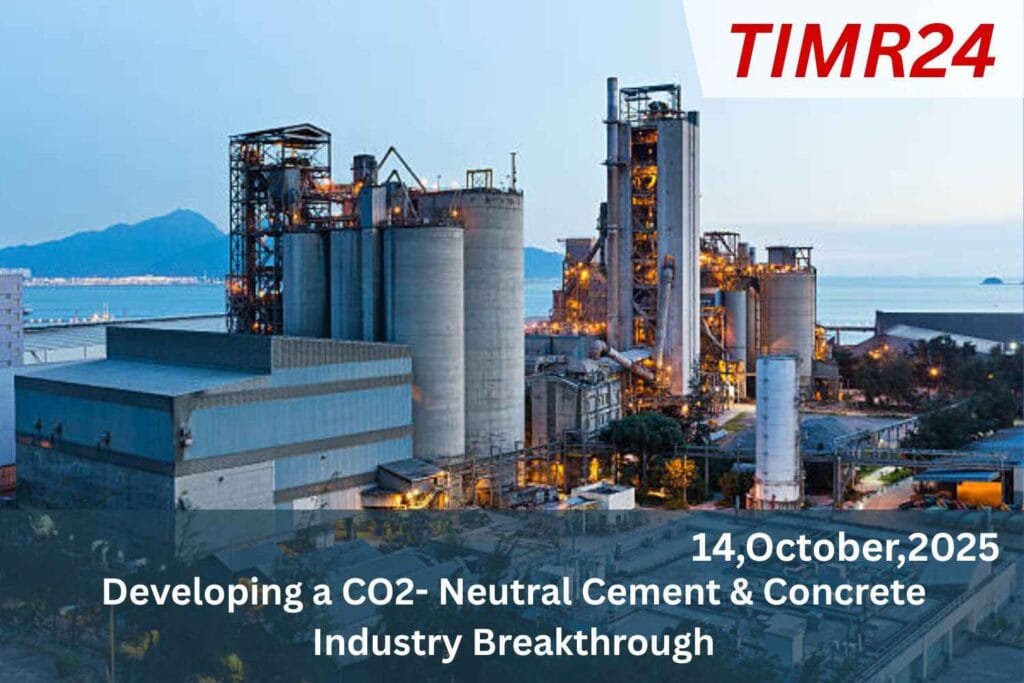
The CO2 cement and concrete industry is adapting processes and ingredients to promote sustainability. By adopting the right analytical strategy, producers can bring carbon neutral cement to the construction industry. Companies aim to conserve resources, lower energy consumption, and reduce greenhouse gas emissions without affecting profitability. New solutions, such as cutting clinker emissions and creating green, are being explored to support sustainability and circularity targets. Process efficiency, energy consumption, emissions, and final product quality are crucial parameters in cement production. Factors such as raw materials’ elemental and mineralogical.
Composition, additives, and the quality of alternative fuels impact outcomes. High-quality materials characterization, particularly automated solutions, is essential for success Optimizing operating conditions in the raw milling and pyro-processing stages is crucial for maximum efficiency manufacturers can adjust particle size distribution using lab-based or in-field particle size analysers and monitor crystalline phases using X-ray diffraction (XRD). This leads to higher throughputs, reduced energy consumption, and effective use of replacement materials. Maintaining stable chemical composition in the raw meal is also important for consistent heat profiles in the kiln.
Using alternative fuels like biomass fuels, mixed fuels, and fossil-waste fuels can reduce environmental impact by improving resource efficiency. However, these fuels require complete chemical, thermal, and physical characterization. X-ray fluorescence (XRF), X-ray diffraction (XRD), neutron analysers, and particle size analysers offer accurate, rapid control of these parameters Alternative materials for ‘green’ can help reduce carbon dioxide emissions by supplementing limestone with materials like blast-furnace slag, fly-ash, silica fume, calcined clays, pozzolans, and other industrial waste. Enhanced recent blended cement combining limestone with calcined.
success Optimizing operating
Clay can enable emission reductions of up to 30-40% compared to OPC. Automation is becoming increasingly important for maximum cost-efficiency in cement production. The cement and concrete industry has traditionally been one of the largest contributors to global carbon dioxide emissions, with conventional production methods releasing nearly 8% of human-made annually. The calcination process in production, where limestone is heated to high temperatures, inherently generates carbon emissions, and this has posed a significant challenge for the construction sector, which relies heavily on these materials. Recognizing the urgent need to reduce emissions.
Researchers, manufacturers, and policymakers worldwide have been exploring innovative pathways to create neutral cement and concrete. This transformation is not merely an environmental initiative; it also represents an economic and technological breakthrough that could redefine the standards of construction sustainability. (NITI AAYOG) and how they integrate with low-carbon building materials One of the most promising avenues for reducing carbon intensity in cement production is the incorporation of alternative raw materials. Traditional cement is primarily composed of clinker, which requires significant energy to produce and releases substantial during.
Calcination By partially replacing clinker with supplementary cementitious materials (SCMs) such as fly ash, ground granulated blast furnace slag, volcanic ash, and rice husk ash, manufacturers can reduce the clinker-to-cement ratio, thereby cutting emissions substantially. These SCMs are often industrial by-products, meaning that their use not only lowers the carbon footprint of cement but also helps in managing waste from other sectors. Additionally, innovations in mineral additives, such as calcined clay, have shown the ability to enhance the durability of concrete while further reducing emissions. Internal links to research on provide a deeper understanding of how these materials are shaping next-generation construction practices.
Beyond raw material substitution, the industry is also leveraging advanced carbon capture and utilization (CCU) technologies. Modern cement plants are beginning to integrate carbon capture systems that trap emissions at the source, preventing them from entering the atmosphere. Captured carbon can either be sequestered underground in geological formations or reused in the production of concrete through mineralization, where reacts with concrete components to form stable carbonates. This not only mitigates emissions but also contributes to the long-term strength and stability of concrete structures to understand their application and scalability in urban and industrial projects.
mitigates emissions
The composition of concrete itself is another critical area for carbon reduction. Traditional concrete mixes are highly cement-intensive, meaning that any reduction in cement content translates to lower overall emissions. Engineers and material scientists have been developing high-performance concrete formulations that require less cement while maintaining structural integrity. These formulations often combine recycled aggregates, industrial by-products, and optimized water-to-cement ratios, resulting in concrete that is both durable and environmentally responsible. Moreover, innovations in curing methods, such as accelerated carbonation curing, not only improve.
The strength of concrete but also lock additional within the material, creating a closed carbon loop. For projects looking to integrate these solutions offer practical guidance and case studies Government policies and industry collaboration play an equally important role in advancing neutral and concrete. Many countries have introduced regulations, incentives, and carbon pricing mechanisms that encourage manufacturers to adopt greener technologies. In India, for instance, the Bureau of Indian Standards (BIS) has been actively revising cement standards to incorporate low-carbon alternatives, while the Ministry of Environment, Forest and Climate Change.
(MoEFCC) promotes sustainable construction practices through certifications and grants. Collaborative platforms where manufacturers, construction firms, and research institutions can share knowledge and pool resources are essential for scaling up these solutions. Internal references to illustrate how regulatory support complements technological innovation Global adoption trends reveal that both established and emerging markets are beginning to embrace CO₂-neutral cement and concrete. In Europe, companies like LafargeHolcim and Heidelberg Cement have launched low-carbon cement products and pilot projects, while in the United States, firms are investing in carbon.
Capture and alternative fuel strategies. India, with its rapid urbanization and infrastructure expansion, represents a high-impact market for these innovations. Domestic companies are experimenting with indigenous materials, such as calcined clay-limestone blends, to create sustainable products that meet local building requirements while reducing carbon emissions. Real-world case studies, including green highways, eco-friendly residential complexes, and industrial parks built with low-carbon materials, demonstrate both feasibility and performance (India’s sustainable infrastructure) for practical examples of how neutral solutions are applied on the ground.
Education and awareness are also pivotal to the widespread adoption of neutral and concrete. Architects, engineers, project managers, and construction workers need training on the handling, mixing, and curing of low-carbon materials to ensure optimal performance. Seminars, workshops, and online courses provided by industry bodies and research institutions help disseminate best practices and technological insights. Internal guides highlight how skill development can accelerate adoption while maintaining structural safety and quality standards.
Reduced energy consumption
The economic advantages of -neutral and concrete extend beyond environmental compliance. Projects that utilize low-carbon materials often qualify for green building certifications such as LEED, GRIHA, and EDGE, which can enhance market value and investor interest. Reduced energy consumption in production and potential carbon credits can also offset costs, making these materials increasingly competitive with traditional alternatives. Furthermore, the adoption of neutral solutions aligns with corporate sustainability goals, improving brand image and meeting growing consumer demand for environmentally responsible infrastructure. Internal articles on provide.
Detailed analyses of cost-benefit considerations and investment opportunities While challenges remain, including initial capital investment, supply chain adjustments, and technology integration, the path toward a CO₂-neutral cement and concrete industry is clear. Innovation, regulatory support, stakeholder collaboration, and knowledge dissemination are the pillars that can drive this transformation. As cities expand and infrastructure demands grow, the ability to build durable, high-performance, and low-carbon structures will become a defining factor in sustainable urban development. By embracing these advancements, the cement and concrete sector can significantly reduce.
Its environmental impact while enabling resilient, future-ready infrastructure Ultimately, developing a CO₂-neutral cement and concrete industry represents a critical step toward achieving global climate goals. The convergence of material science, carbon capture technologies, sustainable construction practices, and supportive policies creates a roadmap for a future where construction does not compromise the planet. With continued innovation and collaboration, CO₂-neutral cement and concrete will move from niche solutions to mainstream adoption, reshaping how buildings, roads, and urban infrastructure are conceived, built, and maintained Internal references like.
Q1. What is CO₂-neutral cement and concrete?
CO₂-neutral cement and concrete are materials designed to significantly reduce or offset carbon emissions during production, contributing to a more sustainable construction industry.
Q2. How is CO₂-neutral cement produced?
It is produced by using alternative raw materials, supplementary cementitious materials (SCMs), and carbon capture technologies to reduce carbon emissions from traditional cement manufacturing.
Q3. What are the benefits of CO₂-neutral concrete?
Benefits include reduced environmental impact, compliance with green building standards, improved sustainability for infrastructure projects, and support for net-zero emission goals.
Q4. Which companies are leading in CO₂-neutral cement?
Global leaders include LafargeHolcim, CEMEX, and Heidelberg Cement, while several innovative Indian companies are developing low-carbon cement solutions.
Q5. How can the construction industry adopt CO₂-neutral concrete?
Adoption involves sourcing low-carbon cement, integrating sustainable practices in project design, using carbon capture methods, and complying with green building certifications like LEED and GRIHA.